
Almost every Gujarati family that lands in Dubai comes home talking about the same evening — the one where the SUV tips over a red sand dune, the sun melts into an orange horizon, and dinner arrives with a Tanoura dancer spinning under fairy lights. The desert safari is the single most booked experience in the UAE, and for good reason: in one half-day you get dune bashing, a camel ride, sandboarding, henna, and a barbecue dinner with live shows, all within an hour of the city. But there are real choices to make — morning versus evening, shared versus private, standard camp versus luxury — and a few things nobody warns first-timers about. This guide lays it all out from a Surat traveller's point of view, including honest rupee prices and how the veg and Jain food situation actually works.
What is included, and morning vs evening vs overnight
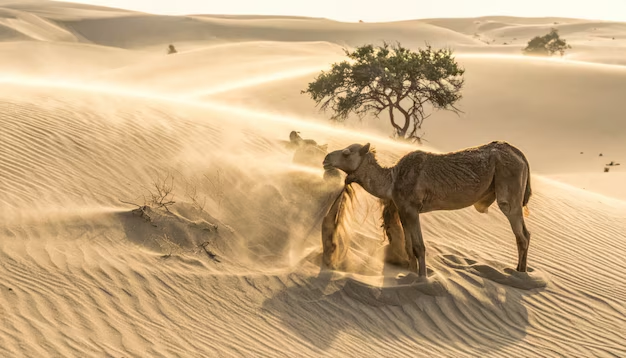
A standard evening safari is a packaged half-day: a 4x4 picks you up from your hotel around 3 pm, drives about 45 minutes into the Lahbab red-dune belt, deflates its tyres and gives you 20-30 minutes of dune bashing — that roller-coaster swooping over the sand that is the heart of the whole thing. You then reach a Bedouin-style camp for camel rides, sandboarding, optional quad bikes, henna, Arabic coffee and dates, a buffet BBQ dinner and a stage show of Tanoura, belly dance and fire performance, and you are back at your hotel by 9-9:30 pm. Morning safaris skip the dinner and shows to focus on the driving, camel ride and sandboarding, wrapping up by lunchtime — better for families who don't want a late night. Overnight safaris are the premium romantic pick: you stay past the crowds, sleep in a desert tent and catch a spectacular sunrise, a natural add-on if you are already using our Dubai 5-day itinerary from Surat.
Premium upgrades and the best season to go
If a shared SUV with 20 strangers isn't your idea of a holiday, the upgrades are genuinely good — a private safari puts your family alone in one vehicle with your own guide so elders aren't rushed, vintage Land Rover safaris swap aggressive bashing for a heritage drive with falconry, and luxury camps in the Dubai Desert Conservation Reserve serve plated dinners and proper beds instead of a buffet tent. On timing, the desert is a summer furnace: from May to September afternoons cross 45C and only the post-sunset hours are bearable. The sweet spot is November to March, when days are warm and desert evenings turn cool enough to want a light jacket — which is also peak season overall, so book early. We break down the trade-offs in our guide to the best time to visit Dubai from India, and if you are timing it around the sales, pair it with the Dubai Shopping Festival guide.
Safety, motion sickness, and what to carry with kids and elders
Dune bashing is thrilling but it is essentially a controlled roller-coaster on sand, so if anyone is prone to car sickness, take a tablet 30-45 minutes before and sit in front — and tell the driver plainly if you want a gentler ride, because reputable operators will tone it down. Pregnant women, people with back or heart conditions and very young toddlers should skip the bashing entirely and choose a camel-ride-and-camp package or a vintage Land Rover tour instead. Dress in light cotton but carry a sweater or shawl, because winter desert nights genuinely turn cold, and wear closed shoes you don't mind filling with sand. Keep phones zipped away during the bashing — more than one family has hunted for a lost phone in the dunes — and confirm the operator provides seatbelts and licensed drivers, exactly the kind of detail our senior-citizen parents travel guide from Gujarat tells you to nail down. For a trip with little ones, our Dubai family and kids guide covers how to pace the whole day.
Veg and Jain food, honest prices, and booking from Surat
Vegetarian food is easy — every camp buffet includes paneer, dal, rice, salads, breads and Arabic mezze like hummus and falafel — while Jain meals with no onion, garlic or root vegetables must be requested at the time of booking, not on arrival, since the kitchen prepares them separately, and Dubai handles this well when told a day ahead (a point we expand on in our roundup of Jain and vegetarian friendly destinations abroad). On price, a shared standard evening safari with transfer, dinner and shows typically runs around 2,500 to 4,500 rupees per person when converted, mornings a little less, while a private SUV works out to roughly 15,000 to 30,000 rupees for the whole family and luxury or overnight camps climb well beyond that. These are guide figures that move with the dirham rate and demand, and it is nearly always cheaper folded into a package — which is why many travellers build it into a complete Gujarat-to-Dubai travel plan rather than booking every piece separately.
Frequently asked questions
Is the desert safari safe for children and grandparents?
Yes, if you choose the right type — the camel ride, camp activities and dinner suit all ages, and only the dune bashing needs caution for very young kids, pregnant women and anyone with back or heart issues, who can simply sit that part out or take a gentler morning tour.
Will we get pure vegetarian and Jain food?
Vegetarian food is standard at every camp buffet, and Jain meals are available if you request them at the time of booking rather than on the day, since the kitchen prepares them separately.
Do we need a visa, and how long does the evening take?
Most Indian travellers need a pre-arranged 30 or 60-day tourist e-visa, which we cover in the Dubai visa guide from Gujarat; a typical evening safari itself runs about six hours door to door, roughly a 3 pm pickup to a 9-9:30 pm drop.
Ready to put the desert evening into a proper Dubai plan?
Message our team on WhatsApp or through our contact page, and we will match the right safari to your family, sort the veg or Jain meals, handle your UAE visa application, and fold it all into a value-for-money itinerary — talk to our Surat travel desk and we will take it from there.