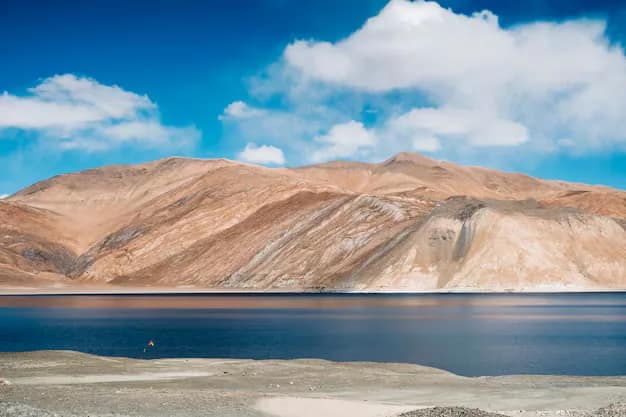
Ladakh is the trip that sits at the top of almost every Indian traveller's list and near the bottom of their nerve — and both feelings are correct. This is the high desert on the roof of India, where Leh itself sits at 3,500 metres, mountain passes cross 5,300, and the light, the silence and the turquoise of Pangong Tso genuinely do not look real. It is one of the most rewarding journeys you can make without leaving the country, but it comes with rules the brochures gloss over, chiefly altitude, and getting those right is the difference between the trip of a lifetime and a miserable few days on oxygen. Because the risks are real, read this alongside our travel insurance guide for Indian travellers before you commit.
How to reach Ladakh from Gujarat
For anyone coming from Gujarat, the sane route is to fly. There is no direct service, so you connect through Delhi and take the short, spectacular flight into Leh — book an early-morning slot, because Leh's weather closes the airport by midday more often than you would like. The overland Manali-Leh and Srinagar-Leh highways are the stuff of legend but add days of driving over high passes and only open roughly June to September. Flying straight to 3,500 metres has one big catch, which is the whole next section: you cannot land and rush off to Pangong the same day. Sort flights early, as Leh seats spike in peak season, and see our Ladakh tour packages if you want it handled end to end.
Acclimatisation and AMS: read this before anything else
This is the single most important part of planning Ladakh. When you fly straight to Leh you arrive where the air has roughly a third less oxygen, and your body needs time to adjust, so do nothing on arrival day and the day after — rest, drink far more water than feels necessary, avoid alcohol and heavy meals. Give yourself a minimum of two full acclimatisation days in Leh before Nubra or Pangong. Acute Mountain Sickness shows up as headache, nausea, breathlessness and poor sleep; mild cases ease with rest, but if symptoms worsen the only real cure is to descend, so never push on stubbornly. Anyone with heart or serious lung conditions, and often older parents, should clear the trip with a doctor first — our senior-citizen travel guide from Gujarat covers who should be cautious.
Leh, its monasteries and the Inner Line Permit
Use those first two days well rather than treating them as dead time. Leh town has the old palace, the Shanti Stupa and a walkable bazaar, all gentle enough for acclimatisation, and short low-effort drives reach the great Buddhist monasteries — Thiksey, echoing Lhasa's Potala, Hemis, the largest in Ladakh, and Shey — where dawn prayers are worth the early alarm. This is also the time to sort permits: Ladakh's headline sights of Pangong, Nubra and the Khardung La pass lie in protected border areas, so Indian citizens need an Inner Line Permit, a straightforward formality arranged in Leh against a small per-day environmental fee, though you must carry printed copies for the checkposts. We handle that paperwork inside a package so you are not chasing permits on your rest day. The Buddhist culture and mountain devotion here will feel familiar to anyone who has considered the Kailash Mansarovar yatra from Gujarat.
Nubra, Pangong, best time and costs
Once acclimatised, drive north over Khardung La at around 5,300 metres — stop briefly for the photo but do not linger, as the thin air hits hard — and descend into Nubra, a startling green valley with its surreal cold-desert dunes at Hunder, where you can ride a double-humped Bactrian camel with snow peaks behind you. Stay a night in Nubra rather than day-tripping, both to see it properly and to keep your altitude gains gradual. Pangong is the finale and deserves an overnight too: the lake sits at about 4,350 metres, shifting from blue to green to grey through the day, and a shoreline camp catches both the sunset and a ferociously starry sky, though nights are genuinely cold even in summer. If high mountains and snow are your thing, you will also enjoy our Kashmir winter guide to Gulmarg and our roundup of the best ski destinations for Indian travellers.
The season is essentially May to September, as the roads to Pangong and Nubra are snowbound and often shut outside that window, and even in shoulder months a pass can close for a day after fresh snow. A safe, well-sequenced route is Leh (2N to acclimatise) to Nubra (1-2N) to Pangong (1N) and back to Leh — a comfortable six to seven days including a weather buffer. Cost from Gujarat, including Delhi-Leh flights, a shared SUV with driver, permits, camps and hotels, typically runs around 40,000-70,000 rupees per person for a week, more for private vehicles and premium camps, and it is worth stressing: do not over-compress the plan to save money, because the extra acclimatisation night is the cheapest insurance you will buy on this trip.
Frequently asked questions
How many days do you really need for Ladakh?
Six to seven minimum, because two of those are non-negotiable acclimatisation days in Leh before you go higher.
Is Ladakh safe for older parents or people with health issues?
It can be, but only with medical clearance and slow pacing; anyone with heart or lung conditions should be genuinely cautious at these altitudes and carry insurance that covers evacuation.
Do we need permits and can we self-drive?
Indian citizens need an Inner Line Permit for Pangong, Nubra and Khardung La, and while self-driving is possible, most first-timers are far better off with an experienced local driver on these roads.
Want Ladakh planned safely around the altitude?
Talk to our Surat team on WhatsApp or through the contact page — we build the acclimatisation days, permits and camps into one itinerary so you can focus on the views, not the logistics; see the Ladakh tour packages to get started.