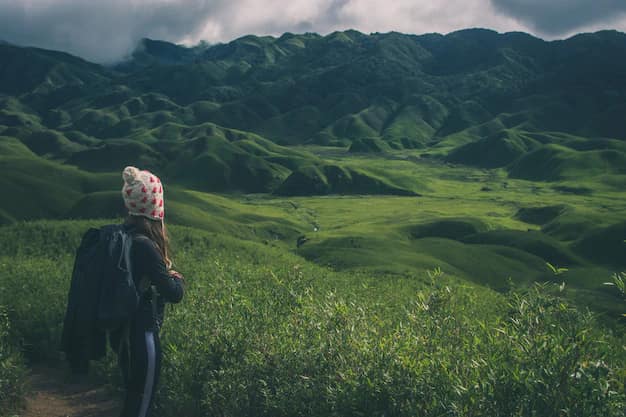
Most Gujaratis have a mental map of Indian travel that stops somewhere around Sikkim. Ask around in Surat and you will hear about Manali, Goa, Kerala, Kashmir — rarely about Nagaland. And yet the Dzükou Valley, sitting at roughly 2,400 metres on the Nagaland–Manipur border behind Kohima, is one of the few places in India where the landscape genuinely looks unlike anywhere else in the country: a rolling carpet of dwarf bamboo over folded hills, cut by a cold stream, with mist that arrives and leaves like it has somewhere to be. This guide is written for travellers starting from Gujarat, with real journey times, honest permit caveats, and a plan you can actually book.
Why the Northeast is India's most under-visited region
The eight Northeast states hold a fraction of India's domestic tourist traffic despite being, by most measures, the most biodiverse and culturally varied part of the country. The reasons are practical rather than mysterious — fewer direct flights, longer road transfers, a permit system that changes from state to state, and a persistent (and largely outdated) perception problem. For a traveller from Gujarat this actually works in your favour: Dzükou on a weekday outside peak season can feel almost private, in a way no Himachal trail has for twenty years. Dzükou is the region's signature trek because it demands only moderate fitness and a single overnight, yet delivers scenery that people spend a fortnight in Ladakh hoping for.
Getting there from Gujarat: the honest version
There is no short way to say this — Dzükou is a full day's travel from Gujarat, sometimes more. The realistic routing is Ahmedabad or Surat to Dimapur (Nagaland's only commercial airport) or Guwahati, almost always via a metro connection at Delhi, Mumbai or Kolkata. From Dimapur it is roughly three to four hours by road up to Kohima; from Guwahati it is a much longer overnight haul, so Dimapur is worth the extra fare if the timings work. Total door-to-door from Surat is commonly 14–20 hours including layovers. Our team handles these multi-leg domestic itineraries regularly — see the current Surat to Northeast India flight options or let us build the connection around your dates through our air ticket booking desk in Surat. Build in a buffer night in Kohima; Northeast weather delays connections more often than people expect.
The permit question: read this before you book
Nagaland has historically required an Inner Line Permit (ILP) for Indian citizens visiting from other states, obtained online or at designated offices in Dimapur, Kohima and elsewhere. Foreign nationals fall under a separate framework and are generally required to register with the local Foreigners Registration Office on arrival rather than obtain an ILP. Here is the honest part: this requirement has been amended, relaxed and re-tightened more than once, and the rules differ by district and by nationality. Do not rely on a blog post — including this one — for the current position. Verify current permit rules with the state authorities or with your agent close to your travel date. We check this for every Nagaland booking as a matter of routine; you can ask our travel consultants in Surat to confirm the position before you pay for flights.
Two trails: Viswema versus Jakhama
Both trailheads sit south of Kohima, and both end in the same valley — the difference is entirely in how you want to suffer. The Viswema route is the shorter one: a motorable track takes you high up before a steep, relentless final climb of roughly an hour and a half to two hours to the ridge. It is the popular choice and the one most Kohima taxi drivers will default to. The Jakhama route is longer, gentler and prettier, winding through forest for around three to four hours to the same ridge, and is easier on knees that have not seen a mountain since college. A common approach is up via Viswema and down via Jakhama, which needs a little transport coordination but gives you two different landscapes for one trek.
What the trek actually involves
Be clear-eyed about this: the initial climb from either trailhead is steep and sustained, on stone steps and rough track, and it is where most first-timers struggle. Once you top the ridge, the valley walk itself is gentle and glorious. There is no reliable phone signal in the valley — tell family in Surat you will be offline for a day. Accommodation is a basic dormitory-style rest house with shared bunks and simple facilities, supplemented by the natural caving huts further along the valley floor that trekkers have used for years. Bedding is limited and unreliable; from around October to March you should carry your own sleeping bag, because the valley gets genuinely cold at night, well below what a Gujarat winter prepares you for. Weather can and does close the trail — heavy rain makes the descent dangerous, and guides will refuse to go. Accept that as a possibility built into your plan, not a disaster.
The Dzükou lily, and why you may not see it
The valley's fame rests partly on the Dzükou lily (*Lilium chitrangadae*), a pale pink-white flower found here and almost nowhere else. It blooms in the monsoon months, broadly June to August, and here is the honest caveat: the window is short, shifts year to year, and is entirely weather-dependent. Plenty of trekkers arrive in the right month and find the slopes green but flowerless. Treat the lily as a bonus rather than the purpose of your trip. Monsoon also means leeches, slick descents and the highest chance of a washed-out trail — many regulars prefer the clear, cold light of October to December instead.
Leave no trace: this valley needs it
Dzükou has paid a real price for its popularity. Litter accumulated badly as visitor numbers grew, and a serious fire in recent years burned across a large stretch of the valley, taking months and considerable effort to control. The rules that follow from this are not decorative. Carry every piece of your waste back out — wrappers, bottles, batteries, everything, including anything you find that someone else left. Never light a fire, not for cooking, not for warmth, not for a photograph; use the designated cooking area at the rest house only. Do not pick the lilies or any other plant. If you smoke, carry your butts out. A traveller from Gujarat who leaves the valley cleaner than they found it is doing more for Northeast tourism than any campaign.
Respecting Naga villages and people
The villages you pass through — Viswema, Jakhama, Kigwema and others around Kohima — are living communities, not scenery. Ask before you photograph anyone, particularly elders in traditional dress, and accept a refusal gracefully. Many Naga communities are devoutly Christian; Sunday mornings are for church, and shops and services may be closed. Dress modestly, greet people, and if you are invited into a home, take the invitation seriously. Hiring a local guide from the trailhead villages is not just safer navigation, it is the most direct way your money reaches the people who maintain these trails.
Food, water and carrying vegetarian supplies
Food options on the trail are minimal to nonexistent — you carry what you eat. For Gujarati travellers this matters more than usual: vegetarian and Jain-appropriate food is not readily available in the valley, and Naga cuisine is predominantly meat- and fish-based, often with fermented ingredients. Stock up in Kohima with khakhra, theplas that travel well, dry snacks, instant khichdi or noodles, dry fruit and electrolyte sachets. The rest house has a basic cooking space; a small gas canister and pot are worth carrying if you are particular. Stream water in the valley is generally clean but carry purification tablets or a filter anyway. Kohima itself has a growing number of cafés and a few places serving Indian vegetarian food, so eat well before and after.
Combining Dzükou with the Hornbill Festival
If you can travel in December, the calculation changes entirely. The Hornbill Festival runs at Kisama Heritage Village just outside Kohima for the first ten days of December, bringing all of Nagaland's major tribes together for music, dance, craft and food. Kisama sits on the same road as the Dzükou trailheads, which makes the pairing almost too convenient: two or three days at the festival, then the trek. The trade-off is honest — Kohima's hotels fill months ahead and rates rise sharply, so December bookings need to be locked early. Our Kohima and Northeast stay bookings team starts securing December rooms by around August each year.
Budget: realistic ₹ ranges
Approximate, and season-dependent — treat these as planning ranges rather than quotes. Return flights from Gujarat to Dimapur typically land somewhere in the ₹12,000–₹28,000 band per person depending on how early you book and whether December peak applies. Kohima accommodation runs roughly ₹1,500–₹5,000 a night for decent mid-range rooms, higher during Hornbill. Local transport to the trailhead and back, shared, is usually a few hundred to around ₹2,500 per vehicle leg. Guide fees, rest house charges and the entry and permit costs are modest but we deliberately do not quote exact figures here, because they are revised periodically — confirm them locally or with us. A comfortable all-in estimate for a 5–6 day trip from Surat, excluding shopping, tends to sit in the ₹35,000–₹65,000 per person range. Also budget for cover: our travel insurance guide for Indian travellers explains what a trekking-inclusive policy should actually contain.
A 5–6 day plan from Gujarat
Day 1: Fly Surat or Ahmedabad to Dimapur via a metro connection; road transfer to Kohima; rest and buy trail supplies. Day 2: Kohima at an easy pace — the War Cemetery, the State Museum, local markets — partly for acclimatisation, partly as a weather buffer. Day 3: Early drive to the Viswema trailhead, climb to the ridge, descend into the valley, overnight at the rest house. Day 4: Morning in the valley, then descend via the Jakhama route and return to Kohima for a hot shower and a real bed. Day 5: Optional day trip to Khonoma, Asia's first green village, or Kisama if it is festival season. Day 6: Kohima to Dimapur and fly home. Add a day if you are travelling in monsoon, when a washed-out trek day is a genuine possibility. Curated versions of this itinerary sit within our Northeast India holiday packages if you would rather not assemble it yourself.
Frequently asked questions
Is the Dzükou trek suitable for beginners and for children? Broadly yes for reasonably fit adults and older teenagers — it is one overnight, not a multi-day expedition. The difficulty is concentrated in the initial climb, which is steep enough to be genuinely tiring. Younger children, anyone with knee trouble, and travellers with cardiac or respiratory conditions should think carefully, and if you do go, take the gentler Jakhama route. Two or three weeks of walking practice in Surat before you fly makes a real difference.
When is the best time to trek Dzükou? October to December offers the clearest skies, the most stable trail conditions and the option of pairing with Hornbill, but nights are cold and a sleeping bag is essential. June to August brings the greenest slopes and the possible lily bloom, at the cost of rain, leeches and slippery descents. January and February are beautiful and very cold, occasionally with frost. Avoid periods of heavy rain entirely — the trail closes and guides will not take you.
Do I definitely need an Inner Line Permit as an Indian citizen from Gujarat? Historically yes for Nagaland, but this requirement has changed more than once, and foreign nationals follow a separate registration process altogether. There is no responsible way to give you a fixed answer in a blog post. Check with the Nagaland state authorities, or have your agent verify the current position, within a few weeks of departure — and carry photo ID and passport-size photographs regardless.
Dzükou is not a difficult trip to make. It is only an unfamiliar one, and that is exactly what an agency is for. If you want the flights, the Kohima nights, the trailhead transport and the permit position all handled from one desk in Surat, talk to our Northeast India travel team or browse the holiday packages we operate from Surat. Tell us your dates and whether you want the lilies or the festival — the rest we will sort out.