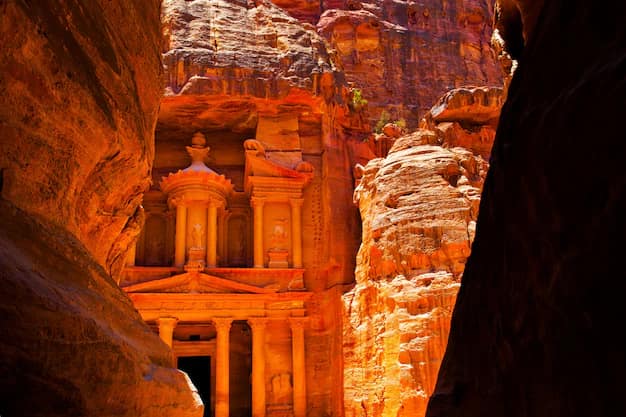
Few countries pack as much wonder into as small a space as Jordan. In a week you can stand before the Treasury at Petra as the morning light turns the sandstone pink, sleep in a Bedouin camp among the towering rock islands of Wadi Rum, and float effortlessly on the mineral-heavy Dead Sea, the lowest point on the surface of the Earth at more than 400 metres below sea level. For Indian travellers it slots neatly alongside the region's other great ancient civilisations, and many pair it with Egypt on one long Middle East loop, so our Egypt travel guide from India is worth reading beside this one if you are thinking of doing both. Jordan is safe, compact and welcoming, and the practicalities are gentler than most first-timers expect once you understand one clever document: the Jordan Pass.
The Jordan Pass, the visa waiver and how to get there
The single most useful thing to grasp before you book is the Jordan Pass, a bundled ticket that covers entry to Petra and dozens of other sites and, crucially, waives the tourist visa fee if you buy it before you arrive and stay at least three nights in the country. In practice that means you purchase the pass online, enter your passport details, and clear immigration without paying the separate visa charge, which for most short trips more than pays for the pass on the Petra entry alone. Terms and prices do change, so treat this as the shape of the deal rather than gospel and verify the current rules on the official Jordan Pass site before you rely on it, and if the paperwork feels fiddly our team can walk you through it, the same way our visa desk in Surat handles trickier applications every week. Getting there is straightforward from Gujarat: there are no direct flights, so you connect through a Gulf hub such as Dubai, Abu Dhabi or Doha into Amman's Queen Alia airport, and if you have a long layover it is worth turning it into a stopover, as our comparison of Dubai and Abu Dhabi explains.
Petra: the Treasury, the Monastery climb and why you need a full day
Petra is the reason most people come, and it rewards patience. You enter through the Siq, a narrow kilometre-long gorge between cliffs that rise a hundred metres on either side, and it opens without warning onto Al-Khazneh, the Treasury, the rock-cut facade you have seen in a hundred photographs and in the Indiana Jones films. But the Treasury is only the beginning: Petra is a whole abandoned city of tombs, a Roman theatre, colonnaded streets and high places of sacrifice, and seeing it properly takes a full day rather than a rushed morning. The classic reward is the hike up to Ad-Deir, the Monastery, an even larger facade reached by a long climb of some 800 rock-cut steps that takes around 45 minutes to an hour each way, so carry water, wear real shoes and start before the midday heat. If the appetite for dramatic ancient landscapes stays with you afterwards, the fairy chimneys and cave churches in our Istanbul and Cappadocia itinerary from India make a natural next chapter.
Wadi Rum and the Dead Sea: desert camps and a weightless float
About two hours south of Petra lies Wadi Rum, the Valley of the Moon, a protected desert of red sand, wind-sculpted arches and sandstone mountains that has stood in for Mars in countless films. The way to experience it is not a quick photo stop but an overnight stay: you take a jeep safari across the dunes in the late afternoon, watch the sun set behind the rock islands, and sleep in a Bedouin camp, from simple tents to the bubble domes that let you watch the stars from your bed. Prices for a camp with a jeep tour and meals typically run somewhere in the region of 40 to 90 US dollars per person a night depending on comfort, so it suits both backpackers and couples, and the romance of it makes it a favourite on our international honeymoon under two lakh ideas. From the desert most itineraries swing north to the Dead Sea, where the water is so dense with salt and minerals that you cannot sink; you simply lie back and bob like a cork, then coat yourself in the famous black mud that spas bottle and sell. Do not shave beforehand and keep the water out of your eyes, and because desert jeeps and salt water are exactly where small mishaps happen, read our travel insurance guide for Indian travellers before you go.
Amman, Jerash, the best seasons, budget and veg food
Give a day or two to the north as well. Amman, the capital, is a hilly, friendly city of Roman ruins, a hilltop citadel and some of the best hummus and falafel you will ever eat, and an hour away lie the ruins of Jerash, one of the best-preserved Roman provincial cities anywhere, with colonnaded streets, an oval forum and theatres you can still sit in. On timing, Jordan is a spring and autumn destination: March to May and September to November bring warm days and cool evenings, while summer is punishingly hot in the desert and winter can be cold and wet, a rhythm that families weighing options will recognise from our roundup of the best international trips for Gujarati families. Budget honestly: Jordan is not a cheap country, and a comfortable mid-range week excluding flights often lands somewhere around 700 to 1,200 US dollars per person once you add the Jordan Pass, camps, hotels and a driver or car, so carry a mix of payment methods and read our take on forex cards versus cash for Indian travellers before you convert your rupees. Vegetarians eat very well here, because Levantine food is built on hummus, falafel, moutabal, tabbouleh, stuffed vine leaves and warm bread, and if you enjoyed that style you will find the same generosity across the region, as our Turkey travel guide from India describes.
Frequently asked questions
Do Indian citizens get a free visa for Jordan?
Not exactly free, but the Jordan Pass waives the tourist visa fee if you buy the pass before you arrive and stay at least three nights, which covers most itineraries; always confirm the current terms on the official site or with our visa desk in Surat before you travel.
How many days do you need in Jordan?
A satisfying first trip is about six to eight days, allowing a full day at Petra, an overnight in Wadi Rum, a night at the Dead Sea and a day or two around Amman and Jerash, without feeling rushed between them.
Is the Monastery hike at Petra difficult?
It is a steady climb of roughly 800 rock-cut steps taking around 45 minutes to an hour each way, manageable for most reasonably fit people if you carry water and pace yourself, though you can hire a donkey for part of the way if the heat is heavy.
Ready to turn Petra, Wadi Rum and the Dead Sea into a booked holiday?
Explera Vacations plans the whole Jordan trip from Surat, from the Jordan Pass and Gulf-hub flights to desert camps, a driver and vegetarian-friendly meals, so you simply arrive and enjoy it. Message us on WhatsApp or contact our travel desk to begin, and browse our tour packages from Surat for ready-made Jordan itineraries you can shape around your dates.