Few countries surprise first-time visitors the way Morocco does. In a single week you can haggle over lanterns in a Marrakech souk, cross a 2,000-metre Atlas Mountain pass, watch the sun sink over Sahara dunes from the back of a camel, and lose yourself in the cobalt-painted lanes of Chefchaouen. It sits just across the Strait of Gibraltar from Spain, yet feels a world apart, and for Indian travellers the food, the bargaining culture and the warmth of a mint-tea welcome all feel oddly familiar. This guide walks you through the classic Marrakech-Sahara-Chefchaouen-Fes loop the way we plan it for families and couples leaving from Gujarat.
Why Morocco works for Indian travellers
Morocco rewards curiosity rather than a big budget, which is what makes it such a satisfying add-on to a Europe trip or a standalone two-week holiday. The landscapes swing wildly, from red-earth kasbahs to Atlantic surf towns to Saharan silence, so you never feel you are seeing the same postcard twice. Bargaining is expected in the medinas, tea is poured with theatrical generosity, and vegetarian food is far easier to find than most people assume. If you have enjoyed the buzz of a place like Egypt, Morocco will feel like a natural next chapter with more mountains and fewer crowds at the headline sights.
Flights, visa routing and getting there
There are no direct flights from India to Morocco, so most routings connect through the Gulf or Europe into Casablanca (CMN) or Marrakech (RAK), and our flight desk in Surat can compare the sensible options for you. Visa rules change, so treat this as a prompt to verify rather than gospel: Indian passport holders have generally needed a visa or an approved e-visa for Morocco, and the exact process and fees should be confirmed close to travel. Because Morocco does not sit inside the standard e-visa portals we handle day to day, the cleanest path is to let our team check the current requirement for you, so start your Morocco visa help here. For the paperwork basics, passport validity and appointment logistics, our overview of passport and visa services across Gujarat is a useful companion read.
Marrakech: the red city and its souks
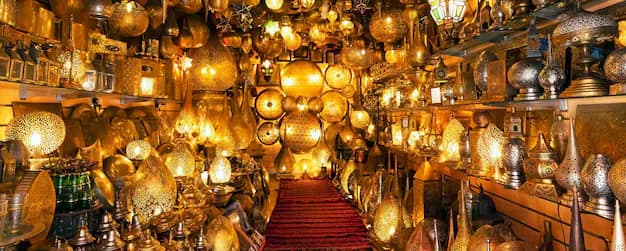
Most loops begin in Marrakech, and its walled medina is the sensory overload everyone remembers. Spend an evening on Jemaa el-Fnaa square as it transforms into an open-air kitchen of grills, storytellers and orange-juice carts, then dive into the souks by day for lanterns, leather babouche slippers, spices and argan oil. Balance the chaos with calm at the Bahia Palace, the Majorelle Garden and a traditional hammam, and use a riad, a courtyard guesthouse, as your quiet base. Give the city at least two nights so you are not rushing between the medina and the modern Gueliz district.
The Sahara: dunes, camels and desert camps
The desert is why many people come, and reaching it is part of the adventure. The classic route runs from Marrakech over the Tizi n'Tichka pass, past the mud-brick film-set kasbah of Ait Benhaddou, and on towards Merzouga and the Erg Chebbi dunes, usually as a two- or three-day trip because the drive is long. Time your arrival for a sunset camel ride into the dunes, a night in a desert camp under a sky thick with stars, and a sunrise you will talk about for years. If a big-landscape, once-in-a-lifetime nature experience is what you are chasing, it scratches the same itch as a South Africa safari, just swapped for sand instead of savannah.
Chefchaouen: the blue pearl of the Rif
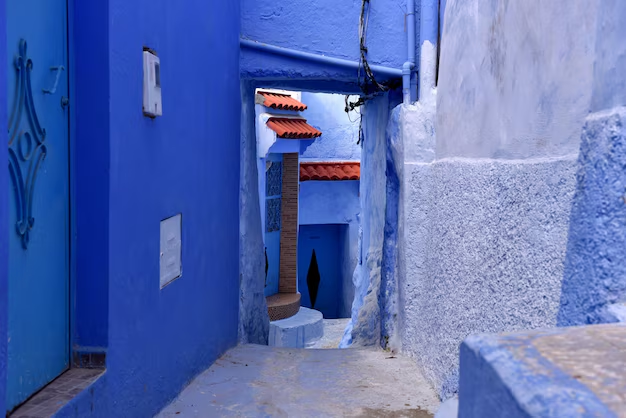
Tucked into the Rif Mountains in Morocco's north, Chefchaouen is the town whose blue-washed walls you have seen a hundred times online, and it genuinely delivers. The medina is small enough to wander without a map, the pace is slow, and every corner frames another photograph of indigo doorways, cascading flower pots and cats dozing on painted steps. Climb to the Spanish Mosque viewpoint for golden-hour light over the whole blue bowl, and browse the woven blankets and local goat's cheese the region is known for. It is a soothing counterweight to the intensity of the big cities and worth the detour north even on a tighter schedule.
Fes: the world's largest living medieval medina
Fes is Morocco's spiritual and cultural heart, and its ancient medina, Fes el-Bali, is a labyrinth of thousands of lanes where cars simply cannot go. Hire a local guide for at least a half day, because getting productively lost here is a given, and let them lead you to the famous Chouara tanneries, the Al-Attarine and Bou Inania madrasas with their dizzying tilework, and the copper and ceramic workshops. The medina assaults the senses in the best way, so pace yourself, keep valuables zipped away, and pause often for mint tea. Many travellers pair Fes with Chefchaouen since the two sit relatively close in the north.
Food and eating vegetarian in Morocco
Moroccan food is fragrant, slow-cooked and surprisingly friendly to vegetarians once you know what to order. Vegetable tagines, couscous, harira soup, zaalouk (a smoky aubergine dip), fresh breads and endless glasses of sweet mint tea will keep most Gujarati palates very happy, and Jain travellers can usually navigate menus by asking for no onion and garlic in simpler dishes. Do confirm ingredients directly, since some tagines and soups use meat stock. For a broader playbook on managing dietary needs on the road, our guide to Jain and vegetarian-friendly destinations abroad has tips that travel well to Morocco.
Money, forex and travel insurance
Morocco uses the dirham (MAD), a closed currency you generally cannot buy in bulk before you land, so plan to carry some USD or EUR to exchange on arrival and rely on ATMs for the rest. Cash still rules in the souks and smaller towns, so keep small notes handy for bargaining, taxis and tips, and sort a sensible mix of card and cash before you fly using our forex and money guide for international travel. Given the long drives, camel rides and desert conditions, comprehensive cover is not optional; read our travel insurance guide for Indian travellers and buy a policy that includes medical evacuation before you go.
Best time to visit and staying safe
The sweet spots are spring, roughly March to May, and autumn, September to November, when the days are warm rather than scorching and the desert nights are pleasant. High summer can be brutally hot inland and around the Sahara, while winter brings genuinely cold desert nights and snow to the High Atlas. Morocco is broadly welcoming, but the medinas involve persistent touts and the occasional unofficial guide, so dress modestly, agree taxi fares in advance and stay alert in crowds. Women travelling alone will find our solo female travel safety guide genuinely useful for reading situations and setting boundaries with confidence.
Frequently asked questions
How many days do I need for Morocco?
A week covers a satisfying Marrakech and Sahara loop, but ten to twelve days lets you add Chefchaouen and Fes in the north without feeling rushed between the long drives.
Is Morocco good to combine with another country?
Very much so, since it pairs naturally with southern Spain or with a wider North Africa plan; if history is your thing, reading our Egypt pyramids and Nile cruise guide alongside this one helps you decide which to do first.
Do I need a visa for Morocco from India?
In general yes, but the exact requirement and process for Indian passport holders can change, so confirm the current rule before booking and let our visa desk in Surat verify it for your travel dates.
Ready to trade the everyday for red cities, blue mountains and a night under the Sahara stars?
Message our team on WhatsApp or contact Explera to shape your dates, and browse our tour packages from Surat or wider holiday packages to turn this Morocco loop into a trip that is genuinely yours.