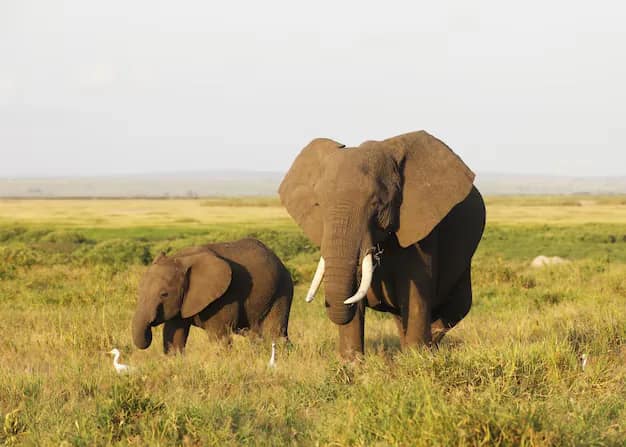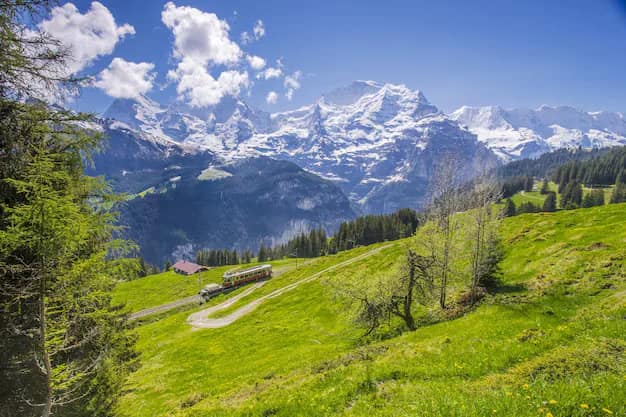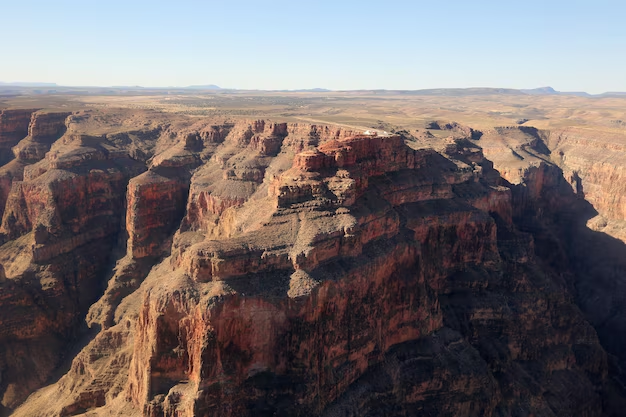
There is a particular kind of hush that falls over a group of travellers standing in the snow at midnight, necks craned, breath fogging, when the first pale-green smear appears low over the horizon and slowly, impossibly, begins to move. The aurora borealis — the northern lights — is caused by charged particles from the sun striking gases high in the atmosphere near the magnetic poles, and for Indian travellers it means a long winter journey to the far north of Europe. The important thing to understand before you spend a rupee is this: the aurora is a natural phenomenon and it is never, ever guaranteed. What you can do is stack the odds heavily in your favour by going to the right place, in the right months, for enough nights — and this guide covers exactly that across the four classic aurora countries: Iceland, Norway, Finland and Sweden.
Iceland: Reykjavik, the Golden Circle and Kirkjufell as your aurora base
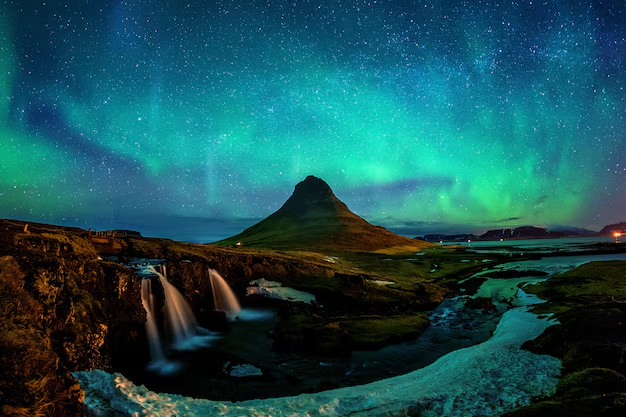
Iceland is the most popular first-timer choice because it packs waterfalls, geysers, black-sand beaches and aurora hunting into one compact, self-drivable island. Most Indian travellers base themselves in Reykjavik and run day loops like the famous Golden Circle — Thingvellir national park, the Geysir geothermal area and the thundering Gullfoss waterfall — before driving out after dark to escape the city glow. The photogenic star of a thousand aurora photos is Kirkjufell, the arrowhead-shaped mountain on the Snaefellsnes peninsula, where the lights reflected in the water make for the kind of image that got you dreaming about this trip in the first place. Iceland's winters are milder than the Nordic interior thanks to the Gulf Stream, but it is also famously cloudy, so you chase clear patches by driving — which is why so many visitors pair Iceland with a full self-drive circuit. If you are still deciding which month suits you, our month-by-month guide to visiting Europe lays out the trade-offs of the deep-winter window.
The mainland Arctic: Norway's Tromso, Sweden's Abisko and Finland's Lapland igloos
For many aurora chasers the mainland Scandinavian Arctic delivers more reliable dark, clear skies than cloudy Iceland. Tromso in northern Norway, sitting around 69 degrees north well inside the auroral oval, is a lively small city with organised chases, fjord cruises, husky sledding and reindeer camps run by the indigenous Sami — the tour operators here simply drive you inland or across the border chasing clear sky, which dramatically raises your chances. Across the border, Sweden's tiny Abisko has an almost mythical reputation: a quirk of the surrounding mountains creates a persistent patch of clear sky known as the 'blue hole', and the Aurora Sky Station on Mount Nuolja is one of the most dependable viewing spots in the world. Finland, meanwhile, turns the hunt into a fairy tale — Rovaniemi, the self-styled home of Santa Claus, is where Indian families with children often start, while further north around Saariselka and Kakslauttanen sit the famous glass-roofed igloos, heated domes designed so you can lie warm in bed and watch the sky, which is exactly why they have become a honeymoon splurge; expect premium igloo nights to run somewhere in the ₹40,000–90,000 band depending on season and property, so treat one or two as the centrepiece rather than the whole stay. These regions also double as gateways to snow adventure and Christmas magic, so browse our roundup of the best ski destinations for Indian travellers and our European Christmas markets guide to see what else can slot alongside your aurora nights, while couples weighing this big-ticket cold-weather trip against warmer, cheaper options should skim our ideas for an international honeymoon under ₹2 lakh first.
When to go, high Kp nights, and why the aurora is never guaranteed
The aurora season runs roughly from September to late March, when the nights are long and dark enough for the lights to show — in the summer midnight-sun months the sky simply never gets dark, so the aurora is invisible even when it is active. Within that window you need three things to line up on the same night: darkness (get well away from city light), a clear sky (clouds hide everything above them), and enough geomagnetic activity, which forecasters express as the Kp index — a higher Kp means the auroral band pushes further and glows brighter. Because clouds and solar activity are both beyond anyone's control, the single most important thing you can do is give yourself time: plan a minimum of three to four nights in an aurora zone so a couple of cloudy write-offs still leave you real chances. Be deeply sceptical of any package that 'guarantees' the northern lights — reputable operators talk in probabilities, not promises, and the honest ones will tell you that even a well-planned week can occasionally end without a strong show. Treat every clear night as a bonus, fill your days with snowmobiles, huskies and Sami culture so the trip is a success regardless, and the aurora becomes the breathtaking cherry on top rather than a pass-or-fail exam.
Schengen visa, packing for real cold, self-drive versus tours, and the honest budget
All four countries are part of the Schengen area, so Indian travellers apply for a single Schengen visa — and note that although Norway and Iceland are not European Union members, they are fully inside Schengen, so the same visa covers them. Apply through the country where you will spend the most nights (or your first entry point if nights are equal), and start early because winter is peak season; our Schengen visa guide for Gujarat travellers and the step-by-step Surat Schengen guide walk through the paperwork, while our note on the best Schengen country to apply from helps you pick the right consulate, and you can begin your Schengen application with us when you are ready. On clothing, this is genuine Arctic cold — expect anywhere from about minus 10 to minus 25 degrees Celsius on a still night, colder in wind — so you layer properly: thermal base layers, a fleece or wool mid-layer, a windproof insulated outer, plus insulated waterproof boots, thick socks, a warm hat, a neck gaiter and two pairs of gloves, since standing still for hours drains heat fast. On getting around, Iceland rewards a confident self-drive on its ring road, but the Scandinavian Arctic in deep winter — icy roads, few daylight hours — is far more relaxing on guided tours from a town like Tromso, and comprehensive travel insurance is non-negotiable given the cost of any medical or weather disruption up here, as our travel insurance guide for Indian travellers explains. Budget honestly, because this is a premium trip: return flights from India commonly land somewhere in the ₹60,000–1,10,000 per person range, Nordic food and tours are expensive, and a comfortable week for two — flights, mid-range winter stays, a glass-igloo splurge and a few chases — realistically sits in the broad ₹3.5–6.5 lakh band, less if you skip the igloo and travel in the shoulder weeks.
Frequently asked questions
Which country gives the best chance of seeing the northern lights?
There is no single winner, but for reliably dark, clear inland skies Tromso in Norway and Abisko in Sweden are hard to beat, while Iceland wins on combining aurora with waterfalls and easy self-drive — the real key everywhere is staying three to four nights, not the country you pick.
Can you guarantee we will see the aurora?
No, and you should distrust anyone who says they can — it is a natural phenomenon dependent on darkness, clear skies and solar activity, so we plan enough nights in the right place to give you a strong chance and pack your days with snow activities so the trip is wonderful either way.
Do we need a separate visa for Norway or Iceland?
No — even though Norway and Iceland are outside the European Union, both are inside the Schengen area, so one Schengen visa covers all four aurora countries; just apply through wherever you spend the most nights.
A northern-lights trip is equal parts logistics and luck, and the logistics are where Explera Vacations earns its keep — the right base towns, the right number of nights, an honestly-priced glass-igloo splurge and a Schengen file that clears the first time. Message us on WhatsApp or send us an enquiry and our team in Surat will shape an aurora itinerary around your dates and budget; explore our full range of tour packages from Surat to get started, and let us handle the cold-weather details while you concentrate on watching the sky.