A decade of K-dramas, K-pop and Korean fried snacks has done what no tourism board could: South Korea is now firmly on the Indian wishlist, and it more than lives up to the screen version. Seoul is a city of ten million where six-hundred-year-old palaces sit under glass towers, where you can rent a silk hanbok for the price of a movie ticket and walk into the same courtyards Joseon kings once ruled from, and where the metro is so clean and punctual it feels choreographed. Fly about eight hours from Delhi and you land in a country that packs royal Seoul, the lake-ringed maples of Nami Island and the beach city of Busan into one compact, superbly connected trip. This guide answers what first-timers from Surat, Ahmedabad and Mumbai actually ask us: what visa Indians need and whether K-ETA applies, when the cherry blossoms and autumn colours peak, how the hanbok-at-Gyeongbokgung ritual works, where the K-pop landmarks are, what vegetarians eat, and how the little T-money card glues the whole holiday together.
Flights from India and the visa question — where K-ETA fits for Indians
Air India and Korean Air both fly nonstop from Delhi to Seoul Incheon in roughly 7.5 to 8.5 hours, and from Ahmedabad or Surat the practical route is a quick domestic hop to Delhi or a one-stop itinerary via Singapore, Bangkok, Hong Kong or Hanoi; return economy fares typically land somewhere in the ₹45,000–₹75,000 band depending on season. Now the paperwork, and read this part carefully: K-ETA, Korea's electronic travel authorisation, currently applies only to passport holders from visa-waiver countries — Indian passport holders are generally not on that list, so most Indian tourists need a proper short-term visitor visa, applied through the Korea Visa Application Centres in cities like Delhi and Mumbai, with fees that have recently sat in the roughly ₹2,500–₹4,500 range and processing that commonly takes one to three weeks. Korea also runs group e-visa arrangements for organised tour groups from time to time, and eligibility rules do get revised, so always confirm the current position before booking non-refundable flights — our visa desk in Surat tracks these changes daily. The file itself looks a lot like a Japan application — bank statements, ITRs, employment proof, itinerary — so if you have read our Japan visa guide for Gujarat applicants you already know the discipline, and our first international trip checklist covers the passport, insurance and forex groundwork.
Royal Seoul: Gyeongbokgung in a hanbok, Bukchon lanes and Insadong
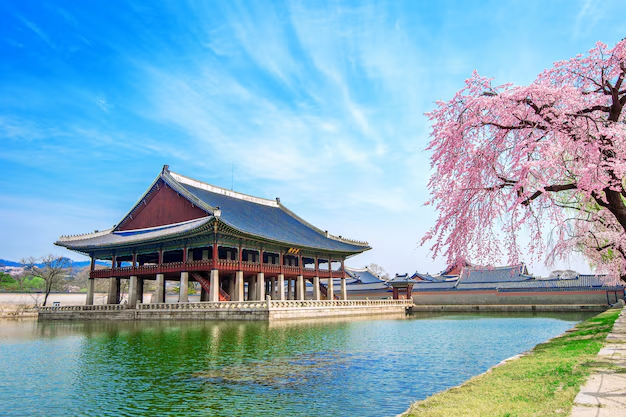
Start where every Korea trip should — Gyeongbokgung, the grandest of Seoul's five Joseon-era palaces, whose throne halls and lotus-pond pavilions sit dramatically against the Bugaksan ridge. The ritual beloved of every visitor is renting a hanbok from one of the dozens of shops around the palace gates: expect somewhere around ₩15,000–₩30,000 for a few hours including hair accessories, and palace entry — normally only a couple of thousand won — has traditionally been free for anyone dressed in hanbok, a perk worth double-checking but usually intact. Time your visit for the changing-of-the-guard ceremony held mid-morning and early afternoon on most days (the palace typically closes on Tuesdays), then walk ten minutes into Bukchon Hanok Village, a hillside of traditional wooden homes where photographers queue for the famous alley view of tiled roofs tumbling toward the city. Finish in Insadong for tea houses, calligraphy shops and hotteok pancakes, or in the restored Cheonggyecheon stream for an evening stroll. Give royal Seoul a full unhurried day — in blossom or foliage season, give it a morning and come back at golden hour.
Modern Seoul: Myeongdong, N Seoul Tower, Gangnam and the K-pop trail
When the palaces close, modern Seoul switches on. Myeongdong is the sensory overload every first-timer needs one evening of — a grid of streets stacked with K-beauty stores, streetwear and food carts selling tornado potatoes, tteokbokki and strawberry mochi — and it sits at the foot of Namsan hill, so you can ride the cable car up to N Seoul Tower afterwards for the love-locks terrace and a city-lights panorama (budget very roughly ₩10,000–₩16,000 per person for the cable car and observatory, with combo tickets shifting season to season). Across the river, Gangnam is the K-wave headquarters: the playful Gangnam Style statue outside COEX, the COEX Mall with its Instagram-famous Starfield Library, K-pop merchandise floors and entertainment-company buildings that fans make pilgrimages to, while Hongdae on the university side of town delivers busking crews, dance battles and late-night shopping. Families should pencil in Lotte World — one of the world's biggest indoor theme parks, under the 555-metre Lotte World Tower — and if your kids rank cities by their theme parks, weigh it against our Hong Kong Disneyland family guide. Two practical notes: buy a T-money card at any convenience store for roughly ₩3,000–₩4,000 plus top-up and tap it on every subway, bus and even taxi — single rides start around ₩1,400–₩1,500 — and land with data working, because Korea runs on maps and translation apps; our eSIM and international SIM guide shows the cheapest way, and since Korea is heavily card-friendly, our forex cards versus cash comparison will save you real money on won conversion.
Beyond Seoul: Nami Island, a Busan extension and when to time it all
Nami Island — the tree-lined islet immortalised by Winter Sonata — is the classic Seoul day trip: ride the ITX train about an hour to Gapyeong, hop the shuttle or the zipwire across the river, and expect an entry ticket somewhere around ₩10,000–₩16,000; its metasequoia and gingko avenues are pleasant year-round but genuinely jaw-dropping in late October and early November foliage. With two or three spare days, take the KTX bullet train to Busan — about 2.5 to 3 hours, usually in the ₩50,000–₩70,000 range one way — for the rainbow hillside of Gamcheon Culture Village, Haeundae beach, the cliffside Haedong Yonggungsa temple and the seafood theatre of Jagalchi market. On timing: the first half of April is cherry blossom season, when Seoul's Yeouido and Seokchon Lake and the Jinhae festival near Busan erupt in pink, while mid-October to mid-November brings crimson-and-gold autumn — these two windows are Korea at its best, with pleasant 10–20°C days, though hotels price accordingly; summer is hot, humid and rainy, and December to February is properly cold but great for ski resorts and winter drama scenery. Korea's seasons run opposite to Southeast Asia's beach logic, so if you are choosing between them, our best time to visit Thailand, Vietnam and Bali guide helps you sequence the trips — and plenty of travellers pair Korea with Japan in one East Asia swing, for which our Japan travel guide from India is the natural companion read.
Frequently asked questions
Will vegetarians survive in South Korea?
Yes, with strategy — order bibimbap without meat and ask for the gochujang on the side (some sauces and soups hide fish or meat stock), look for vegetable kimbap, temple-food restaurants and the many Indian restaurants around Itaewon and Hongdae, and carry theplas and khakhras as backup; strict Jain travellers should read our Jain and vegetarian-friendly destinations guide for how to brief kitchens and choose hotels with breakfast flexibility.
How much does a Korea trip cost from India?
As an honest hedged range, budget roughly ₹1.3–₹2 lakh per person for 6 to 8 days covering return flights, visa costs, mid-range hotels, trains, entry tickets and food — less in winter, more in blossom season or with a Busan extension, and remember the won moves, so treat around ₹60 per ₩1,000 as a rough mental rate rather than gospel.
Do Indians get visa-free entry or K-ETA for South Korea?
As things currently stand, no — K-ETA is for visa-waiver nationalities, and Indian passport holders generally need a short-term visitor visa in advance, though Korea periodically pilots group e-visas and transit exemptions, so check the latest rules close to your travel date before assuming anything.
Korea rewards travellers who plan the visa early and time the seasons right — get those two things correct and the rest is street food, palaces and playlists. Explera Vacations has been building Seoul, Nami and Busan itineraries for Gujarati families, honeymooners and K-drama superfans, handling everything from the visa file to hanbok-morning logistics, so browse our tour packages from Surat or simply message us on WhatsApp with your dates and month, and we will send back a day-by-day Korea plan with honest costs within a day.