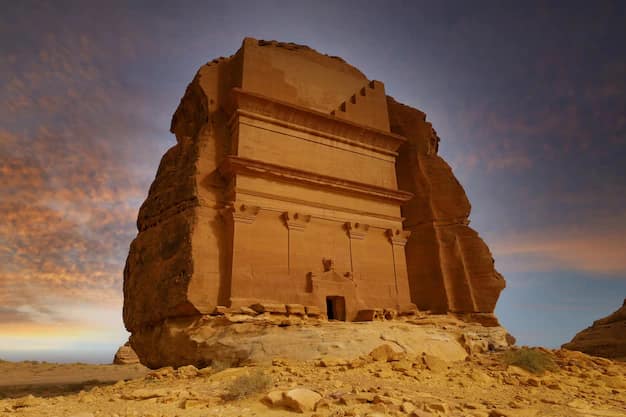
AlUla is a desert valley in north-west Saudi Arabia where sandstone cliffs, palm groves and ancient tombs meet. Its centrepiece is Hegra, a city of the Nabataeans — the same people who built Petra in Jordan — with more than a hundred monumental tombs carved into the rock. For travellers from India, many of whom already visit Saudi Arabia for Umrah, it is a remarkable and still uncrowded destination.
This guide covers the visa route for Indian passport holders, how to get to AlUla, booking Hegra, what else to see, the best months and how to combine AlUla with a pilgrimage. Saudi visa and tourism rules have changed often in recent years, so confirm the current position before you book.
What is Hegra, and why is it special?
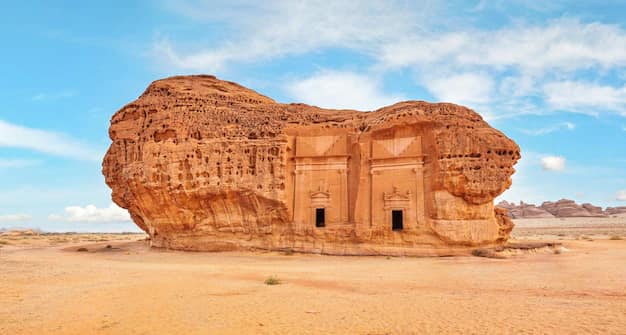
Hegra, also known as Mada'in Salih, was the Nabataean kingdom's main city in the south, on the incense route between Arabia and the Mediterranean, around two thousand years ago. In 2008 it became Saudi Arabia's first UNESCO World Heritage Site. Its tombs, cut into free-standing sandstone outcrops, are often better preserved than those at Petra, and the most famous, Qasr al-Farid, stands alone in the desert, carved from a single rock and never finished.
Hegra can be visited only on a booked tour from the AlUla visitor centre, by bus or vintage Land Rover, with stops at the main tomb groups. Book online through the official AlUla tourism channels before you travel, because slots sell out in the cool season.
Do Indians need a visa for AlUla?
Yes. AlUla is covered by an ordinary Saudi tourist visa. India is not on the list of countries eligible for Saudi Arabia's online tourist e-visa, so the online route is open only to Indian passport holders who already hold a valid, used US, UK or Schengen visa. Everyone else applies through the Saudi embassy or consulate in India or an authorised agency. Our Saudi Arabia visa service explains both routes and handles the application end to end.
How do you get to AlUla from India?
AlUla has its own airport with domestic flights from Riyadh and Jeddah, and some seasonal international routes. From Gujarat, the usual plan is to fly to Riyadh or Jeddah, often with a stop, and connect to AlUla. Madinah is the other gateway: the drive from Madinah takes roughly four hours on a good highway, which makes AlUla an easy addition to an Umrah trip. In AlUla itself you need a car or tour transport, because the sites are spread across the valley.
What else should you see in AlUla?
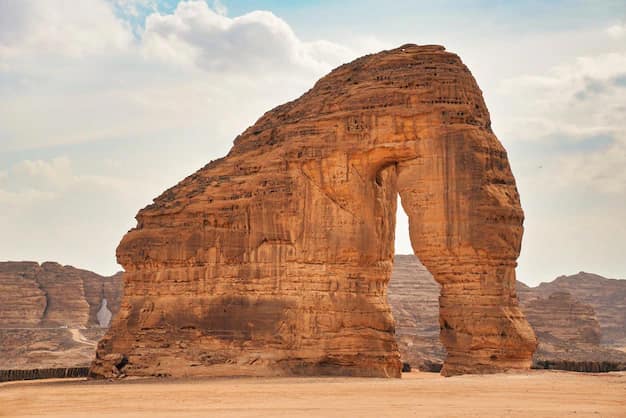
Elephant Rock, or Jabal AlFil, is a huge sandstone formation shaped like an elephant, about a quarter of an hour's drive from town; it is best at sunset, when a lounge area at its base opens. AlUla Old Town is a maze of mud-brick houses that was lived in until the late twentieth century and is now being restored, with cafes and craft shops along the main lane. Dadan, the capital of an earlier kingdom, has the Lion Tombs cut high into a cliff face. In the evening, the mirrored concert hall at Maraya and the stargazing experiences in the desert are memorable.
When is the best time to visit?
October to March is the season, with warm days and cool, sometimes cold, desert nights from December to February. The winter festival programme brings concerts, art exhibitions and balloon flights, and hotels are at their busiest. From May to September daytime temperatures are very high and outdoor sightseeing is limited to early mornings and evenings.
Food, dress and practical tips
AlUla's restaurants range from local Saudi cooking to international dining at the resorts. Vegetarian travellers manage well with salads, hummus, falafel, rice and breads, and Indian restaurants operate in larger Saudi cities. Dress modestly in public, with shoulders and knees covered; abayas are no longer required for foreign women, but a scarf is useful at religious sites. Alcohol is not sold. Our guide to dress codes and etiquette abroad covers the basics, and our travel insurance guide explains what cover to buy.
What does a two-day AlUla itinerary look like?
On the first day, take a morning tour of Hegra, which lasts around three hours, and stop at Qasr al-Farid on the way back. After lunch and a rest through the hottest hours, drive to Elephant Rock for sunset and stay for dinner under the stars. On the second day, start early at Dadan and the Jabal Ikmah inscriptions, an open-air library of ancient texts carved into a canyon, then spend the afternoon in AlUla Old Town and its cafes. Finish with an evening at Maraya or a guided stargazing session in the desert.
With a third day, add a hot-air balloon flight over the valley in the cool season, a hike or e-bike ride through the oasis, or a day at one of the desert resorts. Distances inside AlUla are larger than they look, so plan one area per half day rather than racing between sites. Book tours and dinners in advance during the winter festival months, when the valley is at its busiest.
Frequently asked questions
Can you visit AlUla during an Umrah trip?
Many pilgrims add AlUla before or after Umrah, usually by road from Madinah. Check the conditions of your visa with us before planning, and see our guide to planning Umrah and Hajj for the pilgrimage side.
How does Hegra compare with Petra?
Petra is larger and more dramatic, with its narrow Siq and the Treasury; Hegra is quieter, more spread out and often better preserved. Our Petra and Wadi Rum guide helps if you want to see both Nabataean cities.
How many days do you need in AlUla?
Two to three nights covers Hegra, Elephant Rock, the old town and Dadan, with time for an evening event.
Explera Vacations arranges Saudi tourist visas, flights, AlUla hotels and Hegra tours, and can combine AlUla with Umrah. Talk to us through our contact page to plan your dates.