
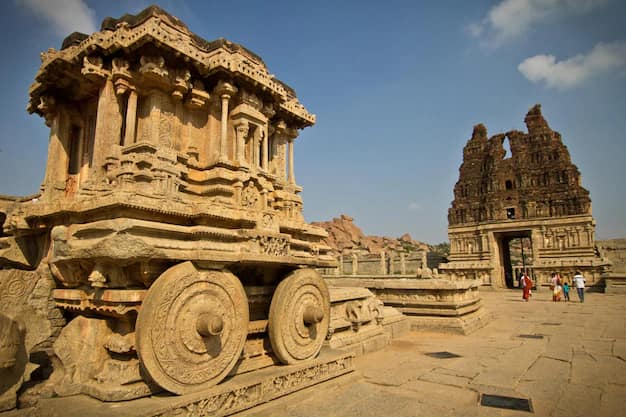
Hampi is one of the most extraordinary places in India: the ruins of Vijayanagara, once among the largest and richest cities in the world, scattered across a landscape of enormous granite boulders, banana plantations and the Tungabhadra river. For travellers from Gujarat it is a different kind of heritage trip from Rajasthan, quieter, more spread out and endlessly photogenic.
This guide covers how to reach Hampi from Gujarat, the main monuments, the best months, getting around, where to stay and a realistic plan. Opening hours and ticket rules change, so check them close to your visit.
Why is Hampi a World Heritage Site?
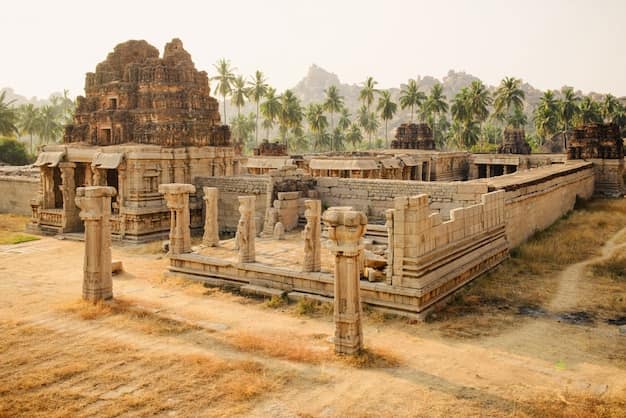
From the fourteenth to the sixteenth century, Vijayanagara was the capital of an empire that controlled most of southern India. Foreign visitors compared it with Rome, and its markets traded in horses, spices and gems. After the empire's defeat in 1565 the city was abandoned, and what remains — more than 1,600 surviving structures, from temples and palaces to aqueducts and markets — was listed by UNESCO in 1986 as the Group of Monuments at Hampi.
The empire reached its height under Krishnadevaraya in the early sixteenth century, a period of great temple building and patronage of Telugu and Kannada literature. Hampi also has a far older place in the Hindu imagination: the area is traditionally identified with Kishkindha, the monkey kingdom of the Ramayana, and many rocks, caves and hills around the village are linked with Rama, Sugriva and Hanuman. That mix of royal history and living mythology is why pilgrims and history lovers come in equal numbers.
How do you get to Hampi from Gujarat?
The nearest railway station is Hosapete (Hospet), about 13 kilometres from Hampi, with connections to Bengaluru, Hubballi and Goa; from Gujarat you will usually change trains or fly part of the way. The closest airport with regular flights is at Hubballi, about three hours by road, and Bengaluru is about six to seven hours away. A small airport near Toranagallu, around an hour away, has had limited flights. Many travellers combine Hampi with Goa, roughly eight hours by road; our Goa travel guide covers that pairing.
What should you see in Hampi?
The monuments fall into two main areas. The sacred centre runs along the river: the Virupaksha temple, still in daily worship, with its tall gateway tower; Hemakuta Hill, with small early temples and the best sunset view; the giant monolithic Ugra Narasimha and the Kadalekalu and Sasivekalu Ganesha statues; and the bazaar streets that once held the city's markets.
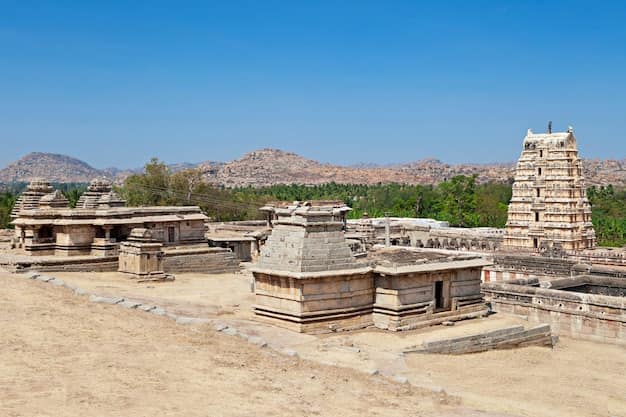
Further east, the Vittala temple complex holds Hampi's most famous sight, the stone chariot, and the so-called musical pillars, now roped off to protect them. To the south, the royal centre has the Lotus Mahal, the Elephant Stables, the Queen's Bath and the stepped tank. Across the river, Anegundi is an older village with a slower pace and coracle rides on the Tungabhadra.
How do you get around Hampi?
The sites are spread over a large area, so walking alone is not practical. Most visitors hire an autorickshaw for the day, rent a bicycle or electric scooter, or book a car with a guide. A good local guide is worth it for the first day, because the stories behind the ruins make them far more interesting. Start early: the light is better, the stone is cooler and the crowds are smaller.
When is the best time to visit?
October to February is the season, with warm days and pleasant evenings. The Hampi Utsav festival, usually held in the cool season, brings music, dance and lit-up monuments, though its dates vary from year to year. From March to May temperatures climb into the high thirties and beyond, and the bare rock makes the heat feel worse. The monsoon from June to September turns the landscape green, but heavy rain can make some paths slippery.
Where to stay and what to eat
Stay in Hampi village for easy access to the sacred centre, in Hosapete for larger hotels, or in one of the resorts and homestays around Anegundi and Kamalapur for a quieter base. South Indian vegetarian food is everywhere: dosa, idli, thali meals and filter coffee, so vegetarian and Jain travellers eat easily. Carry water, a hat and sun protection, and wear shoes with good grip for the rocky paths.
What does a three-day Hampi itinerary look like?
On the first day, explore the sacred centre on foot and by auto: the Virupaksha temple in the morning, the bazaar street, the Ganesha statues and the Ugra Narasimha, then climb Hemakuta Hill for sunset. On the second day, go early to the Vittala temple and the stone chariot, walk the riverside path past the King's Balance, and spend the afternoon in the royal centre at the Lotus Mahal, the Elephant Stables and the stepped tank.
On the third day, cross the river to Anegundi for the village, a coracle ride on the Tungabhadra and the climb to the Anjanadri hill temple, traditionally linked with the birthplace of Hanuman, which has around 575 steps and a sweeping view at sunrise or sunset. Fit travellers can also climb Matanga Hill for the classic sunrise over the ruins. If you would rather travel with a ready-made plan, our tour packages from Surat include South India heritage circuits.
Frequently asked questions
How many days do you need in Hampi?
Two to three full days covers the sacred centre, the Vittala temple, the royal centre and Anegundi without rushing.
Is Hampi suitable for senior citizens?
Yes, with a car and a guide. Many monuments are reached by short walks, but some involve uneven ground and steps; choose sunrise and late-afternoon visits to avoid the heat.
What else can you combine with Hampi?
Badami, Aihole and Pattadakal, the earlier Chalukya temples, are about three hours away. For a longer southern trip, see our Ooty, Coorg and Mysore tour guide and our Kerala travel guide.
Explera Vacations plans South India heritage tours from Surat, with trains or flights, hotels, drivers and local guides arranged. Share your dates through our contact page, or ask about our fixed-departure group tours.