Hong Kong hits you the moment the plane banks over the water: a wall of glittering skyscrapers rising straight out of the sea, green peaks behind them and the busiest working harbour you will ever see stitching it all together. It is one of the densest, most vertical cities on earth, yet it runs with almost unreasonable efficiency, English is widely spoken, and a tap-and-go Octopus card gets you onto the metro, the buses, the iconic double-decker trams and even the century-old Star Ferry. For an Indian family it is a brilliant first taste of East Asia — compact enough to cover in three or four days, wildly photogenic, and with a spare afternoon you can hop a fast ferry to Macau, the former Portuguese colony that has reinvented itself as the Las Vegas of Asia. If you are weighing up where to take the family this year, it sits comfortably alongside the other options in our round-up of the best international trips for Gujarati families, and this guide walks through how to make the most of both cities.
Victoria Peak, the Star Ferry and that world-famous skyline
The single view that defines Hong Kong is from Victoria Peak, the hill that rises above the main island. Ride the historic Peak Tram up the steep slope and the whole of Central, the harbour and Kowloon beyond unfold below you in one jaw-dropping sweep — go for late afternoon so you catch the city by day, at golden hour and lit up after dark. Down at water level, the Star Ferry has been crossing Victoria Harbour since 1888 and remains the cheapest, most atmospheric way to make the trip, while the nightly Symphony of Lights turns the towers on both shores into a free laser-and-light show at 8pm. Add a wander through the markets of Mong Kok, the giant Buddhist Tian Tan grounds, and the trams trundling through Central, and you have a first day that feels like stepping into a film set. Book Peak Tram tickets online where you can, since the queues at the lower terminus can be long on clear evenings.
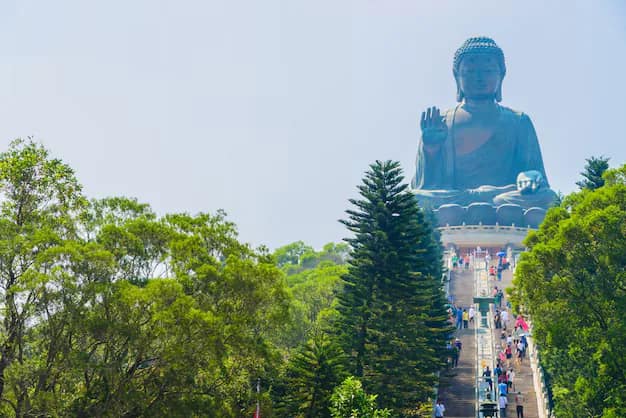
Hong Kong Disneyland, Ngong Ping 360 and Lantau's Big Buddha
Families come for the theme parks, and Hong Kong delivers two big ones. Hong Kong Disneyland on Lantau Island is compact, walkable and far less overwhelming than the larger parks, which makes it ideal for younger children and first-time visitors — our dedicated Hong Kong Disneyland family guide from India breaks down the rides, meal plans and how many days you really need. On the same island, the Ngong Ping 360 cable car glides for 25 spectacular minutes over green hills and the sea to the Tian Tan Big Buddha, a 34-metre bronze statue you climb 268 steps to reach, with the Po Lin Monastery and a car-free village alongside. Ocean Park, on the south of Hong Kong Island, blends a marine-life park with cable cars and thrill rides and is a strong rainy-day alternative. If you are the kind of traveller who likes squeaky-clean, kid-friendly Asian cities, you will find the same easy rhythm in our Singapore family itinerary from Surat, which pairs beautifully with Hong Kong on a longer East Asia loop.
The ferry to Macau: the Cotai Strip, the Venetian and the casinos
Macau sits about an hour away by high-speed TurboJet ferry across the Pearl River Delta, and it is a genuinely different world — Portuguese cobbled squares, baroque churches and the ruined facade of St Paul's on one side, and the glittering mega-resorts of the Cotai Strip on the other. The Venetian Macao is the headline act: one of the largest casino resorts on the planet, with indoor canals, gondola rides and a vast shopping mall under a painted sky, joined by neighbours like the Parisian with its half-scale Eiffel Tower and the City of Dreams. Even if you never place a bet, the Cotai resorts are worth a wander for the sheer spectacle, the family shows and the food courts. Many visitors do Macau as a long day trip from Hong Kong, but an overnight lets you see the historic old town properly and catch the resorts lit up at night. Keep in mind that Hong Kong and Macau are separate immigration zones, so you cross a border each way and should carry your passport and check the latest entry requirements before you sail.
Food, entry rules, money and the best time to go
Hong Kong is one of Asia's great food cities, from steaming baskets of dim sum in a clattering tea house to silky egg tarts, roast-goose shops and buzzing night markets. Pure-vegetarian and Jain travellers do need to plan, because much of Cantonese cooking leans on meat, seafood stock and egg, but the city has a long Buddhist vegetarian tradition — look for the dedicated Buddhist veg restaurants near the big monasteries, which serve entirely meat-free menus, and you will also find Indian restaurants in areas like Tsim Sha Tsui serving familiar thalis and dosas. It always pays to ask clearly about onion, garlic and hidden fish sauce or broth, and to carry a few staples as backup; our guide to Jain and vegetarian-friendly destinations abroad has practical tips that travel well to both Hong Kong and Macau, and the Cotai resorts have enough international food courts that finding a vegetarian meal there is rarely a problem.
On entry rules, get this right well before you fly. Hong Kong and Macau each run their own immigration systems, separate from mainland China, and both have historically offered relatively easy short visits or pre-arrival registration for many Indian passport holders — but the specifics change, so treat any rule of thumb with caution and verify the current requirements for Indians on the official government channels close to your travel date rather than relying on old advice. Our team can confirm exactly what your trip needs and handle the paperwork end to end — talk to our visa desk in Surat and we will sort it. Both cities are pricier than most of Southeast Asia, so plan a sensible daily budget, carry a mix of card and local currency using our forex and money guide for international travel from India, and never skip cover, as our travel insurance guide for Indian travellers explains why world-class but expensive medical care makes it non-negotiable. The most comfortable window is roughly late October to early December, when the humidity drops and the harbour views are sharpest, while summer brings heat, heavy rain and the odd typhoon; there are no direct flights from Gujarat, so most travellers connect one-stop through hubs such as Dubai, Bangkok or Singapore. Whatever dates you pick, reconfirm flight fares, entry rules and hotel prices near booking, as all of them move from year to year.
Frequently asked questions
Do Indians need a visa for Hong Kong and Macau?
Both run their own immigration systems separate from mainland China and have generally offered easy short visits or simple pre-arrival registration for many Indian passport holders, but the rules change — verify the current requirements on the official channels before you travel, or let our team confirm it for you.
How many days do you need for Hong Kong and Macau together?
Four to five nights is the sweet spot: three or four for Hong Kong's skyline, Disneyland and Lantau, plus a full day or an overnight across the water in Macau for the Cotai resorts and the old town.
Is Hong Kong good for a family with young kids?
Very — it is safe, spotlessly efficient, easy to get around on the metro and Star Ferry, and Disneyland here is compact and gentle enough for little ones, as our Hong Kong Disneyland family guide explains in detail.
Ready to trade the Surat routine for a skyline that lights up the harbour?
Our team can package the whole Hong Kong and Macau trip end to end — well-placed hotels, Peak Tram and Ngong Ping tickets, the ferry across to the Cotai casinos and your entry paperwork handled so you land relaxed. Message us on WhatsApp or through our contact page, or browse our tour packages from Surat to start shaping your itinerary.