Ireland is a small island that punches far above its size, and for a first-time traveller from India it delivers a very particular kind of magic: the literary pubs and Georgian squares of Dublin, the sheer 200-metre wall of the Cliffs of Moher dropping into the Atlantic, and the Ring of Kerry, a loop of mountain passes, lakes and sea-cliffs that ranks among Europe's great drives. English is the everyday language, the welcome is genuinely warm, and the whole country is compact enough that you can pair a lively capital with wild coastline in a single relaxed week. The one thing many Indian travellers get caught out by is the paperwork, because Ireland is not part of the Schengen area and does not share the United Kingdom's visa either, so it needs a visa application of its own. Before you fall for the green hills and the fiddle music, it helps to understand how the pieces fit together into a comfortable trip.
Dublin: pubs, poets and an easy first few days
Dublin is where almost every Irish trip begins, and two or three days is enough to fall for it. The compact centre folds together the cobbled cultural quarter of Temple Bar, the calm quads and 9th-century Book of Kells at Trinity College, the grand Georgian doorways of Merrion Square, and a pub culture built as much on live music and conversation as on the famous local stout. Add the Guinness Storehouse with its rooftop city views, a stroll along the River Liffey and a green afternoon in St Stephen's Green, and you have a full, unhurried introduction to the country. Dublin is also where you will land, with one-stop connections from Gujarat via the Gulf or Europe, and it is a natural anchor for a wider trip; if this is your very first time on the continent, our Europe first-timer itinerary from India shows how a friendly, English-speaking city like this eases you in.
The Cliffs of Moher, the Ring of Kerry and the Wild Atlantic Way
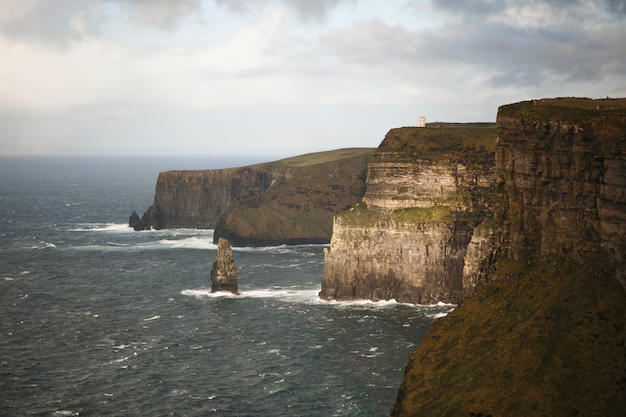
The Cliffs of Moher are the image that pulls most people to Ireland, and in person they more than live up to it: a wall of dark rock rising as high as roughly 214 metres, running for about eight kilometres along the edge of County Clare, with the Atlantic thundering below and seabirds wheeling in the wind. They sit around three hours west of Dublin, and most first-timers reach them either on a long day tour or, better, as part of a slow drive down the Wild Atlantic Way, the 2,500-kilometre coastal route that strings together the whole rugged western seaboard. Nearby you will find the strange limestone moonscape of the Burren and the pretty harbour village of Doolin, the traditional-music heart of the region. Weather here changes by the hour, so pack a warm waterproof layer whatever the month, and know that whipping wind and sideways rain are part of the drama rather than a spoiled day. To judge when the light and crowds suit you best, our month-by-month guide to the best time to visit Europe lays out the trade-offs season by season.
If the Cliffs of Moher are the single image, the Ring of Kerry is the day that ties the trip together: a roughly 180-kilometre loop around the Iveragh Peninsula in the south-west, past the lakes and oak woods of Killarney National Park, over the heather-clad Molls Gap, along beaches and stone forts and out to fishing villages like Sneem and Portmagee, from where boats run to the jagged monastic island of Skellig Michael. Most travellers base themselves in the lively town of Killarney and drive or tour the ring in a single unhurried day, while the neighbouring Dingle Peninsula is an equally lovely, quieter alternative if you have the time, and the whole green south-west pairs beautifully with the harbour city of Cork and the kiss-the-stone ritual at nearby Blarney Castle. Travellers who catch the Irish bug often add the neighbouring islands to the same journey, and our Scotland, Edinburgh and Highlands travel guide from India shows how the two make a natural pair.
The Ireland visa: separate from Schengen and the UK
This is the part to get right early, because Ireland runs its own immigration system. It is not a Schengen country, so a Schengen visa will not admit you, and it is not covered by a UK visa either, so if you are combining Ireland with Britain you generally need both visas separately, and our UK visa guide from Gujarat is worth reading only to note that Ireland is a separate application on top of it. An Indian passport holder applies for an Irish short-stay tourist visa with the usual supporting file: a passport valid well beyond your stay, confirmed flights and hotels, bank statements and proof of funds, employment or business papers and travel insurance. Processing times vary and can run into several weeks in busy periods, so apply well ahead and never book non-refundable tickets before the visa is granted; for a broader view of documents you can lean on our overview of passport and visa services across Gujarat. Because the Irish process has its own quirks, it pays to have someone who files these regularly check your paperwork, and our team can help you apply for your Ireland visa end to end from Surat.
Getting around, seasons, money and vegetarian food
Ireland is small and easy, but the west is best seen by road, so many travellers hire a car for the Cliffs of Moher and the Ring of Kerry while relying on trains and buses between Dublin, Cork and Galway; remember that driving is on the left, as in India, and that rural roads are narrow and slow. The warmest, greenest and busiest months run roughly May to September, with long northern daylight stretching well into the evening, while spring and early autumn bring thinner crowds and softer prices at the cost of more changeable weather. The currency in the Republic is the euro, though Northern Ireland uses the pound sterling, so if you cross the border you will juggle two, and our forex and money guide for international travel from India explains how to split cash and card sensibly. Do not skip cover either, since medical care abroad is costly and Irish visa files expect it, so read our travel insurance guide for Indian travellers before you buy. Vegetarians and Jain travellers manage comfortably, with Indian restaurants in Dublin, Cork and Galway, and Irish menus increasingly marking veg and vegan options, though it always helps to ask about stock and ingredients in traditional dishes.
Frequently asked questions
Do Indians need a visa for Ireland, and does a Schengen or UK visa work?
Yes, Indian passport holders need an Irish visa, and neither a Schengen nor a UK visa covers Ireland, so it is a separate application you can plan with help from our visa desk in Surat.
How many days do you need for Ireland?
A comfortable first trip is about seven to eight days, roughly two to three in Dublin and the rest exploring the west and south-west around the Cliffs of Moher and the Ring of Kerry, ideally by hired car.
When is the best time to visit Ireland?
Late spring to early autumn, around May to September, brings the mildest weather and longest daylight, though rain is possible in any season, so a warm waterproof layer is essential year-round.
Ready to turn this into a booked holiday?
Explera Vacations plans the whole Irish route from Surat, from your separate Ireland visa file to a Dublin base, a self-drive along the Wild Atlantic Way and vegetarian-friendly stays around Killarney, so you only have to pack. Message us on WhatsApp or contact our travel desk to get started, and browse our tour packages from Surat for ready-made itineraries you can shape to your own dates.