Poland is the Europe trip that quietly over-delivers: Krakow has one of the largest and best-preserved medieval market squares on the continent, the Wieliczka salt mine hides an entire underground chapel carved by hand, and your rupee simply stretches further here than in Paris or Zurich. It is also a country that asks you to slow down, because just outside Krakow lies the Auschwitz-Birkenau memorial, a place of remembrance that stays with visitors long after they leave. For a first-timer flying out of India, Poland works both as a standalone week and as a rewarding addition to a wider Europe first-timer itinerary from India. This guide walks you through the cities, the history, the seasons, the visa and the practical bits, all framed for travellers from Gujarat.
Why Poland belongs on your Europe list
Poland rewards travellers who want depth without the crowds and price tags of western Europe. Krakow, the old royal capital, escaped wartime destruction and kept its Gothic and Renaissance heart intact, while Warsaw was flattened and then painstakingly rebuilt, giving the two cities very different personalities. Between them you get grand squares, riverside castles, hearty food, an easy and safe walking culture, and museums that treat 20th-century history with real seriousness. Because distances are short and trains are comfortable, you can cover the highlights in about a week, and the country slots naturally alongside a Prague, Budapest and eastern Europe itinerary from India if you want to string several capitals together on one Schengen visa.
Krakow old town and Wawel Castle
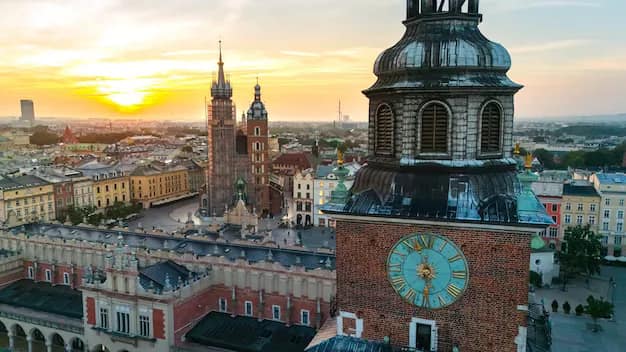
Most trips begin in Krakow, and rightly so. The Rynek Glowny, its enormous main market square, is ringed by cafes and dominated by the Cloth Hall and the twin-towered St Mary's Basilica, from which a trumpeter still plays a broken-off tune on the hour. A short walk south brings you to Wawel Hill, where the castle and cathedral sit above the Vistula river and hold centuries of Polish royal history, plus the legend of a dragon whose statue breathes real fire by the riverbank. Give yourself time to wander the Kazimierz district too, the old Jewish quarter that is now full of atmospheric bars, galleries and food. Krakow is compact enough to explore on foot, and evenings on the square, with the towers lit up, are one of the simple joys of the trip.
The Auschwitz-Birkenau memorial: a place of remembrance
About 90 minutes west of Krakow lies Auschwitz-Birkenau, the former German Nazi concentration and extermination camp where more than a million people, most of them Jews, were murdered. It is not a sightseeing outing but a place of remembrance and reflection, and it is visited quietly and respectfully; entry is free, though a booked educator-led tour is required during busier hours, so reserve a time slot in advance through the official memorial. Dress modestly, keep phones away inside the exhibition spaces where asked, and allow at least three to four hours across the two sites. Many travellers describe it as the most important few hours of their whole trip. Consider it a moment to bear witness rather than an item to tick off, and plan a gentler evening back in Krakow afterwards.
The Wieliczka salt mine
For a complete change of mood, the Wieliczka salt mine on Krakow's southern edge is one of Europe's most surprising sights. Miners spent centuries carving not just tunnels but full chambers, statues and even a soaring underground chapel, all from grey rock salt, complete with salt chandeliers. The standard tourist route descends many wooden stairs and winds through cool, dimly lit galleries with a guide, so wear comfortable shoes and a light layer even in summer. It is deservedly popular, so book ahead and expect timed entry. Together with the old town and Wawel, it rounds out a Krakow base that easily fills three full days before you move on.
Warsaw: the rebuilt capital
Warsaw is the modern counterweight to Krakow's medieval charm. Its old town, reduced to rubble in the Second World War, was reconstructed so faithfully from paintings and photographs that it is now recognised as a feat of restoration in its own right, and its pastel market square feels centuries old despite being decades young. Beyond it you get a fast, glassy business district, excellent museums on the Warsaw Uprising and Polish history, riverside parks and a lively food and cafe scene. It is well worth two days, and the express train from Krakow covers the distance in roughly two and a half hours, making a two-city trip genuinely easy. Warsaw is where you see how far Poland has come, which makes it a fitting place to end.
When to go
Poland has four distinct seasons, and your timing shapes the trip. Late spring through early autumn, roughly May to September, gives you long days, green parks and the most comfortable weather for walking the squares and visiting the memorial and mine. Winters are cold and can be snowy, but December turns Krakow's main square into one of central Europe's loveliest Christmas markets, which pairs well with our European Christmas markets guide from India. Shoulder months keep crowds and prices down while staying pleasant. For a wider month-by-month view of weather, crowds and costs across the continent, our best time to visit Europe guide is a useful companion before you fix dates.
Visa: Poland is a Schengen country
Poland is part of the Schengen area, so travellers from India apply for a short-stay Schengen visa rather than a Poland-specific one, and once granted it lets you cross into Germany, Czechia, Austria and beyond without further checks. You will generally need a valid passport, confirmed flights and hotels, travel insurance, bank statements and proof of ties to India, though requirements do change, so always verify the current checklist with the official visa centre before applying. Our detailed Schengen visa guide from Gujarat and the more local Schengen visa from Surat guide break the process down step by step, and if you are weighing which country to lodge through, our note on the best Schengen country to apply from in Gujarat is worth a read. When you are ready to file, you can begin the Schengen visa application with our team, and apply well ahead as slots fluctuate seasonally.
Getting there from Gujarat, and eating vegetarian or Jain
There are no direct flights from Surat or Ahmedabad to Poland, so most travellers connect through a Gulf or European hub such as Dubai, Doha, Abu Dhabi or Istanbul, with one stop being typical into Krakow or Warsaw. Fares swing widely with season and how early you book, so stay flexible with dates rather than fixing on a fare you saw once. On food, Polish cooking leans on meat, but both cities have plenty of vegetarian and vegan restaurants, well-stocked supermarkets and a scattering of Indian eateries, so vegetarians eat well with a little care to check for meat stock. Strict Jain travellers will want to plan meals and carry some staples; our guide to Jain and vegetarian-friendly destinations abroad has practical tips for exactly this kind of trip.
Budget, money and insurance
Poland is one of the better-value corners of the Schengen zone, which is a big part of its appeal. The local currency is the zloty rather than the euro, and while hotels, tickets and sit-down meals still add up, they typically cost noticeably less than in western Europe, so build a realistic daily buffer and verify current prices rather than relying on old figures. Carrying a mix of a forex card and a little cash works well, and contactless payment is widely accepted. Travel insurance is not optional here: it is a mandatory part of the Schengen visa application and genuinely useful on a trip with long travel days, so read our travel insurance guide for Indian travellers before you buy a policy, and keep digital and paper copies of your key documents.
Frequently asked questions
How many days do I need for Poland?
About a week is ideal: three days in Krakow for the old town, Wawel, the salt mine and the Auschwitz-Birkenau memorial, plus two days in Warsaw, with a spare day for slower exploring or a side trip.
Do I need to book the Auschwitz-Birkenau memorial in advance?
Yes, especially in the busier hours when an educator-led tour is required; reserve a time slot through the official memorial ahead of your visit, and always verify current entry rules as they can change.
Can I combine Poland with other countries on the same Schengen visa?
Generally yes, a Schengen visa lets you travel across the whole area, so pairing Krakow with Prague, Budapest, Vienna or Berlin is easy, but confirm your specific visa's validity and conditions before planning border crossings.
Ready to stand on Krakow's great square, descend into the salt mine and pay your respects at the memorial?
Explera Vacations can handle it end to end, from your Schengen file to flights, hotels and a smartly paced Poland itinerary. Message our team on WhatsApp or contact us to start planning, and explore our curated tour packages from Surat for ideas on combining Poland with the rest of Europe.