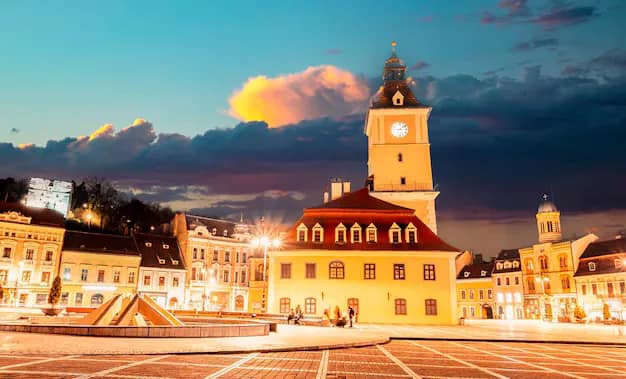
Riga rarely makes the first Europe list from Gujarat, and that is precisely why it rewards you. Latvia's capital gives you a UNESCO-listed medieval core of cobbled lanes and guild houses, the densest concentration of Art Nouveau architecture anywhere in Europe, a vast produce market housed inside old Zeppelin hangars, and a pine-and-sand beach town thirty minutes away by train — at prices that feel genuinely kind after Paris, Zurich or Amsterdam. Latvia sits inside the Schengen area, so the same Schengen visa that opens Germany or France works here too, and our visa desk in Surat handles the file end to end for Gujarat travellers.
Getting to Riga and choosing your season
There are no non-stop flights from India to Riga, so you will connect once — commonly through Helsinki, Istanbul, Frankfurt, Munich, Warsaw or a Gulf hub, with airBaltic operating many of the final legs from European cities. Total journey time from Ahmedabad or Mumbai is usually in the 12 to 16 hour band depending on layover, and fares are typically softest in the shoulder months; our team arranges flights out of Surat with the connections that actually make sense rather than the cheapest-looking ones. Riga International Airport (RIX) is only around 10 km from the centre, linked by city bus and taxi, and getting into town takes well under half an hour. On timing, Riga runs to two very different moods. June to August brings warm, gentle days and light that lingers close to 10 pm, which is when the old town terraces, park concerts and Jurmala beach are at their best. December swings the other way — short, cold, snow-dusted days, but a genuinely lovely Christmas market on Doma laukums in a city that claims the first decorated Christmas tree back in 1510; if that is your pull, read our European Christmas markets round-up alongside the month-by-month Europe weather guide. April, May and September are quieter and cheaper, with a real chance of grey days.
The UNESCO old town and the House of the Blackheads
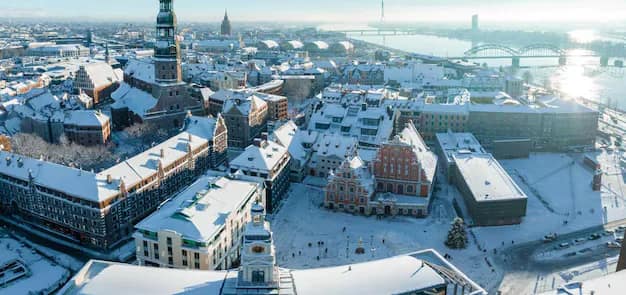
Vecriga, the old town, earned its UNESCO World Heritage listing in 1997 and is small enough to cross on foot in fifteen minutes — which is the point, because you will keep circling back. The centrepiece is the House of the Blackheads on Town Hall Square, a fantastically ornate red-brick facade built for a medieval guild of unmarried foreign merchants; the original was wrecked in 1941 and cleared in the Soviet years, and what stands today is a meticulous reconstruction completed around 2000, with cellars and halls open as a museum. Around it, work through Riga Cathedral and its enormous organ, the spire lift at St Peter's Church for the best rooftop view in the city, the Three Brothers houses on Maza Pils iela, the Swedish Gate, the Cat House with its famously mischievous rooftop cats, and the Powder Tower housing the war museum. Give it two unhurried days and add the Freedom Monument and Bastejkalns park just outside the medieval line. Most sights charge modest entry, several close one day a week, and hours shift by season — verify current opening times before you build a tight schedule.
The Art Nouveau district, Riga's real signature
This is what makes Riga architecturally unmatched. Roughly a third of central Riga's buildings are Art Nouveau — Jugendstil — built during a frantic construction boom around 1900, and nothing else in Europe comes close in density. Walk north out of the old town to Alberta iela, then loop through Elizabetes iela and Strelnieku iela, and look up: screaming masks, sphinxes, peacocks, mythic faces and sinuous ironwork stacked five storeys high, much of it by Mikhail Eisenstein, father of the filmmaker Sergei. The Riga Art Nouveau Centre on Alberta iela has a restored period apartment with an exquisite spiral staircase, and is the one indoor stop worth booking. Go in the morning for light on the facades, and budget an hour or two more than you think — this is a district you photograph slowly.
Central Market, Latvian food and eating vegetarian
Riga Central Market is one of the largest markets in Europe and sits in five converted German Zeppelin hangars beside the railway, a short walk from the old town. Wander the pavilions for dark rye bread, smoked fish, curd cheese, forest berries, honey and pickles, then eat in the gastro hall where small counters serve everything from Latvian classics to Georgian and Asian plates. Traditional Latvian cooking is heavy on pork, herring and dairy, so vegetarians should plan a little: grey peas are usually cooked with bacon, and soups often start from a meat stock, so ask directly. The good news is that Riga has dedicated vegetarian and vegan cafes, a well-known Hare Krishna style canteen near Barona iela, and a handful of Indian restaurants in and around the centre — enough that no one goes hungry. Jain travellers should still carry theplas, khakhra and ready mixes, and it is worth confirming individual restaurants are still trading before you plan a meal around one. While you are in the area, the Academy of Sciences tower nearby has an open observation deck with a fine view over the market roofs and the Daugava.
Jurmala, and stitching Riga into the Baltic capitals route
Jurmala is Riga's beach escape: a 25 km ribbon of white sand and pine forest reached by suburban train from Riga Central Station in roughly thirty to thirty-five minutes, with Majori the usual stop. Spend the day on Jomas iela's pedestrian strip, walk among the wooden dacha villas, climb the Dzintari forest park tower, and if you have energy left, continue to Kemeri National Park for its raised bog boardwalk — genuinely one of the strangest, most beautiful short walks in the Baltics. Riga also works best as the middle of a three-capital run. Comfortable long-distance coaches connect Vilnius to Riga in about four hours and Riga to Tallinn in roughly four and a half, so eight to twelve days covers Lithuania, Latvia and Estonia at a civilised pace. From Tallinn a two-hour ferry drops you in Helsinki, and overnight ferries link Riga with Stockholm, which makes it easy to bolt this on to our Stockholm city guide or the Copenhagen guide. First-time Europe travellers should read our beginner Europe itinerary before locking the route — the Baltics reward slow travel more than checklist travel.
What it costs, plus practical tips
Affordability is Riga's quiet superpower. Latvia uses the euro, but restaurant meals, museum entries, taxis and public transport all sit noticeably below western European levels, and a mid-range hotel inside or beside the old town costs a fraction of the equivalent in Scandinavia — you can eat well and stay central without the usual Europe sticker shock. We will not quote figures that go stale, so treat every price you see online as indicative and verify current rates when you book; our hotel booking desk can hold options across price bands while you decide. Practical notes: cards and contactless work almost everywhere, ATMs are plentiful, tap water is safe to drink, tipping around ten percent is appreciated but not compulsory, and English is widely spoken in the centre alongside Latvian and Russian. Buy trams and buses tickets via the e-talons card or the app rather than paying the higher onboard fare. Pack layers even in July, because Baltic evenings turn cool, and treat proper winter kit as non-negotiable from November to March. Schengen rules also require travel medical insurance with a minimum cover level for your visa file, so arrange travel insurance before your appointment and verify current requirements, as thresholds and documentation are periodically updated.
Frequently asked questions
Do Indian passport holders need a visa for Latvia?
Yes. Latvia is a full Schengen member, so you will need a short-stay Schengen visa, applied for at the mission or visa centre handling Latvia, or at the country where you will spend the most nights if Riga is only one stop on a multi-country trip. Appointments, document lists and processing times change through the year, so start six to eight weeks ahead and verify current rules — our Gujarat Schengen application walkthrough covers the paperwork in detail.
How many days should I give Riga?
Two full days cover the old town, the Art Nouveau district and the Central Market comfortably. Add a third for Jurmala, and plan eight to twelve days if you want Vilnius and Tallinn in the same trip. If you are combining several Schengen countries, keep proof of your bookings and your insurance documentation organised, as border officers may ask.
Is Riga worth visiting in winter?
If you want snow, Christmas markets, cheap hotels and near-empty museums, yes — just accept short daylight and temperatures that regularly sit below freezing. For long evenings, beach days and outdoor dining, come between June and August instead.
Ready to put Riga on your calendar?
Tell us your dates and we will build the flights, hotels, Jurmala day trip and Baltic coach legs into one clean plan, with the Schengen file handled alongside it — start by exploring our curated holiday packages or the ready-made tours departing from Surat, then get in touch with our travel consultants for a tailored quote.