Half an hour outside Lisbon, the flat coastal light gives way to a green hill that seems to hold its own weather. That hill is Sintra — a UNESCO-listed cluster of palaces, ruined ramparts, tunnels and gardens tucked into a damp Atlantic forest. For travellers flying out of Gujarat, it is one of the few European day trips where the postcard genuinely undersells the place. It is also, honestly, one of the easiest day trips to get wrong. This guide is written the way we brief our own clients at the counter: what to book, what to skip, and how to avoid the very common outcome of spending eight hours in Sintra and seeing almost nothing.
Why Sintra is the best day trip in Portugal
Portuguese royalty and wealthy romantics spent two centuries building follies on this ridge, and the result is a hilltop where a 9th-century Moorish fortress, a canary-yellow-and-red 19th-century palace, and a mystic's garden with an underground spiral well all sit within a few kilometres of each other. The forest itself is part of the appeal — Sintra sits in a microclimate that traps Atlantic moisture, so ferns, moss and camellias grow where the rest of Portugal is dry scrub. If your Europe itinerary already includes Lisbon, Sintra is the single highest-return day you can add. If you are still choosing where in Europe to go at all, our comparison of the Azores islands as a Portugal add-on covers the other direction the same trip can take.
Getting there: Rossio station, and getting to Portugal from India
From Lisbon, the Sintra line runs direct from Rossio station in the city centre, and the ride takes roughly 40 minutes with trains every 20–30 minutes through the day. No booking needed, no reserved seats — you tap a rechargeable transit card and go. Sintra's station is a 10-minute walk from the historic centre, and the tourist bus route starts near there. From India, there is no direct Surat–Lisbon service; most of our clients connect through a Gulf hub or a European hub into Lisbon and treat Sintra as day two or three, once the jet lag has loosened. Portugal is a Schengen member, so a single Portugal Schengen visa application covers the whole trip — and if you are weighing which embassy to file with, read our note on choosing the right Schengen embassy from Gujarat before you lock flights.
Tickets and crowds are the whole game
This is the section to read twice. Sintra's major sites — Pena Palace above all, and increasingly Quinta da Regaleira and the Moorish Castle — run on timed-entry tickets, and in peak season (roughly May to September, plus Easter and the year-end weeks) the good slots sell out days in advance. Turning up at 11am without a ticket, in July, is how people end up queuing 90 minutes for a bus, missing their entry window, and going home having seen a gate and a gift shop. Say it plainly: book online, choose the earliest slot available, and be at the site when it opens. The first ninety minutes of the day at Pena, before the tour coaches arrive, are a completely different experience from the same rooms at 1pm. Verify current rates and book timed entry ahead — official pricing changes seasonally and we do not quote fixed figures that go stale.
The palaces compared, honestly: pick two, not five
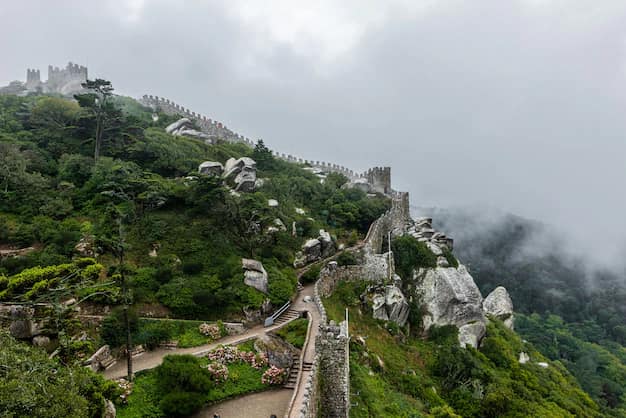
Every Sintra list names five or six sites. Almost nobody sees more than three properly in a day. Pena Palace is the icon — the red-and-yellow romanticist palace on the summit, with the best interiors and by far the worst crowds; its park is large and worth an extra hour. The Castle of the Moors is the opposite: no interiors, just kilometres of restored ramparts along a ridge, and on a clear day the finest views in the region. Quinta da Regaleira is the atmospheric favourite — a Gothic-revival estate whose gardens hide grottoes, tunnels and the famous Initiation Well, a nine-storey inverted spiral staircase descending into the rock; it rewards slow wandering more than any other site here. Monserrate sits further out, is the quietest of the four, and its Mughal-influenced palace and subtropical garden feel oddly familiar to Indian eyes. Our honest pairing advice: Pena plus Regaleira for first-timers, or Moorish Castle plus Monserrate if you have been before or dislike crowds.
Getting between the sites: the hill is steeper than it looks
Sintra's centre sits at the bottom; the castle and Pena sit several hundred metres above it on a winding road with no footpath worth the name. Walking up is possible on forest trails and takes 40–60 sweaty minutes; for most visitors — and certainly for families and older parents — the 434 tourist bus, a tuk-tuk or a taxi is money well spent. The bus loops one way, so plan your order around it rather than backtracking. Tuk-tuks are negotiable and useful for the Monserrate and Regaleira side, which the main loop serves less well. Inside the Moorish Castle, be realistic: the ramparts are a lot of uneven stone steps with drops on either side, wet and slick after rain, and there is no shortcut once you commit to a section. Good grippy shoes are not optional here.
Weather: Sintra makes its own mist
Lisbon can be 30°C and cloudless while Sintra is 19°C, grey and dripping — the hill pulls moisture off the Atlantic and wraps itself in cloud, often burning off only by midday, sometimes not at all. Do not pack for Sintra by looking at the Lisbon forecast. Carry a light layer and something water-resistant even in July; in winter and shoulder season add a proper jacket. The mist is not purely a problem — the Moorish ramparts drifting in and out of cloud is exactly the image most people come for — but if ridge-top views matter to you, keep an alternative afternoon in your back pocket.
Food, vegetarian options and the local pastries
Sintra's two signature sweets are travesseiros (flaky almond-cream pillows) and queijadas (small cinnamon-and-cheese tarts); both are egg-and-dairy based and both are worth the queue at the old bakeries near the town centre. For meals, the historic centre and the streets around the station have plenty of cafés, and Portugal has become far easier for vegetarians than it was a decade ago — grilled vegetables, soups, rice dishes, omelettes, bread and cheese are everywhere, and Lisbon (where you will likely sleep) has several full Indian and vegetarian restaurants. Jain travellers should still plan on carrying backup snacks; onion and garlic are near-universal in Portuguese cooking. Palace cafés inside the sites are convenient but pricey, so eating in town before you go up is the better move.
What it costs: hedged ₹ ranges
Treat these as planning brackets, not quotes. Per person, a Sintra day typically runs ₹2,500–₹5,000 for two site entries, ₹300–₹800 for the return train from Lisbon, ₹500–₹1,500 for the tourist bus or shared tuk-tuk hops, and ₹1,200–₹2,500 for food and pastries — call it ₹5,000–₹10,000 for a comfortable day, more if you add a third palace or private transport. The larger costs sit upstream: flights, Lisbon accommodation, and the visa file itself. Always verify current rates and book timed entry ahead, and budget separately for travel insurance that meets Schengen requirements — it is mandatory for the visa, not optional.
A realistic one-day plan — and why an overnight beats it
If it must be a day trip: catch a train from Rossio by 8:00–8:30, go straight up to your first timed entry at opening, spend the late morning at Pena or the castle, come down for a late lunch and pastries in town, then walk to Quinta da Regaleira for a slower afternoon, and take an early-evening train back. That is a full, satisfying day with two sites and a bit of breathing room. But the better answer, if your itinerary allows, is to sleep in Sintra one night. The day-trip crowds vanish after 6pm, the town becomes quiet and cool, you get the palaces at opening without a dawn train, and you can add Cabo da Roca or the Monserrate gardens without rushing. We book this pairing often through our hotel booking desk in Surat, usually one Sintra night dropped into the middle of a Lisbon stay.
Frequently asked questions
Do I need a separate visa for Portugal, or does any Schengen visa work? Portugal is in the Schengen area, so a valid Schengen visa issued by any member state lets you enter — but the rules on which country you should apply *to* are strict, and getting it wrong is a common refusal ground. If your trip is Portugal-heavy, apply to Portugal. If you already hold a valid Schengen sticker, our guide to countries you can enter on an existing Schengen visa explains the boundaries.
What has changed at the European border for Indian passport holders? The EU's new entry-exit system now records biometrics — fingerprints and a facial image — at first crossing, which adds time at arrival counters, especially at busy hubs. We cover the practical implications in our explainer on the EU EES biometric border checks. It does not change your visa; it changes how long your first Schengen entry takes.
My last Schengen application was refused. Is it worth trying again for this trip? Usually yes, provided you understand exactly why it was refused and fix that specific gap rather than resubmitting the same file. Weak financials, thin travel history, unclear ties to India and inconsistent itineraries are the usual culprits — read why Schengen visas get refused and how to reapply, then bring the refusal letter to our Surat visa consultants so the second file is built around the actual objection.
Ready to put Sintra into a real itinerary? Our team plans Portugal trips end to end for travellers across Surat and Gujarat — visa file, Lisbon flight bookings from Surat, hotels, and timed-entry palace tickets booked before they sell out. Browse our curated Europe tour packages from Surat or get in touch with Explera Vacations and we will build the days around the weather, the crowds and the pace you actually want.