
The word visa gets used as if it means one thing, but for an Indian passport holder it can mean half a dozen very different processes — from walking straight through immigration with nothing extra, to a three-week wait for a stamped sticker after an interview at a consulate. Knowing which type your destination actually uses is what decides whether you apply on your phone in ten minutes or start planning two months ahead. The honest headline is that the Indian passport is genuinely improving — travellers can reach a meaningful number of countries either visa-free or with a visa-on-arrival — but these lists and rules change constantly, and one country can offer several visa types at once depending on why and how long you are going. This guide explains each visa type in plain language, so that when you read a destination guide or an official website you know exactly what you are looking at. Wherever we quote counts they are rough and current-ish; always confirm the live requirement for your specific trip before you book.
Visa-free and visa-on-arrival — the relaxed end of the spectrum
The easiest category is visa-free entry, where your Indian passport alone is enough and immigration simply stamps you in on arrival for a set number of days — no form, no fee, no advance approval. A step up in effort is visa-on-arrival, where you do need a visa but you obtain it at the airport when you land, usually by filling a short form, paying a fee and sometimes queueing; the key risk is that approval is not guaranteed, so a refused visa-on-arrival can mean being sent home. It is easy to blur the two, but the practical difference is huge: visa-free means nothing can go wrong at the counter, while visa-on-arrival still involves a decision by an officer after you have flown. For a current sense of where each applies, our visa-free countries for Indian passport holders and visa-on-arrival countries for Indians guides are the place to start — and both warn, rightly, that lists shift with diplomatic and seasonal changes, so treat any count as roughly accurate and verify before you fly.
eVisa and eTA — the permits you arrange online
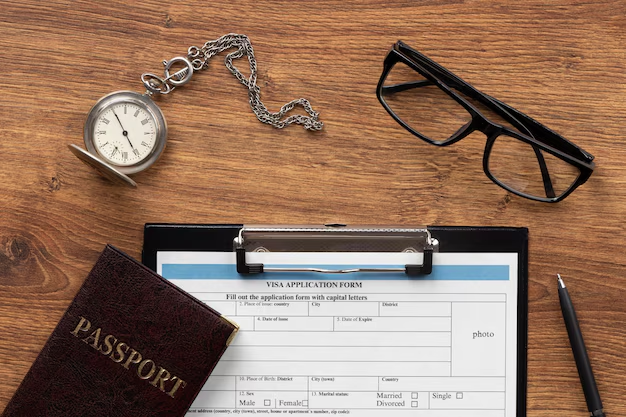
Between the extremes sit two online categories that cause the most confusion. An eVisa is a real visa you apply for on a website before you travel: you upload your passport, a photo and details, pay a fee, and receive an electronic approval by email that you carry as a printout or on your phone — no consulate visit needed. An eTA, or Electronic Travel Authorisation, is not technically a visa but a lighter pre-screening you also do online; it is common for otherwise visa-free arrangements and simply registers you before you board. The two feel similar on your screen, but an eVisa usually means the country would otherwise require a full visa, whereas an eTA sits on top of a visa-free or near-visa-free entry. Thailand is the current cautionary example many Gujarati families get wrong — it is not simply visa-free anymore, and now typically involves a visa-on-arrival or e-visa route plus a mandatory Thailand Digital Arrival Card, so it is exactly the kind of destination where you should confirm the live rule rather than rely on last year's trip. Because eVisa and eTA systems are updated frequently, always apply through the official portal for your destination or let our visa desk in Surat confirm which one your trip needs.
The sticker or consular visa, the interview, and transit visas
The most involved category is the traditional sticker visa, also called a consular visa, where you submit your passport to an embassy, consulate or an authorised visa centre and they physically affix a visa to a page. This is what powerful, high-value destinations use — a Schengen visa from Gujarat for Europe, a US B-1/B-2 visa from Gujarat for America — and it typically means biometrics, a stack of documents proving your funds and ties to India, and often a personal interview where a consular officer decides whether to trust your intentions. The interview is not something to fear if your papers are honest and consistent, but it is the reason these visas need weeks of lead time and cannot be left to the last minute. Separate from all of this is the transit visa, a short permit for passing through a country on the way somewhere else rather than visiting it; whether you need one depends entirely on whether you leave the airport's international zone, and the details differ sharply by hub, which our dedicated transit visa guide for Indian travellers breaks down airport by airport. If you would rather not manage document collection yourself, our passport and visa services across Gujarat explain how the sticker-visa process is handled locally.
Purpose and duration — tourist, business, student, single or multiple entry
The same country will often issue different visas depending on why you are going. A tourist visa is for holidays and visiting family and usually bars you from paid work; a business visa covers meetings, conferences and negotiations but not local employment; a student visa is for enrolling in a course and comes with its own proof of admission, funds and sometimes health checks, as our student visa guide for the UK, Canada and Australia sets out. Applying under the wrong purpose is a classic cause of refusal, so match the visa to the true reason for your trip. Two more terms decide how you can use a visa once granted: single entry lets you enter the country only once, while multiple entry lets you come and go repeatedly within the visa's life — which matters if you are hopping between neighbouring countries or making several trips in a year. Just as important is the distinction between validity and length of stay: validity is the window during which the visa can be used, whereas the permitted stay is how many days you may remain per visit, and the two are rarely the same number.
So which visa type do you actually need? Work backwards from three questions — where are you going, why, and for how long — and the category usually reveals itself. A short beach holiday somewhere visa-free or visa-on-arrival needs almost nothing; a European or American trip means a full sticker visa and real lead time; a work conference needs a business visa, and studying abroad needs a student visa arranged months ahead. The powerful visas are worth understanding for a bonus reason too: holding a valid US, UK or Schengen visa can unlock easier entry to a string of other countries, which is the whole idea behind our power visas for Indian travellers guide. Because every one of these definitions is general and the exact type, fee and rule depends on your destination and can change without much notice, the safest move is always to confirm the current requirement for your specific trip on the official source or with a visa desk before you commit money.
Frequently asked questions
Is an eVisa the same as a visa-on-arrival?
No — an eVisa is approved online before you fly and printed or saved on your phone, while a visa-on-arrival is issued only after you land and is not guaranteed, so a wasted flight is the risk if you are refused at the counter.
Do I still need a visa if I am only changing planes?
Sometimes yes and sometimes no, depending entirely on whether you leave the airport's international zone and on the specific country; our transit visa guide for Indian travellers explains it hub by hub, and the USA is the notable case that requires a full visa even to transit.
Which visa type takes the longest to get?
The traditional sticker or consular visa — like Schengen or US visas — because it can involve biometrics, heavy documents and an interview, so start those weeks or even a couple of months before your travel date rather than close to it.
Still unsure which visa your trip needs?
Tell us the destination, the reason and your dates, and we will match it to the right visa type and handle the paperwork — Explera Vacations helps Surat and Gujarat travellers get every visa category right the first time, so message our team on WhatsApp or contact us, and let our visa desk in Surat confirm the current rule for your specific journey before you book anything.