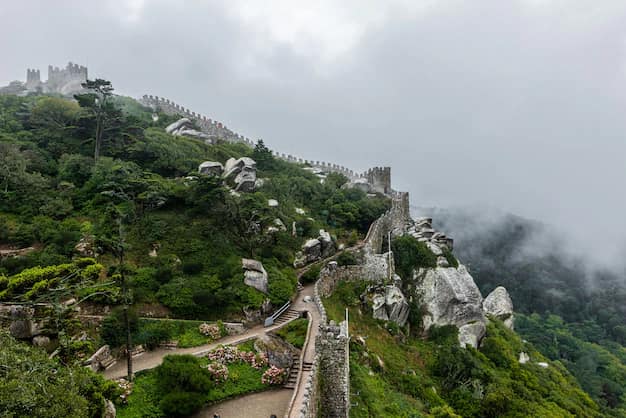
Most travellers from Gujarat go to Greece for the islands — the blue domes, the ferries, the long lunches by the water. Meteora is the other Greece, three hours inland from Athens by train, where grey sandstone pillars rise straight out of a green plain and monasteries sit on top of them as if they had been placed there by hand. It is one of the few places we recommend that genuinely surprises people who have already seen a lot of Europe. This guide covers how to get there from India, when to go, the six monasteries that remain open, what to wear, how hard the climbs really are, and how to fit it into a wider Greece trip without rushing.
Why Meteora is one of Europe's most improbable places
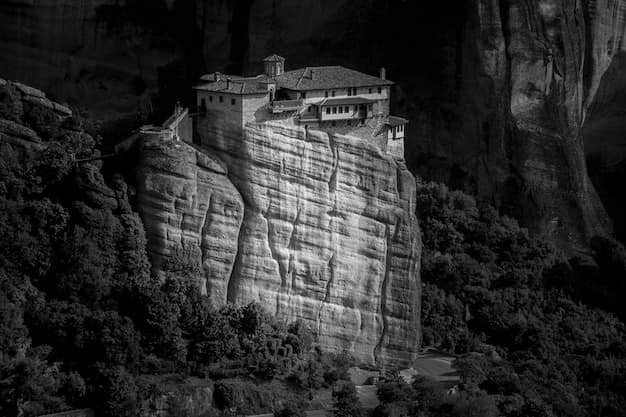
The rock towers are natural — millions of years of a river delta hardening and eroding into pillars that run up to three hundred metres. What people came for are the buildings on top. Hermit monks were living in the caves here by the eleventh century, and from the fourteenth century onwards they began building proper monasteries on the summits, hauling material, food and one another up in rope nets and baskets. At the peak there were more than twenty communities. Six remain open today, and — this is the part that matters — they are not museums. Monks and nuns still live and pray in them. You are visiting someone's home and someone's church, which shapes everything from the dress code to how loudly you speak. UNESCO lists the whole site for both its monasteries and its geology, and standing on the terrace of Great Meteoron looking across at Varlaam on the next pillar, you understand why.
Getting there from India, and why the train beats a car
There are no direct flights from India to Greece for most travellers, so the practical routes are a Gulf hub — Dubai, Doha, Abu Dhabi — or a European connection into Athens, with Thessaloniki a good alternative if the fare works out. From Ahmedabad or Mumbai, expect one stop and a total journey of roughly eleven to fourteen hours depending on the layover. From Athens, take the direct train to Kalambaka, the town at the foot of the rocks; from Thessaloniki you will usually change once at Paleofarsalos. The train is modern, comfortable, cheap by European standards, and runs through the Thessalian plain — for most visitors it is genuinely better than driving, because Greek mountain roads plus jet lag plus an unfamiliar rental car is not a combination we push on anyone. A car only earns its keep if you are continuing to Zagori or Delphi afterwards. Our flight desk in Surat can price the Gulf and European routings side by side, and if you would rather not juggle two towns, we can arrange stays in Kalambaka and Athens as one booking.
When to go, and why you must start early
Spring (April–early June) and autumn (mid-September–October) are the best windows: mild air, green plain, and light that does what you hope it will do at sunset. Be honest with yourself about summer — July and August regularly cross 35°C on the plain, and you will be climbing exposed stone staircases in that heat, often in long clothing. Winter is quiet and atmospheric, with mist rolling between the pillars, but daylight is short and some hours contract. Whatever the season, the single most useful piece of advice is this: start early. Coach groups from Athens and the cruise ports begin arriving mid-morning, and a monastery courtyard that felt contemplative at nine can feel like a queue by eleven. Be at the first monastery when it opens, do two before lunch, rest, and come back for the late light. For sunset, the viewpoints on the road above Kastraki and the rock terrace near Holy Trinity are the classic spots — go a good forty minutes early, because everyone else has read the same advice.
The six open monasteries — and the day each one closes
Six monasteries receive visitors: Great Meteoron (the largest, with a small museum), Varlaam (arguably the most beautiful frescoes), Roussanou (low, photogenic, run by nuns), St. Nicholas Anapafsas (small, closest to Kastraki, wonderful sixteenth-century wall paintings), Holy Trinity (the dramatic one on its own spike of rock, and the longest climb) and St. Stephen (a convent, the easiest access of all — a short bridge rather than a stair climb). The crucial planning detail: each monastery closes on a different day of the week, and the pattern changes between the summer and winter timetables. Nobody sees all six in one day without a car and a lot of luck; two or three in a morning is a comfortable pace. Each charges a small entry fee per person, paid in cash at the gate — please verify current rates and opening days before you finalise your route, since both are revised periodically by the monasteries themselves. We build the day around whichever monasteries are open when you are there, not the other way round.
Dress code and conduct: this is a place of worship
Say this plainly, because it is the thing visitors most often get wrong. These are active monasteries, and the rules are not decorative. Shoulders and knees must be covered for everyone — no sleeveless tops, no shorts, no short dresses. Women are generally expected to wear a long skirt; wrap skirts are usually available in a basket at the entrance to borrow, but they run out at busy times and they are not always flattering, so bringing your own long skirt or a large dupatta is simply easier. Men in long trousers are fine. Inside, keep your voice low, do not walk in front of anyone praying, and understand that photography is restricted inside the churches — the frescoes are fragile and the space is in use; signs and the attending monk or nun are the final word, and no photograph is worth arguing over. Hats off inside. If a service is underway, either stand quietly at the back or step out. Treat the visit the way you would a temple at home, and you will be welcomed warmly.
The stairs, the old monk paths, and where to eat
Be realistic about the climbing. Every monastery except St. Stephen is reached by a steep stone staircase cut into the rock — often well over a hundred steps, sometimes several hundred, with uneven treads, exposed edges and limited shade. If you are travelling with parents in their seventies, or anyone with a knee, heart or breathing issue, plan for St. Stephen plus one other, take the car or taxi between sites, and skip Holy Trinity, which is the hardest of the six. Handrails exist but are not continuous. For those who are steady on their feet, the reward is the old monk paths — the original footways between the rocks, before the road was built in the 1960s. The trail from Kastraki up to Great Meteoron, or the path linking Varlaam and Roussanou through the pines, takes you past hermit caves and gives you the site without a single coach in sight. Sturdy shoes, water, an early start; a local guide is worth it here, because the junctions are not all signposted.
Kalambaka and the smaller village of Kastraki at the foot of the rocks are where you eat and sleep — Kastraki is quieter and has better views, Kalambaka has the railway station and more choice. Food is a genuine bonus for Indian travellers: because Greek Orthodox fasting removes meat and dairy for large parts of the year, the local kitchen has a deep vegetarian repertoire that is not an afterthought — gigantes beans baked in tomato, briam, stuffed peppers and tomatoes, lentil soup, greens with lemon, fava, olives and superb bread. Say nistisima (fasting food) and any taverna will point you to the right half of the menu. Jain travellers should still ask specifically about onion and garlic. There is no Indian restaurant to fall back on in Kalambaka, so carry your usual theplas and pickle for the first day if that is your habit.
Frequently asked questions
What does a Meteora trip cost from India? Hedged honestly: return flights from Ahmedabad or Mumbai to Athens usually land somewhere around ₹55,000–₹95,000 depending on season and how early you book. On the ground, budget roughly ₹6,000–₹12,000 per night for a good double room in Kalambaka or Kastraki, ₹1,500–₹3,000 per person per day for food, and a modest sum for the train and the small per-monastery entry fees. A comfortable two-week Greece trip including Meteora and the islands typically works out to ₹1.9–3.2 lakh per person, more if you want boutique stays. Rates move with the season, so treat these as planning ranges and let us quote your actual dates — see our Europe tour packages from Surat for current combinations.
How many days do I need, and can I combine it with Athens? Two full days is the sweet spot and three is luxurious: day one, three monasteries in the morning and sunset from the Kastraki viewpoints; day two, the old footpaths and the remaining monasteries; day three, a slow morning, the icon-painting workshops in town, or the Theopetra cave nearby. Combining with Athens is the standard route — two or three nights in Athens for the Acropolis and the museums, the train up to Kalambaka, then back to Athens for a flight or a ferry onward. If you want a beach ending, our guide to Rhodes for Indian travellers pairs well with a Meteora start.
What about the visa and paperwork? Greece is a Schengen country, so Indian passport holders need a Schengen visa with confirmed flights, accommodation, financials and mandatory medical cover — start our Greece visa requirements for Indians page about eight to ten weeks before travel. Which consulate you file with matters, and we explain the logic in choosing the right Schengen consulate from Gujarat; if you have been refused before, read why Schengen applications get rejected and how to reapply before you resubmit. Do not skip medical and trip insurance for Indian travellers — it is a condition of the visa, not an upsell — and note that entry procedures now include the EU's EES biometric border system, so allow extra time at your first Schengen airport. Once the visa is in hand, it also opens the door to several non-Schengen countries that accept a valid Schengen visa.
Meteora rewards travellers who plan it properly and visit it respectfully — the right season, an early start, covered shoulders, and enough days that you are not sprinting up a staircase with one eye on the clock. Our documentation team in Surat handles the Schengen file end to end, and we will build the Athens–Kalambaka train legs, the monastery schedule and the island extension around your dates. Talk to Explera Vacations to start planning, or browse our ready Europe itineraries departing from Surat if you would rather begin from something already shaped.