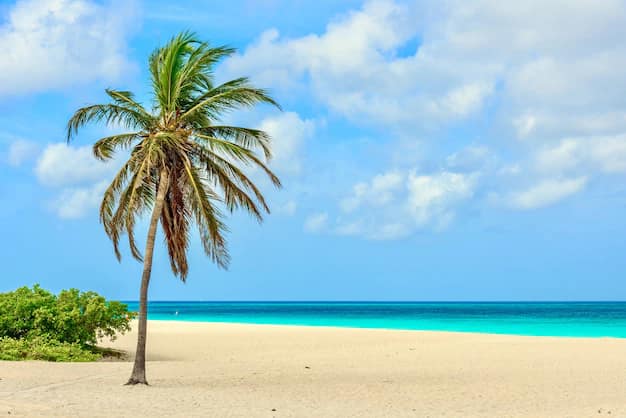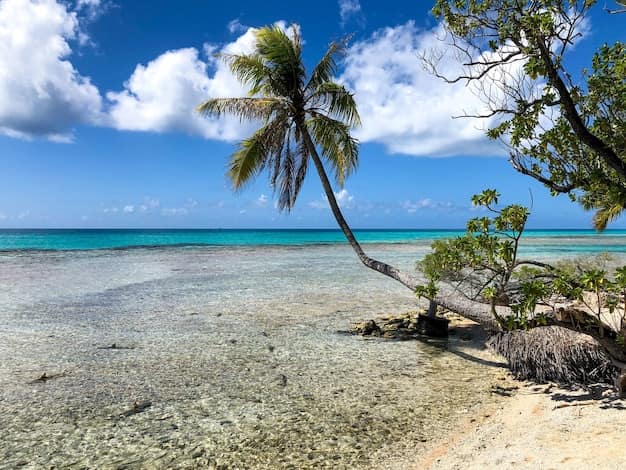
Some destinations sell you a beach. Samoa sells you a beach and a living culture that has not been rearranged for tourists. Two main islands — Upolu and Savai'i — sit in the middle of the South Pacific with volcanic ridges, waterfalls dropping into jungle pools, reef lagoons the colour of a peacock's neck, and villages where the day still bends around church bells and evening prayer. For travellers from Surat and Gujarat who have already done Bali, Phuket and Maldives and want something genuinely different, Samoa is one of the most rewarding — and most demanding — trips you can plan. This guide is written honestly: what is wonderful, what is far, what is expensive, and what will make the difference between being a guest and being a tourist.
Why Samoa, and not just any island
The South Pacific has plenty of postcard lagoons. What sets Samoa apart is fa'a Samoa — the Samoan way — a system of extended family (aiga), chiefs (matai), village councils and shared obligation that still runs daily life. You feel it immediately: in the open-sided family houses without walls, in the way a village looks after its own waterfall and charges a small entry fee that goes back to the community, in the singing that comes out of churches on a Sunday morning and carries across the water. Samoa is not a resort strip with a cultural show at 7 pm. It is a country where you are a visitor in someone's village, and that framing makes the trip better, not harder. Add to it: Upolu's To Sua Ocean Trench and Lalomanu beach, Savai'i's lava fields and blowholes, warm water year-round, and accommodation that ranges from simple beach huts to a handful of proper resorts. If you like your travel with texture, this is the place.
Getting there from India — the honest routing
There is no short way to Samoa from India, and any agent who tells you otherwise is selling you something. Faleolo International Airport (APW) near Apia is served mainly from Auckland, Sydney, Brisbane, Nadi (Fiji) and Honolulu. From Ahmedabad or Mumbai, a realistic routing is India to Singapore or Dubai, onward to Auckland or Sydney, then a final hop of roughly four to five hours to Apia. Total travel time is commonly in the 28–40 hour range door to door, depending on layovers, and the last leg often operates only a few times a week — so your dates must be built around it, not the other way round. Because of this, the smartest way to do Samoa is as an add-on to a bigger Pacific trip. Pair it with our New Zealand itinerary planner for Indian travellers or an Australia visitor visa application walkthrough, and the long-haul cost suddenly makes sense across two weeks instead of one. Our team can build the multi-city ticket for you through flight booking assistance in Surat — verify current rates at the time of booking, since Pacific fares swing hard by season.
Entry requirements for Indian passport holders
Samoa operates an entry-permit-on-arrival system for many nationalities, typically issued for a short stay to visitors holding a confirmed onward or return ticket, proof of accommodation and sufficient funds. Rules for Indian passport holders can and do change, and — crucially — you will also need to satisfy the transit and entry rules of whichever country you route through, which for New Zealand or Australia means a proper visitor visa applied for in advance, not an afterthought. Please treat every requirement in this article as indicative and confirm it officially before you book. Start with our Samoa entry and visa requirements page for the current position, and if the terminology is unfamiliar, our explainer on visa categories every Indian traveller should understand will save you a lot of confusion. It is also worth seeing where the Indian passport stands generally in our passport ranking and visa-free access update.
Best time to visit — and cyclone-season awareness
Samoa is tropical and warm all year, roughly 26–30°C, but the calendar splits into two moods. The drier, cooler months from around May to October are the sweet spot: lower humidity, calmer seas, better visibility for snorkelling, and a far higher chance that the road to a waterfall is actually passable. The wetter months from November to April bring heavy afternoon rain, higher humidity and the South Pacific cyclone season, which typically runs November through April. Cyclones are not a certainty in any given year, but they are a real risk that can close airports and cut power for days. If you must travel in those months, build in buffer days, keep bookings flexible where possible, and take comprehensive cover — read our travel insurance guide for Indian travellers before you choose a policy. For most Gujarat travellers, June to September aligns well with school holidays and is the window we usually recommend.
Upolu: To Sua Ocean Trench, Lalomanu and the south coast
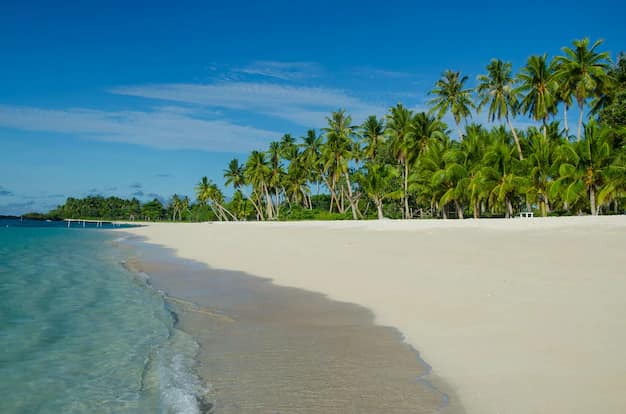
Upolu is the smaller, busier island and home to Apia, the capital. Most visitors base themselves on the south coast, where the beaches are better. Lalomanu at the eastern end is the classic: white sand, a shallow turquoise lagoon, a line of leaning palms and a row of family-run beach fales. To Sua Ocean Trench is Samoa's most photographed spot — a deep swimming hole in a garden of ferns, connected to the sea by a lava tube, with water that glows an unreal blue when the sun hits it. Here is the honest part: access is by a steep, near-vertical wooden ladder of about 20 metres down into the hole. There is a handrail and it is done by thousands of visitors, but if you have knee trouble, vertigo, limited mobility or you are travelling with young children or elderly parents, it may simply not be for you — and that is fine. The gardens and clifftop viewpoints above are beautiful on their own, and nobody has to climb. Elsewhere on Upolu: Papapapaitai Falls from the cross-island road, the Piula Cave Pool, Apia's fish market in the early morning, and the Robert Louis Stevenson Museum at Vailima.
Savai'i: lava fields, blowholes and the slower island
Take the ferry from Mulifanua on Upolu to Salelologa on Savai'i — around an hour, and worth every minute. Savai'i is bigger, greener, far less developed and, for many travellers, the real Samoa. The Alofaaga Blowholes at Taga are the headline act: sea water forced through lava tubes and fired 20–30 metres into the air with a boom you feel in your chest. Local guides will sometimes throw coconuts into the vents to send them rocketing skyward — tip them, it is their livelihood, and stand well back from the wet rock, which is genuinely slippery and unforgiving. The Saleaula lava fields from the early 1900s eruptions are a black moonscape with a church half-swallowed by hardened lava. On the far west, Falealupo offers empty beaches, a canopy walkway and the sense of standing at the edge of the map. Roads are rough in places and public transport is infrequent, so budget for a rental car or a driver — it transforms what you can see.
Sleeping in a beach fale: what it actually involves
The classic Samoan stay is a fale — an open-sided thatched or tin-roofed hut on the sand, with woven blinds you roll down at night, a mattress on the floor and a mosquito net over it. Let us be plain about what that means. There are usually no walls and no lock. Bathrooms are typically shared and basic, hot water is not guaranteed, and electricity may be limited to certain hours in remote villages. Sand gets into everything. You will hear the ocean, the roosters, the rain on the roof and your neighbours. And yet: rates commonly include breakfast and dinner cooked by the family, the setting is a metre from the lagoon, and waking at sunrise with nothing between you and the sea is the memory most people bring home. For families who want air conditioning, private bathrooms and a pool, Samoa also has a small number of proper resorts, mostly on Upolu — we usually suggest mixing two or three fale nights with resort nights so everyone is happy. Our team handles both through hotel booking support in Surat.
Fa'a Samoa: village courtesies that make you a welcome guest
None of this is a restriction. It is ordinary courtesy, the same way you would take your shoes off entering a home in Gujarat. Sunday is widely observed for church and family rest — many shops close, transport thins out, and to'ona'i (the Sunday family meal) is the centre of the day. Do not plan tours or noisy beach activity for Sunday morning; instead, if you are invited to a church service, go — the singing is extraordinary. Many villages observe an evening prayer curfew (sa), usually a short period around dusk announced by a bell or conch. If you are driving or walking through a village then, simply stop, wait quietly, and continue when it lifts. Away from resorts, dress modestly: shoulders covered, a lavalava or sarong over swimwear when you leave the sand, and swimwear kept to the beach. Village land, waterfalls and beaches are usually owned by families — ask before you enter, expect a small custom fee, and pay it cheerfully. And always ask before photographing people, especially children or anything inside a church. A smile, a 'talofa' and a moment of patience will open more doors in Samoa than money ever will.
Food, and vegetarian options for Gujarati travellers
Samoan food is built on root crops, coconut and the sea: taro and taro leaves, breadfruit, green bananas, yam, and palusami — taro leaves baked in coconut cream, which is naturally vegetarian and genuinely delicious. Coconut in every form, fresh papaya, pineapple and mango, and the umu (earth oven) feast that many fales serve on set nights. Being honest: strict vegetarian and Jain travellers will find the range limited outside Apia, and fish and pork are central to most menus. It is workable, not effortless. The practical approach is to notify your fale or resort at booking that you are vegetarian — small family kitchens are usually happy to adapt if given notice — stock up on fruit and staples at the Apia market or Salelologa market, and carry a reserve of theplas, khakhra, dry snacks, masala sachets and instant items from home for the long-haul legs and the quieter villages. Bottled or filtered water is the safe choice, and mosquito repellent is not optional.
Safety in the water — take this one seriously
Samoa's lagoons look tranquil and mostly are, but the reef passages carry strong outgoing currents, especially on a falling tide, and people do get into trouble every year. Coral cuts on the shin or foot are the other common issue and infect quickly in the tropics — reef shoes and a small first-aid kit with antiseptic are worth the packing space. The rule is simple and non-negotiable: swim where the villagers swim, ask your fale host where it is safe that day, and never assume a calm-looking channel is harmless. Waterfall pools can have hidden rocks and change depth after rain. Medical facilities are limited outside Apia and serious cases require evacuation to New Zealand, which is exactly why comprehensive travel insurance with medical evacuation cover is essential rather than optional for this destination.
What it costs — approximate ₹ ranges
These are indicative ranges to help you plan, not quotations; please verify current rates at the time of booking, as airfares and island tariffs move constantly. Return flights from India to Apia via Singapore/Auckland or Sydney commonly land somewhere in the ₹1,10,000–₹2,00,000+ per person range depending on season, routing and how far ahead you book. Beach fale accommodation including breakfast and dinner typically runs around ₹3,500–₹8,000 per person per night; mid-range hotels roughly ₹8,000–₹16,000 per room; the few upper-tier resorts considerably more. A rental car is usually in the region of ₹4,500–₹8,000 per day, the inter-island ferry is inexpensive, and village site entry fees for waterfalls, trenches and blowholes are small — often a few hundred rupees equivalent per person, cash only. Budget realistically around ₹2,20,000–₹3,50,000 per person for a 9–10 day trip including flights, mid-range stays, a car and activities. Combining Samoa with New Zealand or Australia raises the total but sharply improves the value per rupee of that long-haul ticket.
A workable 8–10 day plan
Days 1–2: Arrive Faleolo, transfer to the south coast of Upolu, and do nothing on purpose — jet lag from India is real. Day 3: To Sua Ocean Trench and the Lalomanu area, with a slow afternoon in the lagoon. Day 4: Cross-island road, Papapapaitai Falls, Apia market, Vailima. Day 5: Ferry to Savai'i, settle into a fale on the north or south coast. Days 6–7: Alofaaga Blowholes, Saleaula lava fields, Afu Aau waterfall, and the drive out to Falealupo for sunset. Day 8: A deliberate slow day — snorkel, read, join the village for a Sunday service if the day falls right. Day 9: Ferry back to Upolu, last swim, buy siapo cloth or coconut oil for home. Day 10: Departure. If you are extending into New Zealand, add three to four days for the South Island — our Queenstown adventure and scenery guide pairs beautifully with this itinerary and uses the same long-haul ticket.
Frequently asked questions
Is Samoa realistic for a family trip from Gujarat? Yes, with planning. The flying is long and best broken with a stopover, and you will want to mix resort nights with fale nights so children and elders have comfortable bases. Choose the drier months, keep drive days short, and skip the To Sua ladder if anyone in the group is uneasy about heights — there is plenty to enjoy without it. For document work and appointments, our visa consultancy office in Surat can handle the New Zealand or Australia leg alongside your Samoa entry paperwork.
Do I need to speak Samoan, and will English be enough? English is an official language and is widely spoken, so you will manage comfortably everywhere. That said, learning four words changes the temperature of every interaction: talofa (hello), fa'afetai (thank you), tulou (excuse me, said when passing in front of someone) and malo (well done / hi). Samoans are generous with visitors who try.
Should I visit Upolu only, or make time for Savai'i? If you have six nights or fewer, Upolu alone is the sensible choice — you will still get To Sua, Lalomanu and the waterfalls without spending your holiday on ferries. With eight nights or more, Savai'i is what people talk about afterwards: emptier, slower, more dramatic, and closer to the Samoa that exists whether or not tourists arrive. Given the distance from India, we would nearly always argue for the longer trip.
Samoa rewards travellers who arrive curious and unhurried — and it punishes rushed, badly routed itineraries. That is exactly the kind of trip worth handing to people who plan it for a living. Explera Vacations builds Samoa journeys for travellers across Surat and Gujarat, from the multi-city long-haul ticket and the New Zealand or Australia pairing to fale bookings, island transfers and the entry paperwork behind it all. Browse our curated holiday packages from Surat or simply get in touch with our travel consultants with your dates and group size, and we will map out a realistic, honest plan with current rates before you commit to anything.