Taipei is one of the friendliest introductions to East Asia that an Indian traveller can pick. It is compact enough to cross by metro in half an hour, cheap enough that a family of four can eat well without flinching, and green enough that a rainforest trail sits fifteen minutes from a glass skyscraper. Add steaming night markets, a museum holding thousands of years of Chinese art, and hot-spring valleys an hour from the city centre, and you have a five-to-seven day holiday that never feels rushed. One honest note before you start planning: Taiwan requires a visa or an online travel authorisation for Indian passport holders, and the conditions attached to it change from time to time, so please verify current rules before booking anything non-refundable — our Taiwan visa desk in Surat tracks the latest requirements and can tell you which route applies to your passport and travel history.
Getting there and the best time to visit
There are no direct flights from Surat, so most travellers connect through Mumbai, Delhi or Ahmedabad and then fly onward via Hong Kong, Bangkok, Singapore or Kuala Lumpur into Taoyuan International Airport. Total journey time typically runs nine to fourteen hours depending on the layover, and fares swing widely between the shoulder season and the Lunar New Year peak — we can compare routings and stopover options when you book flights from Ahmedabad or Mumbai. On weather, October to April is the sweet spot: autumn is dry and mild, winter is cool and perfect for hot springs, and spring brings cherry blossom to Yangmingshan. June to September is hot, humid and the heart of typhoon season, though it is also when fares and hotel rates drop. Taoyuan airport connects to the city by MRT in roughly forty minutes, which makes staying near Taipei Main Station or Zhongxiao Fuxing genuinely convenient — see hotel options across Taipei for neighbourhoods that suit families versus couples.
Taipei 101 and the Elephant Mountain viewpoint
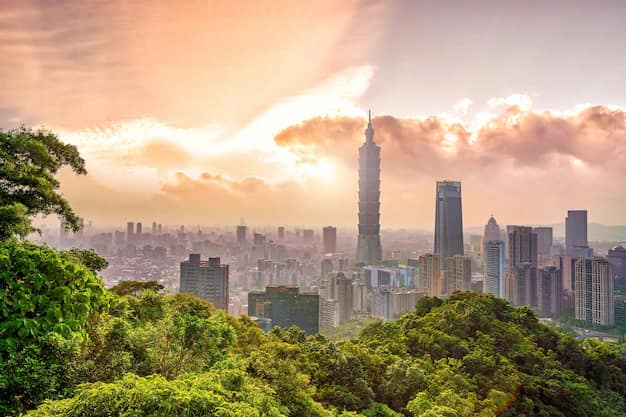
Taipei 101 held the title of world's tallest building until 2010 and remains the city's anchor. The observatory on floors 88 to 91 is worth the ticket for the wind damper alone — a giant golden sphere that visibly steadies the tower during typhoons. Book a late-afternoon slot so you catch daylight, sunset and the lit-up city in a single visit. For the photograph everyone actually wants, though, you want to be outside the building looking at it: the Elephant Mountain (Xiangshan) trail starts a short walk from Xiangshan MRT station and climbs roughly twenty to thirty minutes of steep stone steps to a set of platforms framing the tower head-on. Go about ninety minutes before sunset, carry water, and expect company — it is popular for good reason. Anyone with knee trouble should know the steps are unrelenting; there is no cable car or lift alternative.
Night markets, street food and eating vegetarian
Night markets are where Taipei relaxes. Shilin is the biggest and most tourist-friendly, with a covered basement food court; Raohe Street is tighter, older and easier to walk end to end in an evening; Ningxia is the one locals recommend for serious eating. The good news for Gujarati travellers is that Taiwan has a deep Buddhist-vegetarian tradition, so meat-free food is genuinely mainstream rather than an afterthought. Look for the character 素 or the phrase 素食 (pronounced roughly "su shi") on a shopfront — these are dedicated vegetarian kitchens, many of them buffet-style where you fill a tray and pay by weight. Vegetarian versions of stinky tofu, scallion pancakes, sweet potato balls, peanut mochi rolls and steamed buns are widely available, and convenience stores stock plenty of safe snacks. Two cautions worth taking seriously: many everyday broths and sauces use pork or fish stock even in otherwise vegetable dishes, and traditional Buddhist-vegetarian cooking avoids onion and garlic but not always root vegetables, so Jain travellers should still ask. Our roundup of Jain and pure-vegetarian friendly destinations abroad covers how to phrase these requests and what to carry from home.
National Palace Museum and the city's temples
The National Palace Museum holds one of the world's great collections of Chinese art — bronzes, jade, calligraphy and ceramics moved from Beijing during the twentieth century, so vast that only a fraction is displayed at any time. Arrive at opening or after 3pm to dodge tour groups, and give it three hours minimum; audio guides in English are available and worth taking. For a different kind of hush, Longshan Temple in the Wanhua district is still an active place of worship rather than a monument, busiest in the evening when incense and chanting fill the courtyards. Dress modestly, follow the flow of worshippers rather than cutting across, and photograph people only with permission. Bao'an Temple and the nearby Confucius Temple make an easy pairing on the same afternoon.
Day trips: Jiufen's lanterns and Beitou's hot springs
Jiufen is the old gold-mining town in the hills above the northeast coast, its narrow Old Street strung with red lanterns and teahouses looking out over the sea. It is about an hour and a half from Taipei by bus or by train to Ruifang plus a short local bus, and it is at its most atmospheric in the late afternoon as the lanterns come on and the day-trippers thin out. Pair it with Shifen, where visitors release paper sky lanterns along a working railway line. Beitou sits at the other end of the mood scale and is barely thirty minutes away on the MRT: a volcanic valley of sulphur steam, public and private hot-spring baths, a striking library built of timber, and the milky-blue Thermal Valley. Public baths usually require swimwear and a cap, while hotel-run private rooms let families bathe together in comfort. If you are stitching several North Asian cities into one trip, our Japan travel guide and Seoul city guide explain which combinations work without excessive backtracking, and Hong Kong and Macau is a natural stopover on the way home.
Budget, the MRT and practical tips
Buy an EasyCard at any MRT station the moment you arrive. It covers the metro, city buses, most intercity buses, some trains, the airport line and even convenience-store purchases, and it saves you fumbling for coins for a week. The MRT itself is clean, punctual, signposted in English and inexpensive; eating and drinking inside stations and carriages is prohibited and enforced, so finish your bubble tea before you tap in. Taipei sits in a mid-range bracket for Indian travellers — pricier than Bangkok, noticeably cheaper than Tokyo or Singapore — with night-market meals at the very bottom of the scale and hotels the biggest single variable, so budget in ranges and verify current rates rather than trusting old blog figures. Tipping is not expected. Tap water is drinkable in most of Taipei but filtered dispensers are everywhere. Sort out connectivity before you land using our eSIM and international SIM guide, take a policy that covers hiking and hospitalisation via travel insurance for international trips, and run through the international packing checklist — a light rain jacket and broken-in walking shoes matter more here than anything else.
Frequently asked questions
Do Indian passport holders need a visa for Taiwan?
Yes — Taiwan requires a visa or an online travel authorisation for Indian nationals, and eligibility for the simpler online route generally depends on holding a valid visa or residence permit from certain other countries. These conditions are revised periodically, so treat any figure or rule you read online as indicative only and verify current requirements before booking. Send us your passport details and travel history and we will confirm which route applies to you.
How many days do I need, and is Taipei good for families or first-time travellers?
Four to five days covers Taipei plus one day trip comfortably; seven days lets you add Jiufen, Beitou and either Yangmingshan or a night in Hualien. It is an excellent first East Asia trip — low crime, superb public transport, English signage on all transit, and locals who go out of their way to help. Families with young children will find the MRT lift-accessible and night markets more manageable on a weekday than a weekend.
Ready to put dates to this?
Tell us your travel window, group size and food preferences and we will build a costed itinerary — flights, hotels, day trips and paperwork in one place. Browse our tour packages from Surat, look through the wider holiday packages collection or explore what else our travel services team in Surat handles, then get in touch with Explera Vacations and we will take it from there.