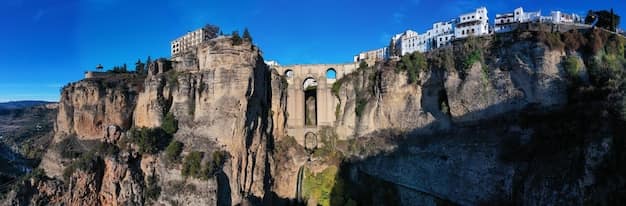
Very few cities reward a single day as generously as Toledo. Perched on a granite outcrop wrapped almost entirely by the river Tagus, the old city is a dense, walkable maze of lanes where a Gothic cathedral, a Moorish-founded fortress and centuries-old synagogues stand within a few hundred metres of one another. That layering is why Toledo is nicknamed the City of Three Cultures, and it is why so many travellers from Gujarat who are already spending a few nights in the capital add it to their plan. If you are still shaping the wider trip, our Spain travel guide sets out how Toledo fits alongside the bigger cities, and the Madrid city guide covers the base you will most likely be travelling from.
Getting there from Madrid, and the best time to visit
The easiest route is the high-speed Avant or AVE service from Madrid Puerta de Atocha to Toledo, which takes roughly half an hour each way. Trains are limited in number compared with other Spanish routes, so book a specific outbound and return slot in advance rather than turning up and hoping; fares are cheapest when reserved early and rise close to the date, and you should verify current timings and prices on the operator's own site. Buses from Plaza Elipticaan take longer but run more frequently. From Toledo's station it is a pleasant twenty-minute walk uphill into the old city, or a short taxi or local bus ride if you would rather save your legs for the lanes. On timing, avoid the peak of July and August if you can, when midday temperatures on that exposed hilltop are punishing and shade is scarce. Spring and autumn are the sweet spot, with mild days and softer light for photographs, while winter is cold but quiet and often the most atmospheric. If Spain is your first trip into Europe, our first Europe itinerary explains how to sequence cities without exhausting yourself.
The Alcazar, the Cathedral and the old city
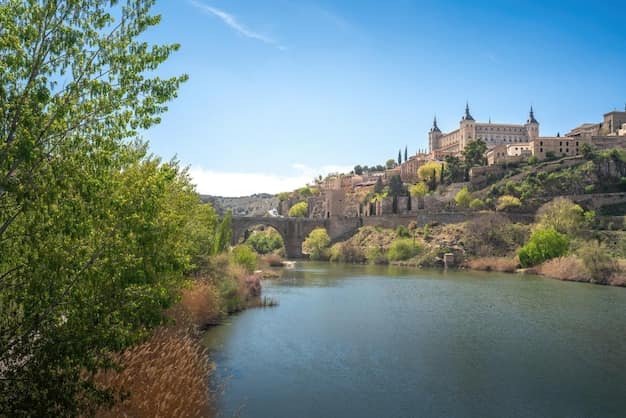
The Alcazar dominates the skyline from every direction. Its foundations are Roman and Moorish, it was rebuilt as a royal palace under Charles V, and today it houses the Army Museum along with the library. Even if military history is not your interest, the building is worth circling for the views and for the sheer scale of it. A short walk away, the Primate Cathedral of Saint Mary is the emotional centre of the city: a vast Gothic interior with a soaring altarpiece, an intricately carved choir, and the Transparente, a Baroque sculpted opening cut into the vault so that daylight falls directly onto the sanctuary. Give the cathedral at least ninety minutes and consider the audio guide, because the sacristy holds a serious collection of paintings including works by El Greco, Goya and Titian. Both sites charge entry, both operate reduced hours on Sundays and religious holidays, and both can sell out on busy weekends, so check current tariffs and opening times before you go. Modest dress is expected inside the cathedral, as with most active places of worship in Spain.
The Jewish Quarter and the City of Three Cultures
For long stretches of the medieval period Toledo was home to Christian, Muslim and Jewish communities living in close proximity, and the city became a celebrated centre of translation where Arabic, Hebrew, Latin and Castilian scholarship met. That coexistence was real and productive, but it was not uninterrupted harmony: it was punctuated by violence, and it ended with the persecutions of the late fourteenth century and the expulsion of Spain's Jews in 1492. The Juderia, the old Jewish Quarter, is where that history is most legible. The Synagogue of Santa Maria la Blanca, built in the twelfth century with horseshoe arches and white columns that read as unmistakably Moorish in style, was later converted to a church, which is how it survived. Nearby, the fourteenth-century Synagogue of El Transito houses the Sephardic Museum, the best single place in the city to understand Jewish life in Spain before and after the expulsion. Walk these lanes slowly and read the plaques; the quarter is a living neighbourhood as well as a monument, so photograph respectfully and keep noise down in residential streets.
Viewpoints across the Tagus and the Puente de Alcantara
Toledo is one of those places best understood from outside itself. The Mirador del Valle, on the far bank across the gorge, gives the classic panorama of the whole hilltop city with the Alcazar and cathedral spire rising above the rooftops; it is a stiff walk uphill from the old town, so most visitors take a taxi or the tourist bus, and late afternoon light is the reward. Down at river level, the Puente de Alcantara is the older of the two great bridges, Roman in origin and rebuilt across the centuries, and crossing it on foot from the eastern side gives you the finest approach to the walls. The Puente de San Martin on the western edge is equally handsome and there is a zipline across the gorge nearby if you want the view with adrenaline attached. Comfortable shoes matter more here than anywhere else in Spain, because Toledo's cobbles are steep, uneven and polished smooth by centuries of use.
El Greco, Damascene metalwork and the city's crafts
Domenikos Theotokopoulos, the Cretan painter known in Spain as El Greco, settled in Toledo in the 1570s and spent the rest of his life here. His masterpiece, The Burial of the Count of Orgaz, hangs in the Church of Santo Tome in the exact chapel it was painted for, and seeing it in situ is a very different experience from seeing it in a museum. The Museo del Greco nearby gathers more of his work alongside a reconstruction of a house of his period. Toledo's other great inheritance is craft. Damascene metalwork, in which fine gold and silver threads are inlaid into blackened steel, has been practised here for centuries and you will see artisans at it in workshops around the old town; small plates, jewellery and boxes make genuinely good gifts to carry home. The city is also historically famous for swordsmithing, though much of what is sold today is decorative rather than functional, and blades of any kind are subject to airline and Indian customs restrictions, so ask the shop about shipping instead of packing them. Buy from workshops that let you watch the work being done, and be sceptical of very cheap pieces sold in bulk near the main squares.
Where and what to eat, including for vegetarians
Toledo's kitchen is Castilian and hearty. Local specialities include carcamusas, a slow-cooked pork and tomato stew served in tapas bars, partridge dishes, and Manchego cheese from the surrounding region. The famous sweet is marzipan, made here since medieval times and sold in convent shops and pastelerias across the old city; it is an easy and light gift to bring back. Vegetarians will manage comfortably with a little planning. Patatas bravas, pisto manchego, which is a Castilian vegetable stew close to a ratatouille, tortilla espanola, padron peppers, gazpacho in warmer months, and excellent bread, olives and cheese are all widely available. Do confirm that rice and vegetable dishes are not cooked in meat stock, and note that many tapas that sound vegetarian may contain jamon, so learn the phrase soy vegetariano, sin carne y sin pescado. Jain travellers and those avoiding onion and garlic will find Spanish menus difficult and should plan on carrying some food from home, and there are a small number of Indian restaurants in Toledo and many more in Madrid. Restaurants serve lunch from around two in the afternoon and dinner from around half past eight, which catches many first-time visitors out.
Day trip or overnight, budget and practical planning
Most visitors treat Toledo as a day trip from Madrid, and that works: leave early, and you can see the cathedral, the Alcazar exterior, the Juderia and a viewpoint before the last train back. But the case for one night is strong, because the tour coaches leave in the late afternoon and the lanes become genuinely quiet and beautifully lit in the evening, and you get the old city almost to yourself the next morning. Small hotels inside the walls fill quickly in spring and autumn, so arrange hotel bookings well ahead. On budget, Toledo is moderate by Spanish standards: monument entry fees are modest individually, and the Toledo tourist bracelet covering several monuments can save money if you plan to visit four or more, though you should verify what it currently includes. Spain is a Schengen country, so Indian passport holders need a Schengen visa for Spain applied for through the Spanish consulate's appointed centre, with proof of accommodation, return flights, funds and mandatory medical insurance; our Schengen visa guide for Gujarat travellers walks through the documents, and rules do change, so verify current requirements before you file. Our visa desk in Surat handles the paperwork and appointment slots, while our team also arranges flight booking and the travel insurance that the application requires. Carry a small amount of cash for craft shops and cafes, keep valuables secure in crowded lanes near the cathedral, and download an offline map because the old city's alleys defeat most navigation apps.
Frequently asked questions
Is one day enough for Toledo?
One day is enough for the headline sights if you start early and move efficiently, but two days lets you see the interiors properly, walk the full circuit of viewpoints and experience the evening atmosphere. Travellers who are already spending several nights in the capital usually find the single day sufficient.
Do I need a separate visa for Toledo, and can I combine it with other Spanish cities?
No separate visa is needed. Toledo is in Spain, and a single Schengen visa covers your entire trip across the zone. It combines naturally with Madrid, and many Indian travellers extend south to Andalusia, where our guides to Seville and Granada and the Alhambra cover the next logical stops.
What should I actually buy in Toledo?
Damascene metalwork and marzipan are the two authentic local purchases. Buy the metalwork from a workshop where you can see the inlay being done, and buy marzipan from an established pastelería or convent shop rather than a souvenir stand.
Ready to put Toledo into a proper Spain itinerary?
Talk to our team and we will build the route, the trains and the paperwork around your dates, or browse our tour packages from Surat for Europe departures that already include Madrid and its surrounding heritage cities. You can also compare our wider curated holiday packages if you would like Spain paired with another country in the same trip.