Most itineraries treat Kyoto as the whole of the old capital region, and then travellers arrive to find Kiyomizu-dera shoulder to shoulder and Arashiyama's bamboo path moving at the pace of a queue. Uji is the correction. It sits about twenty to thirty minutes south of Kyoto Station on the JR Nara Line, roughly halfway to Nara, and it holds one of the most historically important buildings in Japan alongside the town that effectively invented Japanese green tea as we know it. It is flat, compact, walkable, and noticeably calmer than the centre of Kyoto. We send a lot of clients there, and it is one of the few recommendations that comes back with almost no complaints.
This is a guide to what Uji actually is, why the temple matters beyond being photogenic, what a traveller from Gujarat needs to plan for, and how to slot it into a wider Japan trip without adding a day. If you are still at the earlier stage of deciding whether Japan works for you at all, our broader Japan travel guide written for Indian travellers covers the groundwork this post assumes.
Byodo-in and the Phoenix Hall
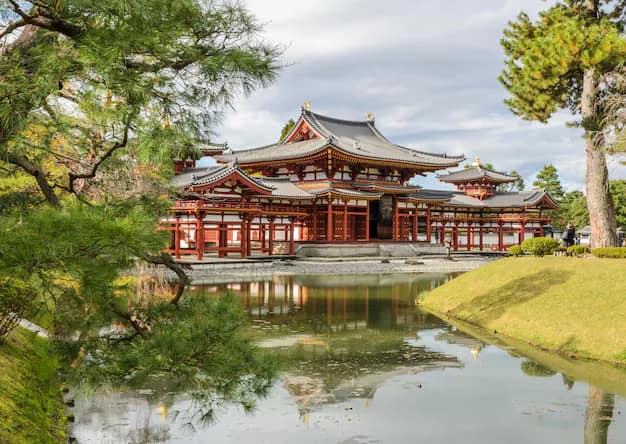
Byodo-in began as a Heian-period aristocrat's country villa on the Uji river. It was converted into a temple in 1052, and its most famous structure, the Phoenix Hall or Hoodo, was completed the following year in 1053. That single date does a lot of work: it means the building in front of you has stood, in essence, for nearly a thousand years, through wars and fires that took most of its contemporaries. It is inscribed by UNESCO as part of the Historic Monuments of Ancient Kyoto.
Inside sits the seated Amida Buddha carved by Jocho, the sculptor whose style effectively defined Japanese Buddhist sculpture for centuries afterwards. Around the interior walls is a celebrated set of bodhisattvas carved riding on clouds, playing instruments and dancing — a whole heavenly orchestra rendered in wood. The originals of many of these carvings, along with the temple bell and the original roof phoenixes, are now housed in the Hoshokan, the modern museum on the grounds, which is well designed and worth the time rather than being a consolation prize.
Two details delight almost everyone who visits. The Phoenix Hall appears on the Japanese ten-yen coin, and the phoenix figures from its roof appear on the ten-thousand-yen note. So if you have been in Japan more than a day, both are already in your pocket while you are standing in front of the real thing. Clients invariably stop, dig out a coin, hold it up against the building and take a photograph. It is a small thing, but it is the kind of detail that makes a monument stick in memory.
Why the building is shaped the way it is
It is worth understanding the design idea, because it turns a pretty building into a meaningful one. The Phoenix Hall was not built to be an ordinary prayer hall. It was built to make visible, on earth, the Pure Land paradise of Amida Buddha — the western paradise into which believers hoped to be reborn. The hall is deliberately sited so that it is mirrored in the pond in front of it and approached across water, so that a worshipper stands on this shore and looks at paradise on the far one. The outstretched wings of the corridors give it the silhouette of a bird about to lift. Once you know this, the reflection stops being a nice photograph and becomes the actual point.
One firm practical note: entering the interior of the Phoenix Hall to see the Amida up close is a separate timed ticket with a limited number of places per slot, and it can sell out on busy days. If seeing the Jocho Amida in person matters to you, go to the interior ticket counter first thing after you enter the grounds, take the earliest slot available, and fill the wait with the museum and the gardens. Photography is restricted inside. Verify current arrangements before you travel, as ticketing details do change.
The other reason to come: tea
Uji is the historic heart of Japanese green tea and remains the benchmark name for matcha and gyokuro. For many travellers this is the bigger draw, and honestly it should be. The distinction is simple and useful to know before you start tasting. Gyokuro and matcha are made from leaves shade-grown for several weeks before harvest; withholding sunlight raises the amino acid content, which produces the sweeter, rounder, less astringent flavour and the intense deep green colour. Sencha is grown in full sun, which gives it a brisker, grassier, more astringent character. Neither is better — they are different drinks — but tasting them side by side in Uji is when the difference finally makes sense.
Byodo-in Omotesando, the approach street running to the temple, is where most of this happens. There are long-established tea houses with tasting rooms, shops that will let you compare grades, and experiences where you grind your own matcha on a stone mill and drink what you made — slow, oddly meditative, and a genuine hit with children and grandparents alike. Then there is matcha as food: matcha soba, matcha ice cream, elaborate matcha parfaits, and warabimochi dusted in green. Buy tea to take home here rather than at the airport; the quality difference is real, and it makes a far better gift than duty-free chocolate.
Ujigami Shrine, the river and the Tale of Genji
Uji is a town, not a single monument, and the walk between its sites is half the pleasure. Cross the Ujibashi bridge — a crossing recorded here since the seventh century — and you reach Ujigami Shrine, whose main hall is claimed as possibly the oldest surviving shrine building in Japan. It is small, wooden, unshowy, and also UNESCO-listed. Beside it is Uji Shrine, and the whole area is a short, shaded walk on the far bank.
The river itself has rapids and a fast green pull to it, and there is a real literary weight to the place. The final ten chapters of Murasaki Shikibu's eleventh-century Tale of Genji — often called the world's first novel — are set in Uji, and the Tale of Genji Museum on the east bank makes something of that with reconstructed interiors and dioramas. If you or a travelling companion has any interest in classical literature, this gives the town a depth that no amount of temple-counting provides. Even if you have never read a page of it, knowing that a thousand-year-old novel ends on the riverbank you are standing on changes how the walk feels.
Getting to Uji from Kyoto
This is the article's real selling point: Uji is genuinely easy. From Kyoto Station, the JR Nara Line takes roughly twenty to thirty minutes to JR Uji station, depending on the service. Alternatively the Keihan line runs to Keihan Uji station, which lands you closer to the far bank and the shrines. Both stations are a short flat walk from everything. Because Uji sits between Kyoto and Nara, you can also treat it as a stop on a single Kyoto-to-Nara day rather than a separate excursion.
One cost point matters. The JR route is covered by a Japan Rail Pass; the Keihan line is a private railway and is not. More importantly, JR Pass pricing changed substantially in October 2023, and the pass is no longer automatically the cheaper option for every itinerary. It needs a per-trip calculation — how many long-distance Shinkansen legs you are actually taking — rather than being assumed. Our team runs that arithmetic for clients as part of planning, and it quite often comes out in favour of point-to-point tickets plus an IC card. If you are shaping the wider route, our Tokyo, Kyoto and Osaka seven-day itinerary shows where the rail-heavy days actually fall.
Getting to Japan from Gujarat
There are no direct flights from India to Japan on most schedules, and certainly none from Gujarat's airports, so plan on one connection. Realistic routings run via a Gulf hub, or via Singapore, Bangkok, Hong Kong or Seoul. For a Kansai-based trip, fly into Osaka Kansai (KIX) — it is by far the closest gateway to Kyoto, Nara and Uji, and it saves you a domestic transfer at both ends. Flying into Tokyo (NRT or HND) works if you are doing a full country circuit and coming down by Shinkansen, but if Kansai is your focus, KIX is the sensible arrival point.
From Surat, Ahmedabad or Vadodara you will usually connect through Mumbai or Delhi unless a direct international departure suits your dates; our notes on international departures from Gujarat's airports set out what actually flies from where. For squeezing the fare down, the tactics in our guide to booking cheaper international flights from India apply here as much as anywhere — Japan fares reward booking well ahead, particularly around cherry blossom and autumn colour.
Visa: what Indian passport holders need to know
Japan requires a visa for Indian passport holders. The general mechanism is an application to the embassy, consulate or an accredited agency covering your jurisdiction, supported by documentation that typically includes a passport with adequate validity, photographs to specification, the completed application form, a day-by-day itinerary, confirmed travel and accommodation details, proof of funds such as bank statements, and evidence of employment or business. Japan has also been rolling out an electronic visa for some applicants, though eligibility differs by jurisdiction and applicant category.
Requirements, fees and processing times change, and they change without much notice, so they must be verified before you book anything non-refundable. We keep our Japan visa requirements page and our step-by-step Japan visa process for applicants in Gujarat current, and our office handles documentation and submission for clients. One useful side note for onward planning: a Japan visa carries some weight elsewhere, and our overview of destinations open to Indians holding a Japan visa explains where that does and does not apply. Do not treat anything in this paragraph as a substitute for checking the official position for your jurisdiction at the time you apply.
When to go, and when in the day
Uji's signature bloom is the wisteria at Byodo-in in late April and early May, when the trellises beside the pond hang heavy with purple and the whole approach smells faintly sweet. Azaleas follow. Autumn colour runs along the river through November and is, to our eye, the more reliable pleasure — quieter, longer-lasting, and beautiful in flat morning light. May also brings the new tea harvest, which is the best possible time to be buying. If your travel is anchored to blossom season more broadly, our sakura season planning guide for Indian travellers explains why fixing dates too precisely around bloom forecasts is a trap.
Whatever the season, go early. Coach groups tend to arrive mid-morning, and Byodo-in before nine is a different place from Byodo-in at noon. The whole town is flat and compact enough to cover on foot in a morning, so an early start does not cost you anything except the lie-in.
Etiquette, and why Uji suits older parents
Byodo-in and Ujigami are active religious sites, not museum pieces. Keep voices low, do not use flash, observe photography restrictions inside the Phoenix Hall, remove shoes where indicated, and do not eat or drink while walking through temple grounds. None of this is onerous; Japanese sites signpost their expectations clearly and politely.
The point worth emphasising is accessibility. Much of Kyoto involves steps, steep approaches and long uphill walks — Kiyomizu-dera and Fushimi Inari both punish tired knees. Uji does not. It is flat, distances are short, benches and tea houses are frequent, and there is somewhere to sit down every few hundred metres. That makes it one of the best days in the region for travelling with elderly parents or with small children, which is exactly why we recommend it so often. Our travel planning notes for senior citizens and parents from Gujarat go into pacing in more detail.
Eating in Uji: vegetarian and Jain notes
Uji is one of the easier places in Japan for a vegetarian traveller, and we say that without hedging. Matcha sweets, warabimochi, tea, tofu dishes and soba are everywhere, and much of it is naturally meat-free. Tea houses along the approach street are used to visitors ordering only sweets and a bowl of matcha.
But the standing Japanese trap applies here too, and it is worth being blunt about it. Bonito dashi — stock made from dried fish flakes — is in most broths and in a great many savoury dishes that look entirely vegetarian. Soba and udon stock is the classic ambush. You must ask specifically, not merely say you do not eat meat. Shojin ryori, the Buddhist temple cuisine tradition, is the reliable route: it is prepared without meat, fish or fish stock, and Kyoto has several long-established places serving it. A strict Jain traveller will still need to plan properly and carry supplies, since onion and garlic are ordinary ingredients and root vegetables are not avoided. Carrying theplas, dry snacks and a small stock of familiar food is normal practice, and nobody will mind you eating them in a park.
Budget, and where Uji fits
A rough all-in Japan trip of ten to fourteen days from Gujarat — flights, accommodation, rail, entries and meals — tends to land somewhere in the region of ₹1,60,000 to ₹3,00,000 per person, and it can run well above that with premium hotels or peak-season flights. Treat that as indicative and season-dependent, not a quotation: airfare in blossom and autumn peaks moves the whole figure, and the rupee-yen rate has swung meaningfully in recent years. Uji itself is a cheap day — a train fare, a temple entry, museum tickets and as much matcha as you can drink. Our budget planning framework for international trips from Gujarat breaks the components down properly, and the forex and money handling guide for Indian travellers is relevant because Japan still runs on more cash than most visitors expect.
Two other bits of preparation pay for themselves. Take proper cover — our travel insurance explainer for Indian travellers covers what actually matters in a country with expensive private healthcare. And sort connectivity before you land, because Japanese navigation and train apps are what make independent days like this one easy; the eSIM and international SIM options for Indian travellers piece covers the practical choices.
How to slot Uji into a real itinerary
Two shapes work. The first is Uji as a half day from a Kyoto base: leave early, do Byodo-in and the museum, walk the river to Ujigami, eat matcha soba, buy tea, and be back in Kyoto by mid-afternoon with the rest of the day free. The second is Uji as the stop between Kyoto and Nara — morning in Uji, afternoon among the deer and the Great Buddha at Todai-ji — which turns two half-days into one full one and is the better move on a tight schedule. Either version sits comfortably inside a ten to fourteen day Japan trip alongside Kyoto's principal temples and the order to see them in and a day or two in Osaka, the region's eating city.
If you have longer, Kansai rewards it. Himeji Castle, the finest surviving Japanese fortress is a straightforward day from Kyoto or Osaka, and Hiroshima with the floating torii at Miyajima is worth two. For a second Japan trip, or for travellers who want space and cool air rather than temples, Hokkaido's landscapes and seasons is an entirely different country.
Talk to us before you book
Uji is not a difficult place to visit, and this post should be enough for a confident independent traveller to plan the day. Where our help tends to matter is everything around it — getting the visa file right the first time, choosing between KIX and Tokyo for your particular route, working out honestly whether a rail pass saves you money on your itinerary, and pacing a two-week Japan trip so that it does not exhaust the people travelling with you. Explera Vacations is IATA TIDS accredited and our team in Surat has been putting Gujarati families, couples and first-time international travellers on these routes for years.
If you are planning Japan for the coming season, get in touch with our Surat office with your rough dates and we will come back with a realistic plan and a costing. If flights are the first piece you want settled, our flight booking desk in Surat can hold fares while the visa file is prepared. And please verify current visa rules, ticketing arrangements and opening details before you travel — we check them for our clients, and we would rather you checked than assumed.