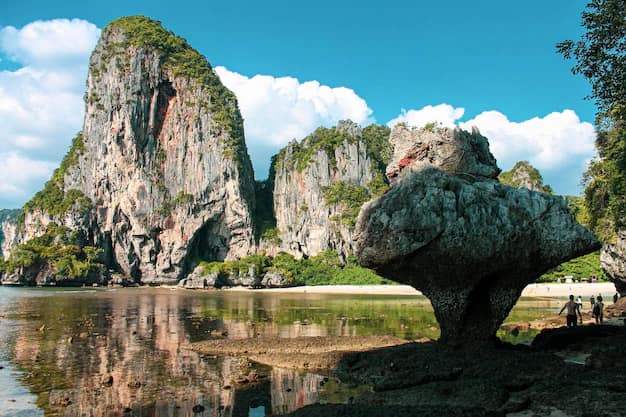
Most Indian travellers who end up in Vang Vieng did not set out to go there. They booked Bangkok, added Laos as an afterthought, and then spent three days looking at limestone karsts rising out of rice paddies, wondering why nobody had mentioned it. The town sits on the Nam Song river midway between Vientiane and Luang Prabang, and over the last decade it has quietly turned itself from a notorious party stop into one of the more rewarding outdoor destinations in Southeast Asia.
We send a steady trickle of clients from Surat, Ahmedabad and Vadodara into Laos each year, usually attached to a Thailand trip. This is the guide we wish existed when they ask what the place is really like. It includes the unflattering parts, because anyone who searches the town name will find them anyway, and a straight account beats a scare story.
Getting there from Gujarat: no direct flights
There is no direct service from India to Laos, so every routing involves a connection. From Surat that normally means a domestic hop to Mumbai or Delhi, or a road transfer to Ahmedabad, followed by one international leg. The four connecting points that work best are Bangkok, Kuala Lumpur, Singapore and Hanoi. Bangkok does most of the heavy lifting, because onward flights into Vientiane (VTE) and Luang Prabang (LPQ) are frequent and the door to door time stays reasonable. Hanoi suits travellers already combining Laos with Vietnam.
Before you lock a routing, check what actually operates from your nearest airport, which is why we keep our notes on international flights out of Gujarat airports current. Fares into Southeast Asia swing hard by season and booking window, and the habits in our piece on booking cheaper long-haul tickets from India apply squarely here. One warning: if you buy two separate tickets to save money, your bags will not through-check, and the baggage rules that Indian carriers and their partners apply can differ on each leg. That is the commonest way a cheap Laos itinerary turns expensive at check-in.
The railway that rewrote the itinerary
For years, reaching Vang Vieng meant a minivan grind over mountain roads, four hours of switchbacks with a driver in a hurry. That trip still exists, but it is now optional. The Laos-China Railway high-speed line opened a station near Vang Vieng and turned the run up from Vientiane into roughly an hour in an air-conditioned carriage, on a schedule. The same line continues north to Luang Prabang. For families, for anyone prone to motion sickness, and for travellers moving with elderly parents, this changed everything.
Two things to know. The station sits outside town, so you need a tuk-tuk or hotel transfer at each end, and those are not instant when a full train empties out. And seats on popular departures sell out, especially around Lao and Chinese holidays, with booking systems that are unfriendly to foreign cards. We book these in advance rather than leaving them to the day. If older relatives are travelling, our guidance on planning a comfortable trip with senior citizen parents covers the pacing questions that matter more than the ticket.
Visas for Indian passport holders: the mechanism, not the numbers
Laos is one of the more accessible countries in the region for an Indian passport. Two routes exist. Visa on arrival is available at designated international airports and land crossings: you complete a form on the spot, hand over passport, photographs and fee, and receive a sticker. The eVisa is applied for online beforehand and produces an approval you print and carry. Both generally expect comfortable passport validity and blank pages, recent photographs to the stated specification, a confirmed onward ticket, proof of accommodation, and at some land crossings the fee in clean US dollar notes in cash.
We are deliberately not quoting a fee amount or a permitted stay length, because both have changed more than once and both differ by entry point. Verify current rules before you travel. Our team checks the position at the time of booking, and you can see where things stand on our Laos visa assistance page for Indian passport holders. If the difference between the two routes is unclear, our explainer on how eVisas, visa on arrival and embassy applications actually differ is the plainest version we have written. Carry printed copies of everything; Lao immigration is relaxed but paper-based.
The tubing years, and what came after
Vang Vieng earned a reputation in the 2000s and early 2010s that still shapes expectations. Backpackers floated down the Nam Song in tractor inner tubes, stopping at a string of riverside bars rigged with rope swings, zip lines and platforms over the water. Alcohol was cheap and heavily pushed, drugs circulated openly, and people jumped into a shallow, rocky river. The result was a genuinely serious toll of tourist deaths and injuries, year after year, in a town with almost no medical capacity. In 2012 the Lao government shut the riverside bar scene down and dismantled the structures.
That is the whole of it, and it matters now mainly as context. The town that exists today is a different business. The river bars are gone, operators are licensed, and visitors are a mix of families, cyclists, climbers and slow travellers, with a large share arriving from China by rail. Tubing still runs in a tamer, regulated form. Vang Vieng is not a party destination any more, and people who arrive expecting one leave after a night. People who come for the landscape stay longer than they planned.
What is genuinely worth doing
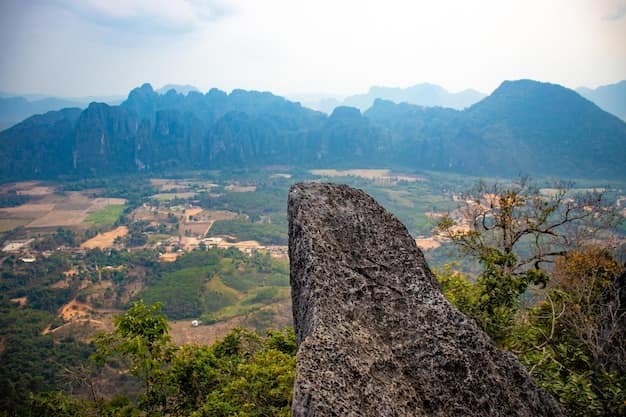
The two viewpoints, Nam Xay and Pha Ngeun, are why the photographs exist. Both are short in distance and hard in effort: steep dirt and loose rock, sections where you haul yourself up on fixed chains or roots, no shade worth speaking of. Proper shoes, not sandals. Go at first light, partly because the heat is brutal by nine, mostly because the mist sitting between the karsts at dawn is the thing you actually came for. Nam Xay has the motorbike prop at the summit that everyone photographs; Pha Ngeun is gentler and looks back over the river and town.
The Blue Lagoons are numbered one to five. Lagoon 1 is closest, most developed and most crowded, with a jumping tree and food stalls. The higher numbers sit further out on rougher tracks and are quieter for it, usually a fair trade. Tham Chang is the easiest cave, reached by steps with lighting and a viewpoint at the mouth; Tham Nam and others are wilder and involve floating through on a tube with a headtorch, which you should only do with a guide. Beyond that: kayaking stretches of the Nam Song, cycling out through the rice fields on the far bank in the late afternoon, and sunrise hot-air balloon and paramotor flights over the valley when conditions allow. Two full days covers the highlights; three lets you slow down, which is the point.
Where people actually get hurt
We will be blunt, because it is useful. The largest risk to visitors in Laos is not the river or the caves. It is road traffic, specifically rented scooters ridden by people with little experience, often without a helmet, sometimes without a valid licence, on roads with livestock, potholes and unlit trucks. Many insurance policies will not pay a claim arising from riding without the correct licence. If you do not ride confidently at home, hire a driver instead. It costs very little in Laos and removes the biggest hazard from the trip.
The viewpoint climbs deserve respect too: loose scree, chain-assisted scrambles and wet rock in the green season combine badly, and a twisted ankle two-thirds of the way up a karst is a difficult rescue. Cave tubing without a guide is a genuinely bad idea, because water levels change. And medical facilities in Vang Vieng are limited to basic clinics. Anything serious means transfer to Vientiane; anything worse means evacuation to Bangkok. That is precisely why a policy with medical evacuation and repatriation cover is a requirement rather than an upsell, and why we walk clients through what to look for in travel insurance with evacuation cover before issuing tickets. Laos is calm and low-hassle by regional standards, though the precautions in our safety guide for Indian women travelling solo still apply, particularly around night transport.
Season: when the karsts look their best
Roughly November to February is the sweet spot. Days are warm and dry, valley nights are genuinely cool, trails are firm and the light is clear. This is peak season and prices reflect it. The green season, roughly May to October, brings the landscape to life: vivid rice paddies, dramatic mist wrapping the karsts, waterfalls running properly. It also brings mud on the viewpoint trails, a swollen river that can close tubing and kayaking, and heavy afternoon rain. If you are used to planning around weather, our thoughts on monsoon-season destinations worth reaching from Gujarat are a useful frame. March and April are hot, and this is also when regional agricultural burning can leave the valley hazy for days, flattening the views and irritating the lungs. We say so plainly to anyone asking about April.
Money, connectivity and everyday practicalities
The Lao kip is the currency, but US dollars and Thai baht circulate widely and are accepted for many tourist services. Card acceptance is limited outside larger hotels and a few restaurants, and terminals fail often. ATMs exist in Vang Vieng but impose modest per-withdrawal limits and charge each time, which adds up. Indian debit and credit cards are unreliable here, more so than in Thailand, so warn your bank and never depend on a single card. Carry more cash than instinct suggests, keep clean unmarked USD notes for fees and emergencies, and split your money between two places. Our guide to carrying forex and managing money on an international trip covers the mechanics. Lao SIMs are cheap and town coverage is decent, though it thins in the hills; many travellers now prefer arranging an eSIM before departure. Pack for humidity, sun and sudden rain, and our packing checklist for international trips will save you a shopping trip.
What it costs, and how it fits a 7 to 10 day trip
Indicative and season-dependent: a 7 to 10 day Laos trip from Gujarat, including international flights, mid-range hotels, rail transfers, activities and meals, tends to land somewhere around roughly Rs 85,000 to Rs 1,45,000 per person. On the ground in Vang Vieng, day-to-day spending runs roughly Rs 3,000 to Rs 7,000 per person per day, depending on whether you are taking balloon flights or simply walking and cycling. Treat those as brackets to plan against, not quotes: airfare alone can move the total by a third. Our walkthrough on budgeting an international trip from Gujarat explains how we build these estimates, and first-time travellers should also work through the first international trip checklist for Gujarat travellers.
The natural shape is a loop: two nights in Vientiane, two or three in Vang Vieng, three in Luang Prabang, joined by the railway, flying home from LPQ. That gives you the capital, the karsts and the old royal town without a single long road transfer. If Laos alone feels thin for a first trip, pair it with Thailand, which is what most of our clients choose. A few days in Bangkok on either side works neatly, and our Bangkok and Pattaya itinerary for Indian travellers slots straight onto the front of a Laos loop. Check the current Thailand entry requirements separately, since they work on a completely different basis. For what waits at the northern end of the line, our Luang Prabang travel guide covers the temples, the alms procession and the waterfalls.
Eating well, and behaving well
Lao food is built on sticky rice eaten by hand, with grilled meat or fish, larb, bamboo shoot soups, river weed and a lot of fresh herbs. Vang Vieng has a heavy Thai crossover and, after years of backpacker traffic, a spread of Western cafes and a few Indian restaurants. A vegetarian will eat perfectly well: papaya salad without the fermented additions, fried rice, noodle dishes, stir-fried vegetables. The complication is fish sauce, which is in almost everything by default, including dishes that look vegetarian. Learn to ask for food without it and expect the answer to be wrong sometimes. A strict Jain traveller needs to plan rather than improvise: onion and garlic are foundational here, root vegetables are common, and language is a real barrier. Carry a written card in Lao, bring ready food, and book a room with kitchen access. We prepare those cards for Jain clients as a matter of routine.
Laos is quiet, and the pace is slower than Thailand or Vietnam. Impatience reads as rudeness. Cover shoulders and knees at temples, remove your shoes before entering, and never point your feet at a Buddha image. Monks are part of daily life rather than a photo opportunity: do not photograph them without permission, women should not hand objects directly to a monk, and if you come across an alms procession, watch from a distance and stay silent. Bargaining exists but is gentle. Drug offences are treated far more seriously than the town history might suggest. None of this is difficult; it comes down to arriving quietly and behaving like a guest.
Vang Vieng rewards travellers who arrive with the routing, the rail seats, the visa paperwork and the insurance already settled, so the only real decision left is what time to set the alarm for the viewpoint. That part is our job. Our team in Surat builds Laos and Laos-with-Thailand itineraries with flights, train bookings, guides, transfers and evacuation-grade cover included, and we will tell you honestly when a month is the wrong month to go. Have a look at our tour packages departing from Surat for a sense of how we structure Southeast Asia trips, or simply get in touch with our travel consultants with your dates and we will build the route around them.