Most first-time Japan itineraries from India run Tokyo, Kyoto, Osaka and home. It is a good route and we book it often. But clients who come back for a second trip almost always ask the same question: where do we go that still feels like the old country, without the crowds of Kyoto in April? Our answer, more often than not, is Kanazawa — a mid-sized city on the Sea of Japan coast, in Ishikawa prefecture, about two and a half to three hours from Tokyo by shinkansen. It is quiet, walkable, extremely proud of itself, and it has something almost no other Japanese city can offer.
Why Kanazawa matters: wealth, art, and the bombs that never came
Kanazawa was the seat of the Maeda clan, whose domain was the second-wealthiest in Japan after the shogunate itself. That much rice revenue in the hands of a clan that the shogun watched carefully created an interesting incentive: rather than spend it on soldiers and fortifications, which would have looked like a threat, the Maeda poured it into gardens, tea ceremony, theatre, lacquer, dyeing, porcelain and gold. For roughly three centuries, the city bought art instead of war.
The second fact is the one that decides whether you go. Kanazawa was not bombed in the Second World War. Most Japanese cities were, and what they lost was precisely the fine-grained wooden fabric of the Edo period — the lanes, the teahouses, the merchant frontages, the earthen walls. Kyoto was largely spared too, but Kyoto absorbs enormous visitor numbers. Kanazawa survived in a quieter register. Its old districts are not reconstructions built for tourists; they are streets people still live on. That is the honest reason to spend two nights here rather than adding another day to Kyoto's temple districts.
Kenrokuen, the garden of six qualities
Kenrokuen is counted among the three great gardens of Japan, and the name is worth understanding because it explains the design. It means garden of six qualities: spaciousness, seclusion, artifice, antiquity, water and panorama. In classical Chinese garden theory these six attributes were held to be mutually exclusive — you cannot have vastness and intimacy at once, or age and contrivance. Kenrokuen's claim is that it holds all six together. Walk it slowly and you can feel the argument being made: broad ponds open out, then a path folds you into a dark stand of trees, then a viewpoint hands you the city and the hills beyond.
Two things people photograph. The Kotojitoro, a two-legged stone lantern standing at the water's edge, whose asymmetric shape has become the city's emblem. And, in winter, the yukitsuri — conical arrangements of ropes strung from central poles to hold up the pine branches against the weight of wet Sea of Japan snow. Gardeners put them up in the first half of November and take them down in March. They are functional engineering, not decoration, and seeing several hundred of them across a snow-covered garden is one of the genuinely distinctive sights in Japan. Next to the garden sits Kanazawa Castle park, largely reconstructed but instructive about the scale of Maeda power.
The teahouse districts and the samurai quarter
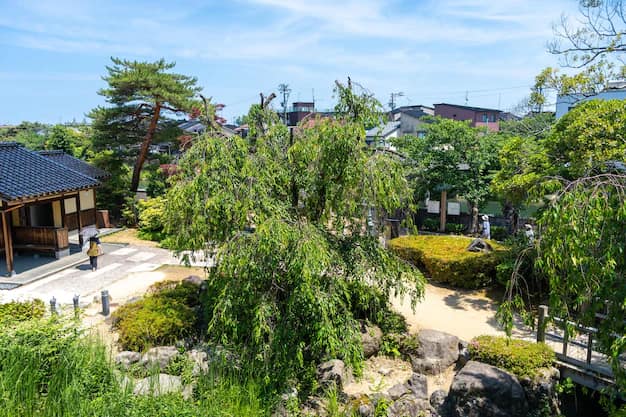
Two rivers frame the old town: the Asano to the north, the Sai to the south. Cross the Asano and you reach Higashi Chaya, the largest of the surviving geisha teahouse districts — a compact grid of two-storey wooden houses with fine vertical lattice screens, lit softly at dusk. A few of the houses are open to visitors and let you see the upstairs guest rooms, the lacquered walls and the small enclosed gardens. Nishi Chaya on the other side of the city is smaller and quieter, and Kazuemachi, strung along the riverbank, is the one locals will tell you to walk at twilight.
Nagamachi, below the castle, is the samurai quarter. Its yellow earthen walls, capped with tile and wrapped in straw matting through the winter, run along narrow lanes with water channels beside them. The Nomura-ke residence is the one to go inside: a mid-ranking retainer's house restored with a small, exquisitely tight garden that you view from a tatami room a few feet away. It takes half an hour and it explains more about how a samurai household actually lived than any museum panel.
One thing we ask every client to take seriously. The chaya districts are working neighbourhoods and private homes. Geisha and maiko moving between engagements are people going to work, not an attraction. Photographing them, or anyone else, without clear permission is not acceptable, and local signage now says so plainly. Stay off doorsteps, keep your voice down after dark, and the district will feel far more alive than it does through a lens.
Gold leaf, and the crafts that Maeda money paid for
Kanazawa produces the overwhelming majority of Japan's gold leaf — the humid climate suits the beating process — and the craft is everywhere once you notice it. Gold leaf here is beaten to a thickness measured in ten-thousandths of a millimetre. The city's signature photograph is a soft-serve ice cream sheathed in a whole square of it, which is faintly absurd and entirely harmless, and which every family we have sent has ended up buying. More interesting are the workshops that run hands-on sessions where you apply leaf to a lacquered box, chopsticks or a small dish and take it home the same day. These work well for children and for mixed-age groups, they are indoors, and they fill a wet afternoon usefully.
Beyond gold there is Kaga yuzen, the local school of hand-painted silk dyeing, with its characteristic deep, slightly muted palette and its willingness to paint insect-bitten leaves rather than perfect ones. There is Kutani porcelain, with its heavy overglaze colours, and Ohi pottery, made for the tea ceremony by a single family line for well over three centuries. Serious buyers should budget time and, ideally, ask us to arrange an interpreter for a workshop visit; the pieces are not cheap, and the value is in understanding what you are holding.
Omicho Market and a museum with a swimming pool
Omicho Market has been the city's kitchen for close to three hundred years — a covered warren of fishmongers, vegetable stalls, pickle sellers and small upstairs restaurants. In winter the crab stalls dominate it completely. Go before eleven in the morning if you want it working rather than performing. Even if you do not eat seafood, it is worth walking through for the vegetables alone; the produce of Kaga, including a set of traditional heritage varieties, is a point of local pride.
At the other end of the city's self-image is the 21st Century Museum of Contemporary Art, a low circular glass building set in open lawn with no front or back. Its outer ring is free to walk, which is unusual and generous; the inner galleries are ticketed. The best-known work is Leandro Erlich's Swimming Pool, which lets people stand under a sheet of water and look up at visitors above — the underside is inside the paid zone and typically needs a timed slot, so check the museum's current arrangements on the day you arrive rather than assuming you can walk in. The building itself is the reason to go even if the exhibitions do not appeal.
Getting there from Gujarat
There are no direct flights from India to Japan's Hokuriku coast, and none at all from Gujarat. In practice you fly from Ahmedabad or Mumbai via a Gulf hub, Singapore, Bangkok, Hong Kong or Seoul into Tokyo (Narita or Haneda) or Osaka Kansai. Surat travellers usually connect through Mumbai or Delhi; we go through the trade-offs of routing, baggage and overnight layovers in our note on international flights from Gujarat airports, and there is more on fare timing in our advice on booking flights cheaply out of India.
From Tokyo, the Hokuriku Shinkansen runs to Kanazawa in roughly two and a half to three hours depending on the service. In March 2024 the line was extended west from Kanazawa to Tsuruga, which changed how connections work from the Kansai side — travellers coming up from Osaka or Kyoto now transfer differently than the older guidebooks describe, so check the current routing when you plan rather than trusting an old blog post. On rail passes: the Japan Rail Pass covers the Hokuriku Shinkansen on the Tokyo side, but JR Pass pricing changed substantially in October 2023 and the pass no longer automatically saves money. It needs a calculation against your actual itinerary. For a Tokyo–Kanazawa–Kyoto–Osaka run with a couple of day trips it can still work; for a slower two-city trip it often does not. We do that arithmetic for clients rather than assuming an answer.
Visa: what Indian passport holders need to know
Japan requires a visa for Indian passport holders. Applications are made through the embassy, a consulate, or an accredited agency, and the documentation set generally includes a passport with adequate validity and blank pages, photographs to specification, the completed application form, a day-by-day itinerary, confirmed flight and hotel details, proof of funds through bank statements, and evidence of employment or business. Some applicants are asked for a guarantor. Japan has also been rolling out an electronic visa system for certain applicants, and both eligibility and process differ by jurisdiction — what applies to an applicant in one consular region may not apply in another.
Requirements, fees and processing times change, and we will not print numbers here that may be wrong by the time you read this. Verify current rules with the embassy or an accredited agency before you book anything non-refundable. Our step-by-step Japan visa guide for Gujarat applicants covers document preparation in detail, our Japan visa service page explains how we handle a file end to end, and if the trip is your first overseas journey, the first international trip checklist for Gujarat travellers is a sensible companion.
Season, and the weather nobody warns you about
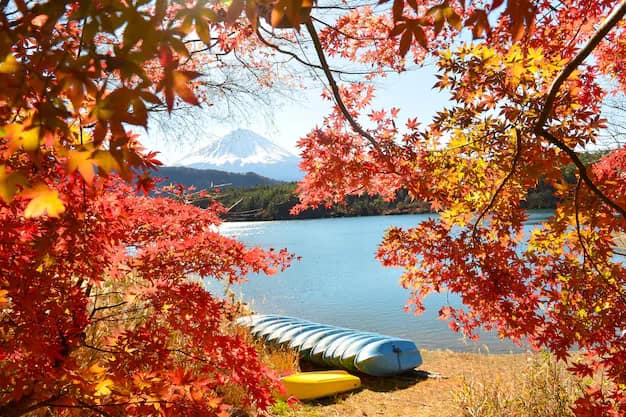
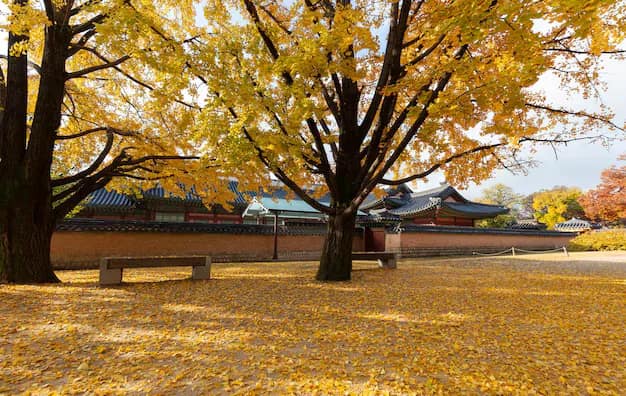
Cherry blossom at Kenrokuen usually falls around early April, later than Tokyo, and the garden opens free of charge for a short window at full bloom in most years. May brings deep fresh green and comfortable walking weather. Autumn colour runs roughly early to late November, overlapping neatly with the raising of the yukitsuri. Our guide to sakura timing across Japan explains how the bloom front moves north and why Kanazawa lags the Pacific coast.
Now the local specific. The Sea of Japan side is not the Japan of postcards. Kanazawa gets far more rain and snow than Tokyo or Osaka — grey skies, wet snow, sudden squalls — and the old joke is that you should not forget your umbrella even if you forget your lunch. An umbrella is a year-round item here. Winter is genuinely cold and genuinely snowy, which puts some travellers off, but it is also the season for crab and for the yukitsuri, and the old districts under snow are extraordinary. If deep winter appeals, our Hokkaido snow country guide is a useful comparison for how much cold you are actually signing up for.
Getting around, money and small practicalities
The city is compact but its sights are spread across three or four clusters, which catches people out. The Kanazawa Loop Bus circles the main sights in both directions and is the simplest answer; a rental bicycle is the pleasant one, and the flat riverside routes are easy. IC transit cards work on most services, and coin lockers at the station will hold your bags on arrival and departure days. Kanazawa Station itself is worth ten minutes: the enormous wooden Tsuzumi-mon gate, modelled on a hand drum used in Noh theatre, standing in front of a glass-and-steel dome.
Card acceptance in Japan keeps growing, but cash remains genuinely useful — small restaurants, temples, craft stalls and some buses still prefer it. Carry more yen than instinct suggests; our forex and money guide for Indian travellers covers cards, cash limits and charges. Sort connectivity before you fly using our eSIM and international SIM comparison, and do not travel without cover — travel insurance for Indian passport holders is inexpensive relative to Japanese medical costs. Etiquette is simple and non-negotiable: shoes off where indicated, phones silent and conversation quiet on trains, and no tipping anywhere. Tipping causes confusion rather than pleasure.
Eating as a vegetarian or Jain traveller
We will be straight about this, because glossing it over creates unhappy trips. Kanazawa's food culture is built on the sea. Kaisendon — a bowl of rice under sliced raw fish — is the local dish, and winter crab is the reason many Japanese visitors come at all. For a vegetarian traveller this is harder than the average Japan itinerary, not easier. The deeper problem is dashi, the stock made from dried bonito, which is in miso soup, in noodle broth, in simmered vegetables, in tempura dipping sauce — in a great many dishes that look entirely vegetarian. It has to be asked about directly, and a printed card in Japanese explaining what you do not eat is far more effective than a conversation.
The practical routes are good ones. Shojin ryori, Buddhist temple cuisine, is genuinely vegetarian and often beautiful, and can be arranged with notice. Tofu and yuba, the delicate skin lifted from soy milk, are local strengths. Vegetable tempura, inari sushi, zaru soba with a checked sauce, and the reliable convenience store shelves — onigiri, egg sandwiches, fruit — will carry you between proper meals. Larger Japanese cities now have a growing set of clearly vegan-labelled restaurants, and Kanazawa has a handful. A strict Jain traveller should plan seriously: onion and garlic are common in Japanese and Chinese-influenced cooking, root vegetables are everywhere, and carrying thepla, dry snacks, ready-to-eat packets and a small supply of masala is normal practice rather than a failure of nerve. We build vegetarian and Jain-aware routing into itineraries as a matter of course, and it is doubly worth doing when travelling with elderly parents.
What it costs, and where Kanazawa fits
Japan is not a cheap destination, but it is a predictable one. As an indicative range only, a ten to fourteen day Japan trip from Gujarat — return flights with one stop, mid-range hotels, rail travel, entries and daily meals — tends to land somewhere around ₹1,80,000 to ₹3,20,000 per person, and can go higher in cherry blossom and autumn peaks or with premium hotels, and lower with business hotels, off-season flights and disciplined eating. Those figures are indicative and season-dependent, not a quotation. The variables that move them most are the flight routing, the season, and whether a rail pass genuinely pays for itself. Our note on planning an overseas travel budget from Gujarat sets out the categories to price properly.
Structurally, Kanazawa is the natural break in the middle of a Japan trip. Tokyo for three or four nights, the shinkansen west, two nights in Kanazawa, then onward to Kyoto and Osaka. Two nights is the right length: one full day for Kenrokuen, the castle park and Nagamachi, a second for the chaya districts, Omicho and the museum, with a craft workshop wherever the weather pushes you indoors. Many travellers pair it with Shirakawa-go, the thatched-roof village reachable by bus, and Takayama in the mountains beyond, which turns two nights into four and is a very good use of them. If you want the shorter classic route first, our seven-day Tokyo, Kyoto and Osaka itinerary is the baseline, and the broader Japan travel primer for Indian visitors covers the country-level questions this post assumes.
If Kanazawa sounds like your kind of place — and it tends to appeal to travellers who like gardens, craft and quiet more than neon and theme parks — our team in Surat can put the whole thing together: routing from Ahmedabad or Mumbai, the visa file, rail arrangements including an honest pass calculation, hotels near the station or the old town, craft workshops booked in advance, and vegetarian or Jain meals planned rather than improvised. Talk to our travel consultants in Surat about dates and budget, or look through our ready-made and custom tour packages from Surat to see how a Japan trip is usually shaped. We will tell you honestly if a different season or a different city suits you better.