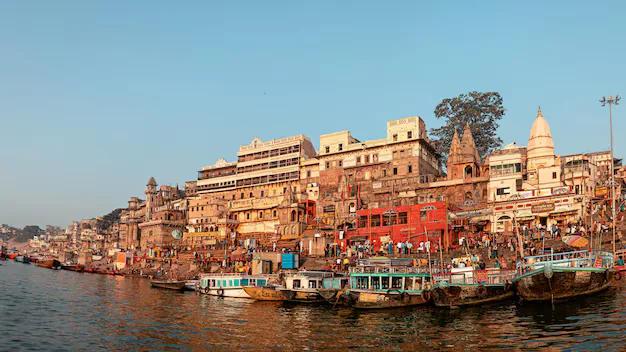
Varanasi, also called Kashi and Banaras, sits on a crescent of the Ganga in Uttar Pradesh and is often described as one of the oldest continuously inhabited cities in the world. For Hindu families from Gujarat it is a once-in-a-lifetime pilgrimage: darshan at Kashi Vishwanath, a dip or a boat ride on the Ganga, and the evening aarti on the ghats. For every traveller it is one of the most intense and moving places in India.
This guide covers how to get to Varanasi from Gujarat, temple darshan, the ghats and aartis, Sarnath, food, the best months and a realistic plan. Temple rules, timings and train schedules change, so confirm them shortly before you travel.
Why is Varanasi so important to Hindus?
Kashi is considered the city of Shiva, and the Kashi Vishwanath temple is one of the twelve jyotirlingas. Many Hindus believe that dying in Kashi brings moksha, which is why the cremation ghats burn day and night and why elderly pilgrims have come here for centuries. The city is also a centre of learning, music and craft: Banaras Hindu University, the Banaras gharana of classical music, and the silk weavers whose Banarasi saris are worn at Gujarati weddings.
How do you get to Varanasi from Gujarat?
Varanasi's Lal Bahadur Shastri International Airport, about 25 kilometres from the city, has flights from Ahmedabad and other metros, either direct or with one stop depending on the season; check current schedules. Long-distance trains connect Gujarat with Varanasi and nearby Pandit Deen Dayal Upadhyaya Junction, and an overnight journey in an AC sleeper is comfortable for families. Book train tickets the day bookings open around Diwali, Dev Deepawali and winter holidays. Our tips on finding cheaper flights from India help for the air route.
How does darshan at Kashi Vishwanath work?
The temple now sits inside the Kashi Vishwanath Dham, a wide corridor that connects it directly to the ghats. Mobile phones, cameras, bags, leather belts and wallets are not allowed inside; lockers are available near the gates, but the simplest plan is to carry only your ID and some cash. Queues are longest on Mondays, in the month of Shravan and on festival days. Early morning is calmest, and the temple trust has offered paid and special darshan options, so check the official website for current timings and tickets.
Which ghats and aartis should you see?
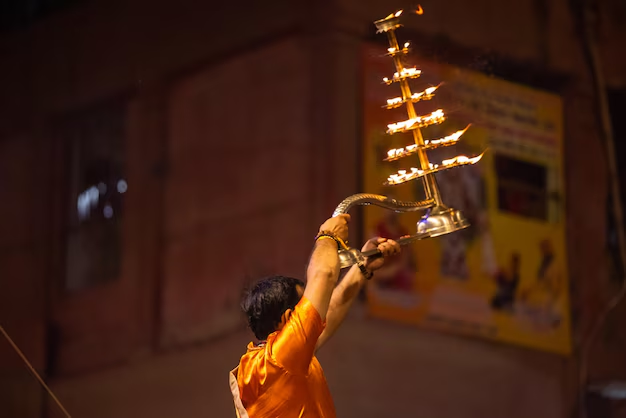
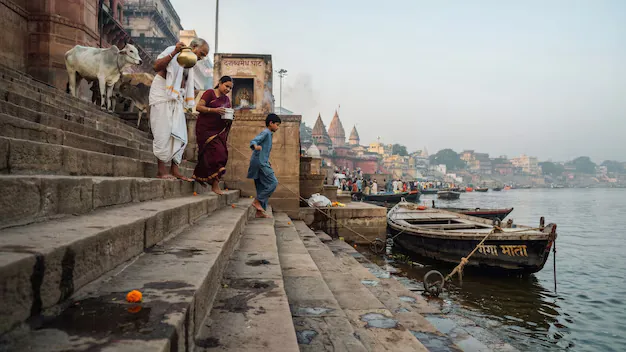
Varanasi has more than eighty ghats along about six kilometres of river. The evening Ganga aarti at Dashashwamedh Ghat, with priests in matching robes moving great brass lamps in unison, is the most famous ceremony; come an hour early for a seat on the steps, or book a boat and watch from the water. At dawn, Assi Ghat holds a quieter morning programme with aarti, music and yoga, and a rowing boat from Assi towards Manikarnika as the sun rises is the classic Varanasi experience.
Manikarnika and Harishchandra are the cremation ghats. Visitors may pass by on foot or by boat, but this is a place of grief for the families present: keep a respectful distance, do not photograph funerals, and politely refuse anyone who offers a paid tour or asks for donations for wood.
Is Sarnath worth a visit?
Yes. Sarnath, about ten kilometres from the city, is where the Buddha gave his first sermon after enlightenment. The Dhamek Stupa, the ruins of ancient monasteries and the archaeological museum, which holds the original Lion Capital of Ashoka used as India's national emblem, make a peaceful half-day. Ramnagar Fort across the river and the campus of Banaras Hindu University, with its large Vishwanath temple, are other easy additions.
When is the best time to visit?
October to March is the season, with pleasant days and cool mornings that suit early boat rides. Dev Deepawali, on the full moon of Kartik about two weeks after Diwali, is the most spectacular night of the year, when the ghats are lit with lakhs of diyas; hotels and boats sell out months ahead. April to June is very hot, and in the monsoon from July to September the river rises and some ghats and boat services may be closed.
Food, shopping and practical tips
Varanasi is a joy for vegetarian and Jain travellers. Try kachori-sabzi and jalebi for breakfast, thick lassi in a clay cup, tamatar chaat, the winter dessert malaiyyo, and a Banarasi paan after dinner; many eateries in the old city serve sattvik food without onion and garlic on request. For shopping, buy Banarasi silk from established weavers' cooperatives or shops that show the silk mark, rather than from touts who approach you on the ghats.
The old city lanes are narrow and crowded, so stay near the ghats or in the Godowlia area and walk, or use e-rickshaws. Wear comfortable footwear you can slip off, carry small notes, and keep an eye on belongings in crowds. For older parents, a hotel with lift access and a car to the nearest point of the ghats makes a big difference. If this is part of a longer pilgrimage, our guides to Somnath and Dwarka darshan from Gujarat and the Vaishno Devi yatra cover other journeys families often combine.
Frequently asked questions
How many days do you need in Varanasi?
Two to three nights: one evening for the Ganga aarti, one dawn boat ride, temple darshan, a walk through the old city and a half-day in Sarnath.
Is Varanasi suitable for elderly parents?
Yes, with planning. Book a hotel close to the ghats with a lift, arrange a car or e-rickshaw to the nearest drop-off point, and choose early morning darshan to avoid long queues in the heat.
Can you combine Varanasi with other places?
Many families add Prayagraj, about three hours away, for the Triveni Sangam, or Bodh Gaya for the Buddhist circuit. Ayodhya is also within a long day's drive. For other sacred river towns, see our Rishikesh and Haridwar guide, and for the Golden Temple, our Amritsar travel guide.
Explera Vacations plans Varanasi pilgrimages from Surat, with train or flight tickets, hotels near the ghats, darshan guidance and private boats arranged. Share your dates through our contact page, or ask about our fixed-departure group tours.