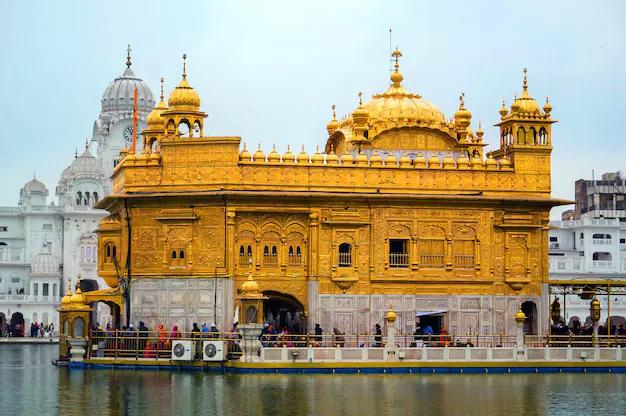
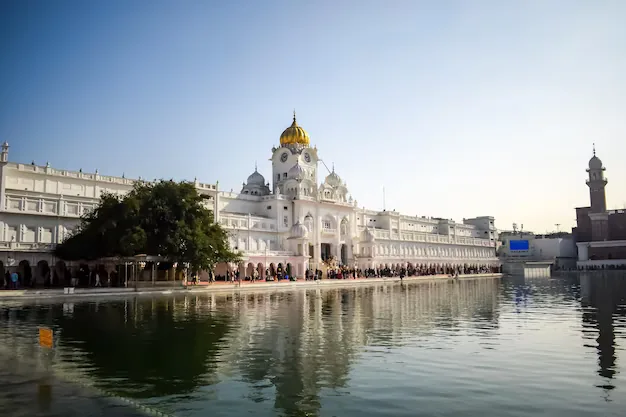
Amritsar is the spiritual heart of Sikhism and one of the most welcoming cities in India. At its centre is Sri Harmandir Sahib, the Golden Temple, its gilded sanctum floating in a sacred pool and open to people of every faith, day and night. For travellers from Gujarat, Amritsar combines a profound spiritual visit with powerful modern history at Jallianwala Bagh and the Partition Museum, the patriotic ceremony at the Attari–Wagah border, and some of the best food in India.
This guide covers how to reach Amritsar, temple etiquette and the langar, the main sights, the border ceremony, food, the best months and a sensible plan. Ceremony timings and access rules can change, so confirm them shortly before your visit.
What should you know before visiting the Golden Temple?
The Golden Temple welcomes everyone, but it is an active gurdwara with simple rules. Cover your head; scarves are available free at the entrances. Remove your shoes and socks at the free shoe counters, wash your feet in the shallow channels at the gates, and do not bring tobacco or alcohol anywhere near the complex. Inside, walk clockwise around the sacred pool, the Amrit Sarovar, and join the queue across the causeway to the sanctum, where the Guru Granth Sahib is recited continuously. Photography is not allowed inside the sanctum.
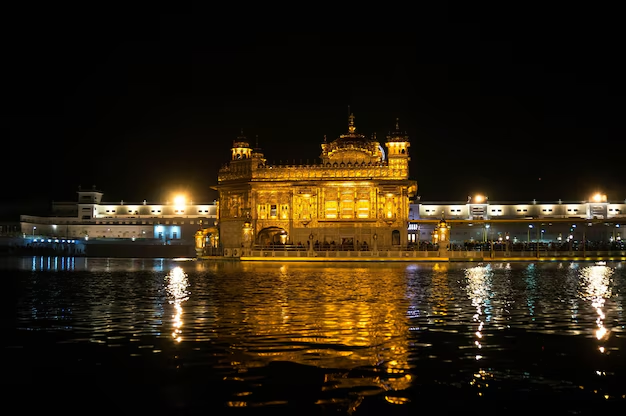
The temple is open around the clock. Early morning, when the Guru Granth Sahib is carried to the sanctum in the Palki Sahib procession, and late evening, when it returns and the complex glows under lights, are the most moving times to visit.
How does the langar work?
The Guru Ka Langar at the Golden Temple is one of the largest free community kitchens in the world, serving simple vegetarian meals of dal, roti, rice and kheer to every visitor regardless of religion, caste or status, every day. You sit in rows on the floor, eat what is served and leave your plate at the washing area. Volunteering for a short while, rolling rotis, chopping vegetables or washing plates, is welcomed and is one of the most memorable things you can do in Amritsar. Many Gujarati families tell us it was the highlight of their trip.
How do you get to Amritsar from Gujarat?
Sri Guru Ram Dass Jee International Airport is about 11 kilometres from the city centre, with flights from Ahmedabad and other cities, direct or via Delhi depending on the schedule. Trains from Gujarat reach Amritsar Junction directly or via Delhi, and the Shatabdi and Vande Bharat services from Delhi take around five to six hours. Hotels around the Golden Temple's heritage street are convenient for walking to the temple at any hour.
Which other sights should you see?
Jallianwala Bagh, a short walk from the temple, is the garden where British troops fired on a peaceful gathering in April 1919. The memorial, the bullet-marked walls and the martyrs' well make a sobering visit, and the evening light-and-sound show tells the story. The Partition Museum in the restored Town Hall documents the upheaval of 1947 through personal stories, objects and letters, and is one of India's best modern museums. Gobindgarh Fort, a restored Mughal and Sikh-era fort, has shows and food stalls in the evening.
What is the Attari–Wagah border ceremony like?
Every evening before sunset, soldiers of India's Border Security Force and Pakistan's Rangers perform the Beating Retreat ceremony at the Attari–Wagah border, about 30 kilometres from Amritsar. The high-kicking march, the lowering of both flags and the patriotic crowds make it loud, emotional and unforgettable. Arrive at least two hours early for a seat, carry your photo ID, and leave bags in the car, because large bags are not allowed through security. Timings shift with the season, so check them on the day.
When is the best time to visit?
October to March is the most pleasant time, with cool days and cold nights; December and January can bring dense morning fog that delays flights and trains. Gurpurab, the birth anniversary of Guru Nanak, usually in November, and Diwali, when the temple is illuminated and fireworks light the pool, are especially beautiful but crowded. Vaisakhi in April celebrates the harvest and the founding of the Khalsa. May and June are very hot.
What should you eat in Amritsar?
Amritsar's food is famous, and much of it is vegetarian. Try Amritsari kulcha stuffed with potato and served with chole, thick lassi in steel tumblers, sarson da saag with makki di roti in winter, and phirni or kulfi for dessert. Many dhabas around the old city have been serving the same dishes for generations. Jain travellers can ask for food without onion and garlic, though it is easier at hotels than at busy dhabas.
Frequently asked questions
How many days do you need in Amritsar?
Two to three nights: one full day for the Golden Temple, the langar, Jallianwala Bagh and the Partition Museum, and a second for Gobindgarh Fort, shopping and the Wagah ceremony.
Is Amritsar suitable for elderly parents?
Yes. The temple has wheelchairs and is accessible, and the heritage street around it is pedestrianised. Choose a hotel close to the temple and avoid the busiest festival days.
What can you combine with Amritsar?
Dharamshala and McLeod Ganj, about five hours away, and Dalhousie make good hill extensions, and Haridwar is an overnight train away for the Ganga aarti at Har Ki Pauri. For other North India circuits, see our Rajasthan tour guide from Gujarat and our Vaishno Devi yatra guide; and for a sacred city of a different faith, our Varanasi travel guide.
Explera Vacations plans Punjab trips from Surat, with flights or trains, hotels near the Golden Temple, a driver for Wagah and a guide for the old city. Share your dates through our contact page, or browse our tour packages from Surat.