Haridwar and Rishikesh sit where the Ganga leaves the Himalaya and enters the plains of Uttarakhand. Haridwar is one of Hinduism's seven holiest cities and the gateway to the Char Dham; Rishikesh, a short drive upstream, is known around the world as the capital of yoga, and for its ashrams, suspension bridges and white-water rafting. Together they make one of the easiest and most rewarding trips from Gujarat for families, pilgrims and young travellers alike.
This guide covers how to get there, what to see in each town, rafting and yoga, the best months, food and a realistic plan. Bridge closures, rafting seasons and temple timings change, so confirm them close to your dates.
What is the difference between Haridwar and Rishikesh?
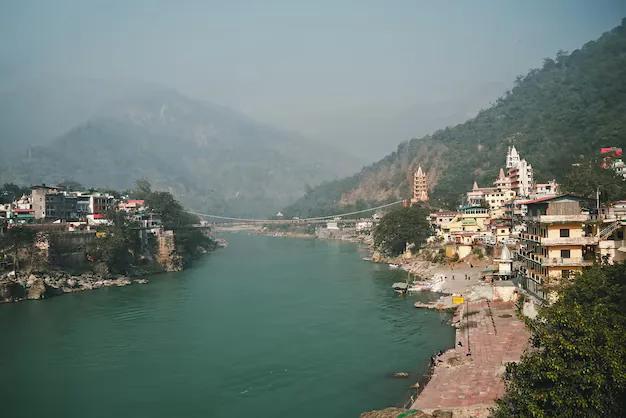
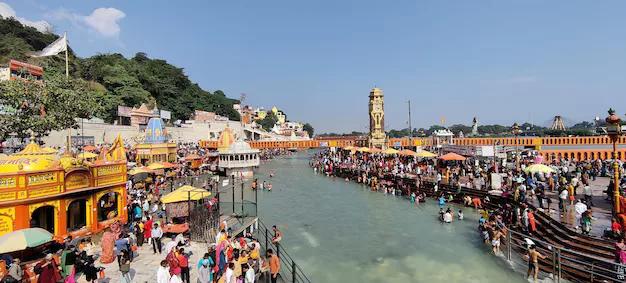
Haridwar is a busy pilgrimage city built around the ghats where the Ganga flows fast and cold from the mountains. Families come for a holy dip, for rituals for ancestors, and for the evening aarti at Har Ki Pauri. Rishikesh is smaller and greener, spread along both banks of the river between forested hills, with ashrams, yoga schools, cafes and the adventure activities that draw younger travellers. Most visitors stay one or two nights in each, or base themselves in Rishikesh and visit Haridwar for an afternoon and evening.
How do you get there from Gujarat?
The nearest airport is Dehradun's Jolly Grant, about 35 kilometres from Rishikesh and 40 from Haridwar, with flights from Ahmedabad and other cities, direct or via Delhi depending on the schedule. By rail, trains from Gujarat reach Haridwar Junction directly or via Delhi, and an overnight AC sleeper suits families. From Delhi it is about five to six hours by road. Book early for summer holidays, the Kanwar Yatra in July and the start of the Char Dham season, when demand peaks.
What should you see in Haridwar?
The heart of Haridwar is Har Ki Pauri, the ghat where the evening Ganga aarti is performed as hundreds of diyas float downstream. Arrive at least an hour before sunset for a place on the steps, keep your footwear in the free stands, and beware of anyone collecting money in the name of the aarti. Two hilltop temples, Mansa Devi and Chandi Devi, are reached by ropeway and give views over the city and river. The ghats are crowded on festival days and holy dates, so hold children's hands and keep an eye on belongings.
What should you see in Rishikesh?
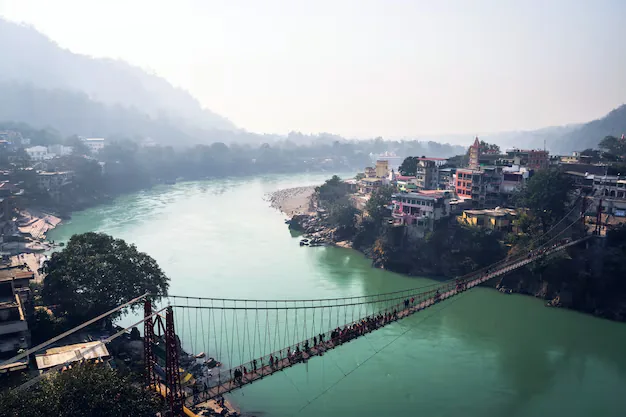
Rishikesh's two famous suspension bridges, Ram Jhula and Lakshman Jhula, link the ashram areas on either bank. Lakshman Jhula has been closed to traffic for safety reasons for several years and a new bridge has been under construction nearby, so check which crossings are open; Ram Jhula and the riverside boats are the usual alternatives. On the east bank, Parmarth Niketan holds an evening aarti on its own ghat, and Triveni Ghat has a busier public one in the town centre.
The Beatles Ashram, where the band stayed in 1968, is a ticketed site of crumbling meditation huts and murals inside the Rajaji reserve area. Around town, temples such as the thirteen-storey Trayambakeshwar temple near Lakshman Jhula, cafes overlooking the river and the quieter ghats upstream reward slow walking. In March the town hosts the International Yoga Festival, and drop-in classes run all year at many ashrams.
Is river rafting in Rishikesh safe?
Rafting on the Ganga above Rishikesh is popular and generally well run, but it is a real white-water activity. The usual stretches, from Brahmpuri, Shivpuri or Marine Drive down to town, range from gentle rapids suitable for beginners to longer runs with stronger grade III and IV rapids. The season usually runs from around September to June, and rafting stops during the monsoon, when the river is high. Choose a licensed operator, wear the helmet and life jacket provided, listen to the safety briefing, and check age and health limits before booking. Bungee jumping and zip lines near Rishikesh have their own weight and age rules.
When is the best time to visit?
October to April is the most comfortable time, with clear skies and good rafting. Winter mornings and evenings are cold, so pack warm layers for the aarti. May and June are hot but busy with summer holidays and the start of the Char Dham yatra. In the monsoon, from July to September, heavy rain can cause landslides on hill roads, rafting closes, and the Kanwar Yatra brings huge crowds to Haridwar.
Food, stays and practical tips
In the holy areas of Haridwar and Rishikesh, meat and alcohol are not served, so vegetarian and Jain travellers eat easily. Try kachori and aloo sabzi on the Haridwar ghats, and the many cafes in Rishikesh serving thalis, South Indian food and fresh juices. Stay options range from simple dharamshalas and ashram rooms, where you follow the ashram's timings and rules, to riverside resorts and hotels upstream of Rishikesh. Carry a scarf or shawl for temples, modest clothes for ashrams, and cash for small shops.
Rishikesh is also the gateway to the Himalaya: if you want to go further into the mountains, our Shimla and Manali tour guide and Spiti Valley road trip guide cover Himachal, and our Kailash Mansarovar yatra guide covers the high pilgrimage beyond.
Frequently asked questions
How many days do you need for Haridwar and Rishikesh?
Three to four days: one for Haridwar and the evening aarti, one or two for Rishikesh's ashrams, bridges and rafting, and a buffer for travel.
Is it suitable for elderly parents?
Yes. Haridwar's ghats and the ropeway temples are manageable with care, and Rishikesh can be explored slowly by car and short walks. Choose hotels with lifts and avoid the busiest festival dates.
Can you combine it with the Char Dham?
Yes. Haridwar and Rishikesh are the starting points for the Char Dham yatra to Yamunotri, Gangotri, Kedarnath and Badrinath, which needs registration and careful planning; ask us about current requirements. Families who want to see the Ganga further downstream often add our Varanasi ghats and Kashi Vishwanath guide.
Explera Vacations plans Uttarakhand trips from Surat, from flights and trains to riverside hotels, rafting with licensed operators and Char Dham registration. Tell us your dates through our contact page, or browse our tour packages from Surat.