The caves of Ellora and Ajanta in Maharashtra are among the greatest achievements of ancient Indian art, and both are UNESCO World Heritage Sites. At Ellora, Buddhist, Hindu and Jain monks and craftsmen carved 34 temples and monasteries into a basalt cliff, including the Kailasa temple, cut downward from a single rock. At Ajanta, a horseshoe gorge holds Buddhist caves whose paintings are the finest surviving examples of early Indian art. For travellers from Gujarat, they are close enough for a long weekend and remarkable enough for a lifetime.
This guide covers how to get there, how to see each site, the closing days, Grishneshwar and the other sights, the best months and a realistic plan. Ticket prices, opening days and transport arrangements can change, so confirm them before you travel.
What makes the Kailasa temple at Ellora so special?
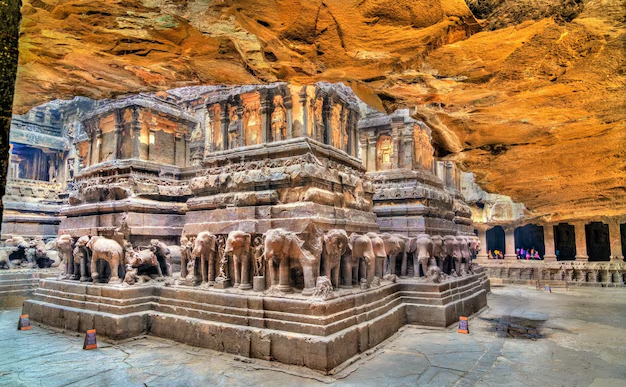
Kailasa, cave 16, is a complete temple to Shiva carved out of the rock from the top down in the eighth century, under the Rashtrakuta dynasty. Instead of building with blocks, the sculptors removed an estimated hundreds of thousands of tonnes of stone to leave a multi-storey temple with a shrine, a Nandi pavilion, life-size stone elephants, towers and galleries covered in carvings from the Ramayana and the Mahabharata. Walk the courtyard first, then climb to the paths along the top of the cliff for the view down into the temple.
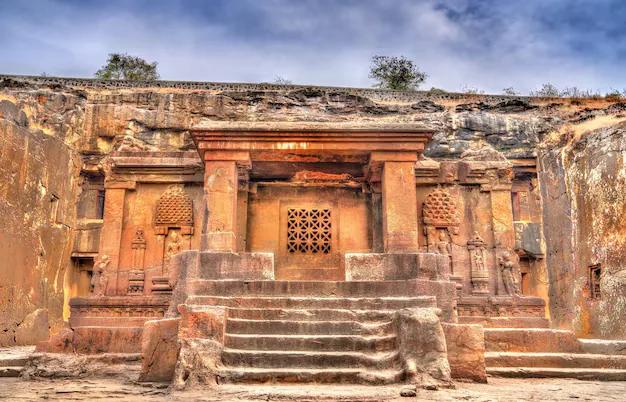
How do you see the rest of Ellora?
The 34 caves run for about two kilometres along the cliff. The Buddhist caves, numbered 1 to 12, include monasteries with sleeping cells and the beautiful Vishwakarma cave, cave 10, with its ribbed roof and seated Buddha. The Hindu caves, 13 to 29, include Kailasa and the Dashavatara cave. The Jain caves, 30 to 34, are a short ride away and have delicate carvings of the tirthankaras that Jain families from Gujarat especially value. Allow at least half a day, and use the site's buses or battery vehicles between the groups.
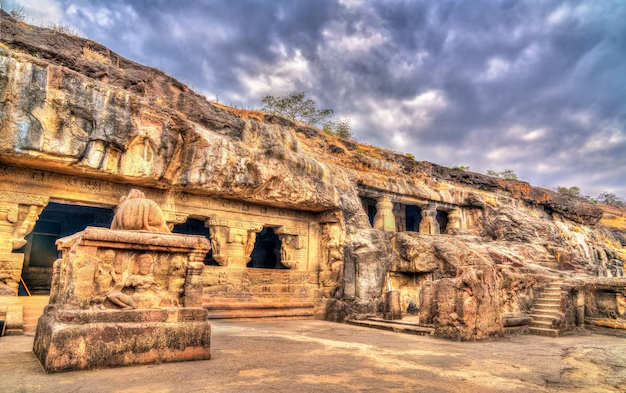
Why are the Ajanta paintings so important?
Ajanta's 30 or so caves were carved in two phases, from around the second century BCE to the fifth century CE, along a curve of the Waghur river. Their wall paintings of the Buddha's life and the Jataka stories show kings, dancers, animals and daily life in rich colour, and they influenced art across Asia. Light levels are kept low to protect the paintings, flash photography is not allowed, and some caves limit the number of visitors at a time. Private vehicles stop at a visitor centre, and buses carry visitors the last few kilometres to the caves.
How do you get there from Gujarat?
Chhatrapati Sambhajinagar, the city formerly called Aurangabad, is the base for both sites. It has an airport with flights from major cities, mostly via Mumbai or Delhi, and a railway station on the line from Mumbai. From Surat the drive is roughly 400 kilometres, or seven to eight hours, which makes a road trip practical for families with their own car or a hired driver. Ellora is about 30 kilometres from the city and Ajanta about 100 kilometres, around two and a half hours by road.
Grishneshwar and the other sights
The Grishneshwar temple, one of the twelve jyotirlingas of Shiva, is about a kilometre from the Ellora caves, so many families combine darshan with their Ellora day; men are traditionally asked to remove their shirts in the sanctum. Pilgrims visiting several jyotirlingas often pair it with our Somnath and Dwarka pilgrimage guide. Daulatabad Fort, a medieval hill fort with a famous dark passage, sits on the road between the city and Ellora. In the city, Bibi ka Maqbara, built in the seventeenth century and often called the Taj of the Deccan, and the shops selling Paithani silk and Himroo weaves are worth a few hours.
When is the best time to visit?
October to March is the most comfortable time, with cool mornings that suit the long walks. The monsoon, from July to September, turns the Ajanta gorge green and fills the waterfall at its head, though paths can be slippery. April to June is hot, and the bare rock and open courtyards at Ellora become very warm by midday, so start early. Remember that Ellora is usually closed on Tuesdays and Ajanta on Mondays.
Food and practical tips
Maharashtrian vegetarian food is easy to find: thalis, poha, misal pav, and the local naan khaliya for non-vegetarians in the city. Restaurants at both sites are basic, so carry water and snacks. Wear comfortable shoes you can slip off at shrines, a hat and sun protection. Older travellers should plan for steps at both sites; at Ajanta, palanquin chairs have been available for those who cannot manage the climb.
If you enjoy ancient sites, our Hampi travel guide covers the Vijayanagara ruins, and for a weekend closer to home, see our Saputara hill station guide, which is on the way from Surat. For a beach and temple trip further south, see our Gokarna and Murudeshwar guide.
Frequently asked questions
How many days do you need for Ellora and Ajanta?
Three days is comfortable: one for Ellora, Grishneshwar and Daulatabad, one for Ajanta, and a half day in the city. Two days is possible if you start early.
Which should you choose if you only have time for one?
Ellora is closer and more varied, with the Kailasa temple and caves of three faiths. Ajanta is the place for paintings. With one day only, choose Ellora.
Is it suitable for children?
Yes. Children usually love the scale of Kailasa and the cave buses at Ajanta. Plan breaks, carry water, and avoid the midday heat.
Explera Vacations plans Maharashtra heritage trips from Surat, with a car and driver, hotels in Chhatrapati Sambhajinagar and guides at both sites. Tell us your dates through our contact page, or ask about our fixed-departure group tours.