Iceland is the destination that feels less like a country and more like a set of natural special effects: waterfalls thundering off green cliffs, geysers firing on a schedule, glaciers you can walk on and a milky-blue geothermal lagoon you soak in while it drizzles. For a traveller flying out of Surat or Ahmedabad it is a genuine long haul, usually via Dubai, Doha, London, Frankfurt or another European hub into Keflavík airport near Reykjavík, so most Gujarati families treat it as a once-in-a-lifetime add-on to a wider Europe plan rather than a quick beach break. The single most useful fact to hold onto is that Iceland has two completely different faces by season: the long-daylight summer of roughly June to August when the whole Ring Road opens up, and the dark, cold winter when the northern lights become possible but many highland roads close. Reykjavík makes a compact, walkable base with almost the entire population living in and around it, and it pairs naturally with the kind of wider loop we map out in our Europe first-timer itinerary from India. This guide walks you through the Golden Circle, the Ring Road's headline sights, the Blue Lagoon, the aurora question and how the Schengen visa and budget actually work from India.
The Golden Circle: Þingvellir, Geysir and Gullfoss
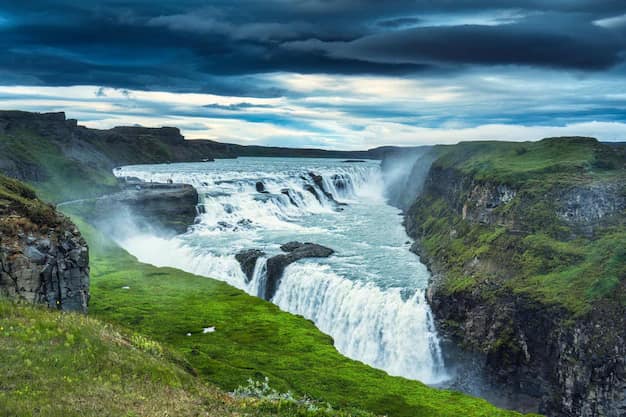
If you only have a day or two, the Golden Circle is the classic Iceland sampler, a compact loop east of Reykjavík that packs three headline sights into a comfortable day trip. You start at Þingvellir National Park, a UNESCO-listed rift valley where the North American and Eurasian tectonic plates are visibly pulling apart and where Iceland's first parliament met over a thousand years ago. Next is the Geysir geothermal area, where the dependable Strokkur spout blasts boiling water skyward every few minutes, and finally Gullfoss, the mighty two-tiered waterfall that gives this guide its cover photo and roars with glacial meltwater. It is entirely doable as a self-drive or a guided coach tour, and it works in every season, though winter ice makes the paths slippery and the daylight short. Time your visit using the season notes in our best time to visit Europe guide, because the same trip feels wildly different in July sunshine versus January twilight.
Driving the Ring Road: waterfalls, glaciers and black-sand beaches
The Ring Road, or Route 1, is the roughly 1,300-kilometre highway that circles the whole island, and driving even part of it is the best way to understand why people fall for Iceland. Heading east along the south coast you string together a run of unforgettable stops: the waterfalls of Seljalandsfoss, which you can walk behind, and the powerful Skógafoss, then the black-sand beach and basalt columns at Reynisfjara near Vík, and further on the glacier tongues of Vatnajökull and the surreal Jökulsárlón glacier lagoon where icebergs drift out to sea past Diamond Beach. A full loop deserves at least six or seven days, while a shorter trip can focus on the south coast alone and still feel epic. The scenery has the same glacier-carved, waterfall-lined drama that draws Indian travellers to the fjords in our companion Norway fjords guide from India, so the two make a natural pair if you are comparing Nordic routes. If you plan to self-drive, respect the weather warnings, keep the tank topped up in the sparse east, and never attempt closed highland F-roads in a normal car.
The Blue Lagoon and chasing the northern lights
No Iceland trip is complete without a long soak in geothermal water, and the Blue Lagoon near Keflavík is the famous one, a milky-blue spa set in a black lava field that is conveniently close to the airport for your arrival or departure day. It gets busy and is not cheap, so pre-book a time slot rather than turning up, and if you want a quieter, cheaper dip consider the Sky Lagoon near Reykjavík or one of the local public geothermal pools that Icelanders actually use. The northern lights are the other big draw, and here you deserve an honest answer: the aurora is only realistically visible in the dark winter months, roughly September to March, on clear nights away from city lights, and it is never guaranteed no matter how much you pay. Some nights you will be rewarded with dancing green curtains; other nights the clouds win and you see nothing, so build in several evenings and treat any sighting as a bonus rather than a booking. If aurora is your main motivation, read our dedicated northern lights across Iceland and Scandinavia guide before you commit, because the same Schengen visa can also send you to Norway or Finnish Lapland.
Visa, flights and budget from India
Iceland is part of the Schengen area, so Indian passport holders apply for a short-stay Schengen visa, and because Iceland does not have its own visa page here you route the application through our Schengen visa desk and our detailed Schengen visa guide from Gujarat. Where you actually lodge the file depends on your itinerary and appointment availability, which is exactly what our Schengen visa from Surat walkthrough and our note on the best Schengen country to apply from in Gujarat are built to help you decide, so always verify the current rules, fees and appointment situation before you book flights. Iceland is one of Europe's more expensive destinations once you add car hire, fuel, tours and food, so a week-long trip of seven to ten days can run into several lakhs per couple excluding international airfare, and any single figure you see quoted should be treated with caution and priced for your own dates and season. Load a travel card sensibly after reading our forex and money guide for international travel, and never skip proper cover, which is what our travel insurance guide for Indian travellers is for, especially on a self-drive trip where weather can change your plans.
Frequently asked questions
When is the best time to visit Iceland from India?
June to August gives long daylight, open Ring Road access and running waterfalls, while roughly September to March is the darker, colder window when the northern lights become possible but many highland roads close.
Are the northern lights guaranteed in Iceland?
No, the aurora is only realistically visible on clear, dark winter nights and is never guaranteed, so plan several evenings, keep expectations honest and treat any sighting as a lucky bonus.
Do Indians need a visa for Iceland?
Yes, Iceland is in the Schengen area, so Indian travellers need a short-stay Schengen visa, and since the rules and appointment slots change we recommend letting our visa desk file it correctly rather than guessing.
Ready to turn this into a real Iceland trip?
Explera Vacations plans Iceland holidays end to end for Surat and Gujarat travellers — flights, the Golden Circle and Ring Road, the Blue Lagoon, an optional winter aurora leg and the Schengen visa — so message our team on WhatsApp or contact us and browse our tour packages from Surat to lock in your dates.