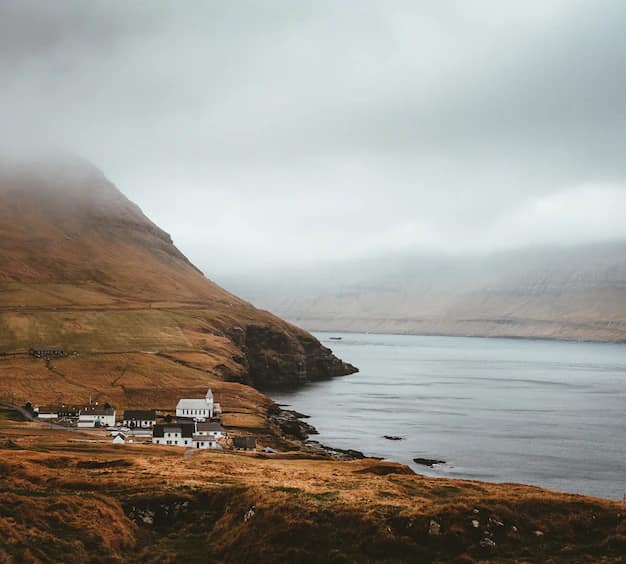
Some places photograph better than they live. The Isle of Skye is the rare one that does the opposite — no camera quite catches the scale of a ridge of black rock rising straight out of wet green moorland, or the way the light changes four times in an hour. For travellers from Surat and Gujarat who have already ticked off London and are hunting for something wilder, Skye is one of the most rewarding corners of Britain. It is also one of the most misunderstood, because a great many visitors arrive with a one-day plan, meet a wall of cloud and rain, and leave without seeing a single thing they came for. This guide is written to stop that happening to you.
Why Skye feels like the most dramatic corner of Britain
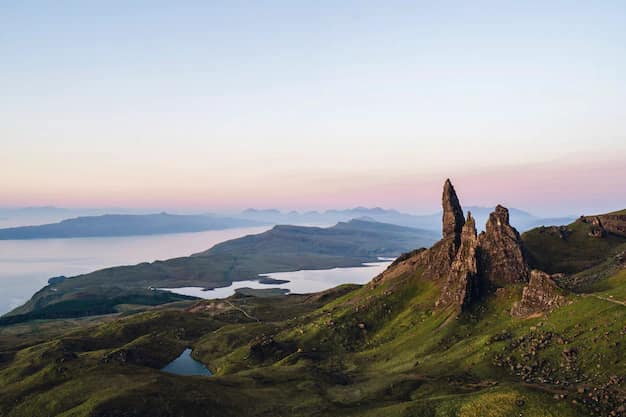
Skye sits off Scotland's north-west coast, connected to the mainland by a bridge, and it packs an improbable amount of landscape into an island roughly 80 km long. The Trotternish peninsula in the north holds the Old Man of Storr — a lone basalt pinnacle standing above a landslip terrace — and the Quiraing, a still-moving slice of collapsed hillside that looks like something out of a fantasy film. In the south, the Cuillin mountains are serious, jagged, and genuinely mountaineering terrain rather than tourist walks. The west coast ends at Neist Point, where a white lighthouse sits on a green finger of land above the Atlantic. Portree, the island's small harbour capital, gathers most of the accommodation, restaurants and buses. For Indian travellers used to Europe's cathedral-and-cafe circuit, Skye is an entirely different register — this is a place you come for weather, rock and silence.
Getting to Skye from India: flights, trains and the long drive
There is no airport on Skye. You fly into Scotland and drive. The usual routing from Gujarat is Ahmedabad or Mumbai to London Heathrow on a direct or one-stop service, then a domestic hop to Glasgow, Edinburgh or Inverness; alternatively, connect through a Gulf hub such as Dubai, Doha or Abu Dhabi, which often works out more comfortable for evening departures. From Glasgow the drive north is roughly 5 to 6 hours; from Inverness it is closer to 3 hours and arguably the prettier approach. Our team can help you compare routings and stopovers through our flight booking services in Surat so you are not stitching together three separate tickets yourself.
If you would rather not drive at all, the train from Inverness to Kyle of Lochalsh is one of the great scenic rail journeys in Britain, ending at the bridge to Skye. Be honest with yourself about what happens next, though: without a car you are dependent on a thin network of local buses and a handful of day tours, most viewpoints involve long waits, and the Quiraing and Neist Point are difficult to reach at all. A hire car makes Skye. If you plan to drive, an International Driving Permit issued in India alongside your valid Indian licence is normally required by rental companies — apply at your local RTO well before departure, and verify current requirements with your rental provider, since policies change.
Visa and paperwork before you go
Skye is in the United Kingdom, so you need a UK Standard Visitor visa. Applications run through an online form, a biometrics appointment at a visa application centre, and a document set covering finances, employment and travel intent — our full walkthrough for the UK visa application process from Gujarat covers what the caseworker is actually looking for. Processing times shift with season, so start early rather than three weeks before your flight. If you are unsure which visa route fits your trip, our explainer on visa categories and how they differ for Indian passport holders is a useful starting point, and you can begin a UK application directly through our UK visa assistance page.
Two more things worth knowing. First, digital entry systems for the UK have been changing — read up on the UK electronic travel authorisation updates for 2026 and verify the current position before you book, because these rules have moved more than once. Second, a UK visa in your passport can ease entry to a handful of other destinations; our piece on countries that accept a valid UK visa from Indian nationals sets out where that genuinely applies. And please do not skip cover — remote Highland roads, long walks and unpredictable weather are exactly the situation comprehensive travel insurance for Indian passport holders exists for.
The best time to visit — and the honest catch
May, June and early September are the sweet spot. Daylight in June stretches past 10 pm, which means you can walk the Storr after dinner and still drive back in light. Temperatures sit around 12–18°C in summer, so pack layers rather than heavy woollens. The catch, and everyone who has been will confirm it, is midges — tiny biting insects that swarm in still, damp conditions from roughly late June through August, particularly at dawn and dusk near water. They are not dangerous, but they are maddening. Carry a strong repellent and, if you are camping or walking at dusk in July, a head net is not an overreaction. Winter brings a different problem: daylight can shrink to around seven hours in December, many rural cafes and guesthouses close, and roads over high ground can be genuinely difficult.
Weather honesty: why a single-day dash to Skye usually fails
This is the most important paragraph in the guide. Skye receives a great deal of rain — well over 2,000 mm a year in places — and cloud sits low over the Trotternish ridge for long stretches. It is entirely normal to drive an hour to the Quiraing car park, walk fifteen minutes, and see nothing but white mist where the landscape should be. Travellers who allocate one day, arriving and leaving the same afternoon, are effectively gambling their whole trip on a single roll of the dice. Build in at least three or four nights so a washed-out morning is an inconvenience rather than a disaster, keep your itinerary loose enough to swap days around when a clear window appears, and treat the forecast as a rough guide rather than a promise. Locals will tell you the weather on Skye can differ completely between the north of the island and the south on the same afternoon — that is genuinely useful, because when Storr is socked in, Neist Point or Elgol may be clear.
The main walks, graded honestly
The Old Man of Storr path is the easiest of the famous ones — a well-made gravel track climbing steadily for about 45 minutes to an hour to the viewpoint, manageable for most reasonably fit adults and older children, though the final section is loose underfoot and windy. The Quiraing is a different proposition: the full circuit is roughly 6.8 km on a narrow, exposed traverse with steep drops, sections of scree, and a few places where the path has eroded. It is not appropriate in strong wind, poor visibility, or for anyone uneasy with heights. Many visitors simply walk 20 minutes out from the car park for the classic view and turn back, which is a perfectly sensible decision. The Fairy Glen near Uig is a short, gentle wander. The Cuillin ridge is mountaineering, not hiking — do not attempt it without a qualified guide. Wear proper waterproof boots with ankle support; the ground is wet, peaty and slippery far more often than not.
The Fairy Pools, Neist Point, Portree and Dunvegan
The Fairy Pools in Glen Brittle are a chain of clear blue-green pools and small waterfalls below the Cuillin, reached by a fairly flat 20–25 minute walk with several stream crossings that can become impassable after heavy rain. People swim here, and you should know exactly what you are signing up for: the water is genuinely freezing, often in the single digits Celsius even in August. Cold-water shock is real. If you go in, go in briefly, never alone, and get warm and dry immediately after. Plenty of visitors are perfectly happy simply looking. Neist Point is a 30–40 minute return walk down and back up a steep concrete path to the westernmost lighthouse on Skye — best at sunset, and often astonishingly windy. Portree is the base most travellers use, its harbour lined with painted houses and a cluster of restaurants. Dunvegan Castle, seat of Clan MacLeod for eight centuries, is the island's main indoor attraction with formal gardens and seal-spotting boat trips — a sound choice for a wet afternoon.
Driving, parking and single-track roads
Much of Skye beyond the main A87 is on single-track roads with passing places — one lane wide, with marked lay-bys where you pull in to let oncoming traffic through. The etiquette matters: pull into the passing place on your left, or wait opposite one on your right, and never park in a passing place. Sheep wander onto the road without warning, and locals driving to work will be behind you, so let faster vehicles pass. If you have never driven on the left, give yourself a day of easier driving before tackling the Trotternish loop. Parking at the popular trailheads — Storr, Quiraing, Fairy Pools — is now paid, typically a modest hourly or daily charge payable by card or app, and the car parks fill early in summer. Arriving before 9 am or after 5 pm makes a real difference, and roadside parking is enforced.
Food, and the vegetarian question
Portree and Dunvegan have decent restaurants, and Skye's seafood reputation is well earned. But the honest picture for vegetarian travellers is mixed: outside the main villages, options thin out fast, some rural pubs offer one meat-free dish at best, and Jain requirements are effectively impossible to meet without self-catering. The practical answer is to plan ahead. Book a guesthouse or cottage with a kitchen, stock up at the larger supermarkets in Portree, Broadford or on the mainland at Fort William before you cross, and carry your own snacks, khakhra, theplas and instant meals for walking days. Call restaurants ahead and ask directly — Scottish hospitality is genuinely accommodating when given notice, and far less so at 8 pm on a busy Saturday. There are Indian restaurants in Portree and Inverness if you need a familiar meal midway through the trip.
Where to stay, and why you must book early
Accommodation on Skye is the single tightest constraint on the whole trip. The island has limited beds, demand vastly exceeds supply between May and September, and good guesthouses in Portree — the most convenient base, close to restaurants and roughly central for the north — sell out months in advance, sometimes six or more for peak summer. Broadford is cheaper and closer to the bridge; Dunvegan and Staffin suit those who want to be near a specific corner of the island. If Skye itself is full, Kyle of Lochalsh on the mainland is a workable fallback. Book the moment your dates are firm; our hotel booking desk in Surat can hold rooms on your behalf while your visa is still processing, which is often the difference between staying in Portree and staying an hour away.
What a Skye trip actually costs, in rupees
Approximate ranges only — everything here moves with season, exchange rate and how far ahead you book, so please verify current rates before budgeting firmly. Return flights from Ahmedabad or Mumbai to Scotland typically land somewhere around ₹65,000–₹1,20,000 per person depending on routing and season. Car hire runs roughly ₹4,000–₹8,000 per day for a small automatic, plus fuel, which is considerably dearer than in India. Mid-range guesthouse rooms on Skye tend to sit around ₹9,000–₹18,000 per night in summer. Meals out come to perhaps ₹1,800–₹3,500 per person, much less if you self-cater. Add the UK visa fee, insurance, IDP and trailhead parking. A realistic all-in figure for a 5-day Skye leg attached to a wider Scotland trip is often in the region of ₹1,80,000–₹3,00,000 per person, and less if you travel in shoulder season and share a car.
A workable 4–5 day Skye itinerary
Day 1: fly into Inverness or Glasgow, collect the car, drive north-west with a stop at Eilean Donan Castle, and settle into Portree. Day 2: the Trotternish loop — Old Man of Storr in the morning, Kilt Rock, Quiraing viewpoint, Fairy Glen near Uig, back to Portree for dinner. Day 3: west side — Dunvegan Castle, Coral Beach, then Neist Point for sunset. Day 4: south — Fairy Pools and Glen Brittle, or the boat from Elgol towards Loch Coruisk if the sea is calm. Day 5: your spare day, deliberately unbooked, to redo whatever the weather stole earlier in the week, before driving back to the mainland. Treat that fifth day as non-negotiable rather than optional. If you would rather have the whole thing arranged, our curated Europe tour packages from Surat include Scotland itineraries built around exactly this kind of weather buffer, and our visa consultants in Surat can handle the UK paperwork in parallel.
Frequently asked questions
Can I visit Skye as a day trip from Edinburgh or Glasgow? Technically yes, and many bus tours sell it — but we would gently advise against it. You would spend ten or more hours on the road for perhaps three hours on the island, at whatever the weather happens to be doing that afternoon. Skye rewards patience. Give it three nights minimum.
Do I need to be a strong hiker to enjoy Skye? Not at all. The Old Man of Storr path is the only classic walk with any real climb, and even that is under an hour on a made track. Neist Point, the Fairy Glen and the Fairy Pools are short and largely gentle. Several of the finest views — Kilt Rock, Sligachan, the Quiraing road — are visible from within a few minutes of a car park. Skip the Cuillin ridge unless you are a trained mountaineer with a guide.
Is Skye suitable for a family trip with elderly parents or young children? Yes, with sensible planning. Choose Portree as a fixed base rather than moving hotels, favour the short walks and roadside viewpoints, keep Dunvegan Castle and its gardens as a comfortable indoor day, and be realistic about the weather — cold wind and rain are harder on older travellers than the distances are. A car with easy access and a flexible daily plan makes the whole thing far more relaxed.
Skye is one of those destinations where good planning genuinely changes the trip — the right season, the right base, a car, and honest spare days in the schedule. If you are ready to put dates to it, talk to our travel team in Surat and we will build the routing, the visa file, the car and the accommodation around your calendar. And if you would like a Scotland leg wrapped into a wider British or European itinerary, we will be glad to shape one that fits your family and your budget.