Khajuraho and Orchha sit in the Bundelkhand region of Madhya Pradesh and together make one of the finest heritage journeys in India. Khajuraho's sandstone temples, built about a thousand years ago, are covered in some of the most accomplished sculpture anywhere in the world. Orchha, a few hours away, is a quiet riverside town of palaces, temples and royal cenotaphs that once ruled the region. For travellers from Gujarat, the pair makes a relaxed four-day trip with plenty of history and very little stress.
This guide covers how to get there, the three temple groups at Khajuraho, Orchha's palaces and the Ram Raja temple, Panna National Park, the best months and a realistic plan. Flight and train schedules in this region change often, so confirm them before you book.
Why are the Khajuraho temples so famous?
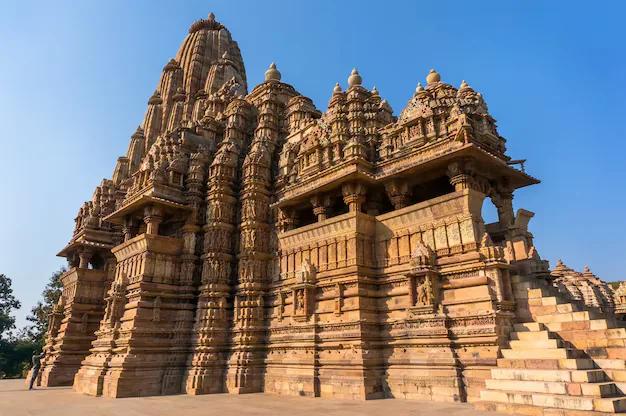
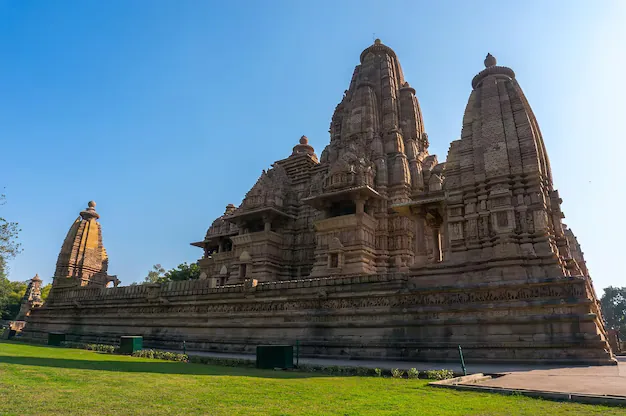
The temples were built by the Chandela dynasty between roughly 950 and 1050 CE. Of around 85 temples, about 25 survive, and the group was listed as a UNESCO World Heritage Site in 1986. Their fame comes from the carving: thousands of figures of gods and goddesses, celestial dancers, musicians, warriors, animals and scenes of everyday life, arranged in bands that climb the temple walls towards towers shaped like mountain peaks.
Khajuraho is often reduced to its erotic sculptures, but those panels are a small part of the whole and sit within a much larger picture of life, devotion and celebration. Families visit comfortably, and a good guide explains the meaning of the sculpture far better than any guidebook.
Which temple groups should you see?
The Western Group, inside a landscaped, ticketed enclosure, holds the masterpieces. The Kandariya Mahadeva temple is the largest and most elaborate, with more than 800 sculptures; the Lakshmana, Vishvanatha and Chitragupta temples are nearby. Come early for soft light, and return in the evening for the light-and-sound show. The Eastern Group includes the Jain temples of Parshvanath and Adinath, with fine carvings of the tirthankaras and their attendants, and is a short drive away. The Southern Group, with the Duladeo and Chaturbhuj temples, is quieter still.
How do you get to Khajuraho and Orchha from Gujarat?
Khajuraho has a small airport with flights mainly from Delhi and Varanasi, so from Gujarat you will usually connect. By rail, Khajuraho station has limited services, and Jhansi, a major junction about 16 kilometres from Orchha, is far better connected, including direct or one-change trains from Gujarat. Many travellers take the train to Jhansi, visit Orchha first, then drive about four to five hours to Khajuraho and fly out, or the reverse. Our tips on finding cheaper domestic flights help when routing through Delhi.
What should you see in Orchha?
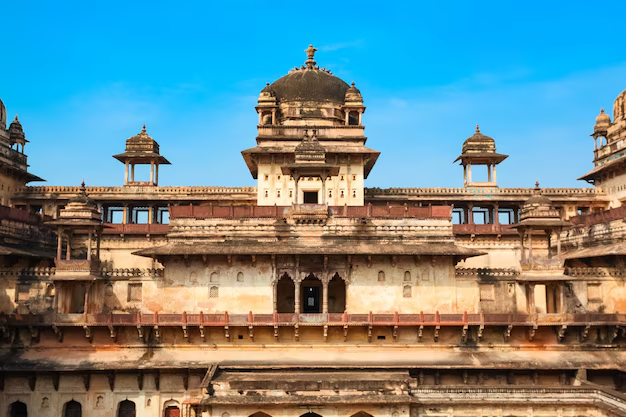
Orchha was the capital of the Bundela kings in the sixteenth and seventeenth centuries, and its monuments sit beside the Betwa river in a calm, walkable town. The Ram Raja temple is unique: here Lord Ram is worshipped as a king rather than a deity, and the police give him a guard of honour at the daily aarti. Across a bridge, the fort complex holds the Raja Mahal, with painted ceilings, and the Jahangir Mahal, built to welcome the Mughal emperor, with domed pavilions and views over the town. The tall Chaturbhuj temple and the row of royal chhatris, or cenotaphs, on the riverbank are best at sunset.
Is Panna National Park worth adding?
Panna Tiger Reserve is only about 25 kilometres from Khajuraho and makes an easy half-day or full-day addition. Its tiger population was rebuilt after local extinction, and jeep safaris through forest and along the Ken river also give chances of deer, crocodiles and birds. Safari permits are limited and should be booked in advance, and the park is usually closed in the monsoon. Our tiger safari guide to Ranthambore and Jim Corbett explains how safari zones and permits work.
When is the best time to visit?
October to March is the season, with pleasant days and cool nights. The Khajuraho Dance Festival, usually in February, brings classical dancers to perform in front of the floodlit temples, and hotels fill quickly. April to June is extremely hot, often above 40°C, and sightseeing becomes hard after mid-morning. The monsoon from July to September turns the countryside green but closes Panna's safaris.
Food, stays and practical tips
Both towns are easy for vegetarian and Jain travellers, with plenty of North Indian thali restaurants and hotel kitchens used to Gujarati requests. Khajuraho has a good range of hotels and resorts near the Western Group, while Orchha has heritage hotels inside old palaces and simple guesthouses near the temple. Hire a guide at the Western Group, wear comfortable shoes, carry water and a hat, and keep cash for small shops and autos.
For more of India's great heritage sites, see our Ellora and Ajanta caves guide, our Hampi ruins guide and our Rajasthan tour guide from Gujarat.
Frequently asked questions
How many days do you need for Khajuraho and Orchha?
Four days is comfortable: one and a half in Khajuraho, a half-day in Panna, a travel day and one day in Orchha.
Is Khajuraho suitable for a family trip?
Yes. The temples are a celebration of life in all its forms, and families visit every day. A guide helps explain the art to children and older parents in context.
Can you combine this trip with Varanasi?
Yes. Flights have linked Khajuraho and Varanasi, which makes a natural circuit; our Varanasi travel guide covers that leg.
Explera Vacations plans Madhya Pradesh heritage trips from Surat, with trains or flights, heritage hotels, a car and driver, guides at each site and Panna safari permits. Share your dates through our contact page, or ask about our fixed-departure group tours.