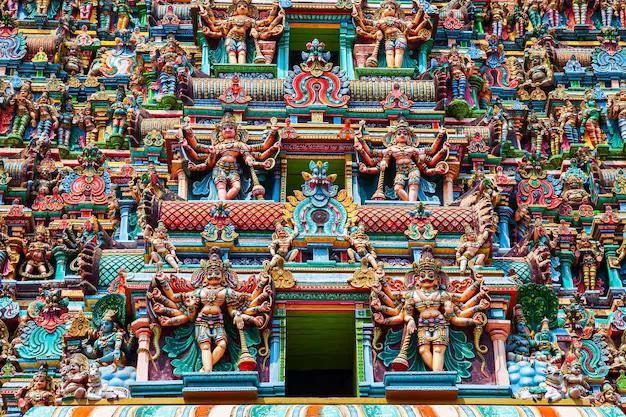
Madurai in Tamil Nadu is one of the oldest cities in South India, and its heart is the Meenakshi Amman temple, a vast complex of towering, sculpted gopurams dedicated to the goddess Meenakshi and her consort Sundareswarar, a form of Shiva. A few hours east, on an island at the tip of India, Rameswaram holds the Ramanathaswamy temple, one of the twelve jyotirlingas and among the holiest pilgrimage sites for Hindus. For families from Gujarat, the two together make a deeply rewarding South India pilgrimage.
This guide covers temple rules and timings, the main sights in Madurai, Rameswaram and Dhanushkodi, how to get there, the best months, food and a sensible plan. Temple timings, dress rules and train schedules change, so confirm them shortly before you travel.
What makes the Meenakshi temple special?
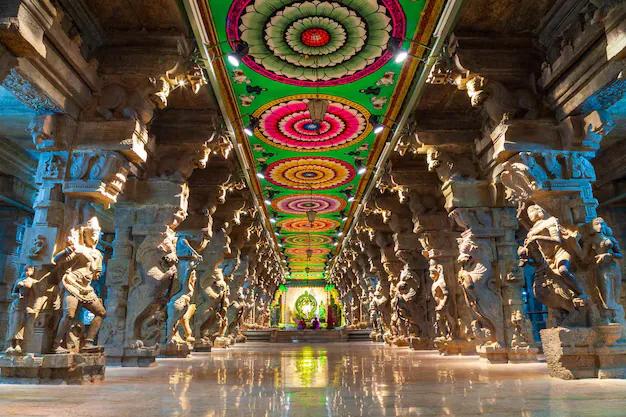
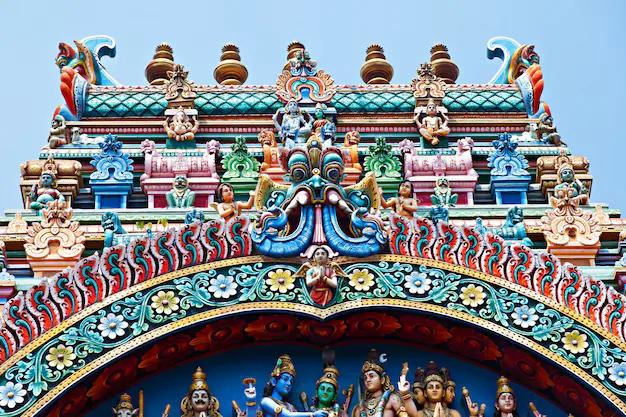
The temple covers about fourteen acres in the centre of the old city and has fourteen gopurams, the tallest of them about 50 metres high, each covered in thousands of brightly painted figures of gods, demons and animals. Inside are halls of carved pillars, the golden lotus tank and the twin shrines of Meenakshi and Sundareswarar. The temple is alive with worship from dawn to night; the evening ceremony, when Sundareswarar is carried in procession to Meenakshi's chamber, is a moving sight for those who stay late.
Mobile phones and cameras are not allowed inside, so leave them at the counters outside or at your hotel. Dress modestly in traditional clothes, cover shoulders and knees, and remove footwear at the entrance. Queues for the inner shrines are longest in the morning and on festival days; special darshan tickets have been available to shorten the wait.
What else should you see in Madurai?
The Thousand Pillar Hall inside the temple complex is now a museum of bronzes and temple art, and its carved columns are remarkable. The Thirumalai Nayak Palace, built in the seventeenth century, has an enormous courtyard and an evening light-and-sound show. The Gandhi Memorial Museum, in a former palace, tells the story of the freedom movement and keeps the dhoti Gandhi was wearing when he was assassinated. Madurai's markets around the temple sell flowers, brass lamps, cotton saris and the famous Madurai jasmine.
How do you visit Rameswaram and Dhanushkodi?
Rameswaram lies on Pamban Island, reached from the mainland by a road bridge and a rail bridge across the sea. The Ramanathaswamy temple is associated with Lord Ram, who is believed to have worshipped Shiva here before crossing to Lanka. Its pillared corridors are among the longest of any Hindu temple, and pilgrims traditionally bathe at the sea and in the temple's sacred wells, or theerthams, before darshan; carry a change of clothes. Dhanushkodi, at the island's tip, is a ghost town destroyed by a cyclone in 1964, where the road ends at the meeting of two seas. Go early in the day, because access can be restricted in bad weather.
A practical plan for Rameswaram is to arrive the evening before, bathe at Agni Theertham on the seafront early the next morning, then complete the theertham bathing inside the temple before darshan, when the queues are shortest. Local priests and guides offer to manage the ritual bathing for a fee; agree the price before you start. After darshan, drive to Dhanushkodi and the memorial to Dr A.P.J. Abdul Kalam, who was born in Rameswaram, and be back on the mainland by evening.
How do you get there from Gujarat?
Madurai's airport has flights from Mumbai, Chennai, Bengaluru and other cities, so from Ahmedabad or Surat you will usually connect once. Long-distance trains also link Gujarat with Madurai, and an AC sleeper is comfortable for families. From Madurai, Rameswaram is about three and a half to four hours by road or train. Many families fly into Madurai and out of Chennai, adding temples on the way; our Mahabalipuram and Kanchipuram guide covers that leg.
When is the best time to visit?
December to March is the most comfortable time, with warm days and less humidity. October and November bring the north-east monsoon, with heavy rain that can disrupt travel to Rameswaram. April and May are hot, but the Chithirai festival in Madurai, which celebrates the wedding of Meenakshi and Sundareswarar, draws enormous crowds and is spectacular for those who plan ahead. Avoid Mahashivratri and major festival days at Rameswaram if you want shorter queues.
Food and practical tips
Tamil Nadu is easy for vegetarian travellers. Try idli, dosa and pongal for breakfast, a banana-leaf meals thali for lunch, and Madurai's famous jigarthanda, a cold milk drink, in the afternoon. Many restaurants near the temples are pure vegetarian, and Jain travellers can ask for food without onion and garlic. Carry cotton clothes, a shawl for temples, sunscreen and small change for footwear counters and offerings.
If you are visiting several jyotirlingas, our guides to Somnath and Dwarka, Omkareshwar and Ujjain and Kashi Vishwanath in Varanasi cover others that Gujarati families often combine.
For another major South Indian temple trip, see Tirupati Balaji darshan and TTD booking.
Frequently asked questions
How many days do you need for Madurai and Rameswaram?
Three to four days: one and a half in Madurai, one in Rameswaram and Dhanushkodi, and a travel buffer.
Is it suitable for elderly parents?
Yes, with planning. Both temples involve long walks on stone floors and queues, so start early, use special darshan tickets where available, and choose hotels close to each temple.
Can you combine this with Kerala?
Yes. Madurai is a few hours from Munnar and Thekkady, which makes an easy extension; our Kerala travel guide covers the hills and backwaters.
Explera Vacations plans South India pilgrimages from Surat, with flights or trains, hotels near the temples, a car and driver, and darshan guidance. Tell us your dates through our contact page, or browse our tour packages from Surat.