On the banks of the Narmada in Madhya Pradesh, within a day's drive of Gujarat, lies one of India's most rewarding pilgrimage circuits. Omkareshwar's jyotirlinga stands on an island shaped like the sacred syllable Om. Maheshwar, downstream, is the riverside capital of the great queen Ahilyabai Holkar. And Ujjain, a little to the north, holds Mahakaleshwar, another of the twelve jyotirlingas, with its famous dawn Bhasma Aarti. For families from Gujarat, this is one of the easiest and most meaningful pilgrimages to plan.
This guide covers how to get there, darshan at Omkareshwar and Mahakaleshwar, Maheshwar's ghats and saris, the best months, food and a realistic plan. Temple timings and booking rules change, so confirm them on official sites shortly before you travel.
Why is Omkareshwar so sacred?
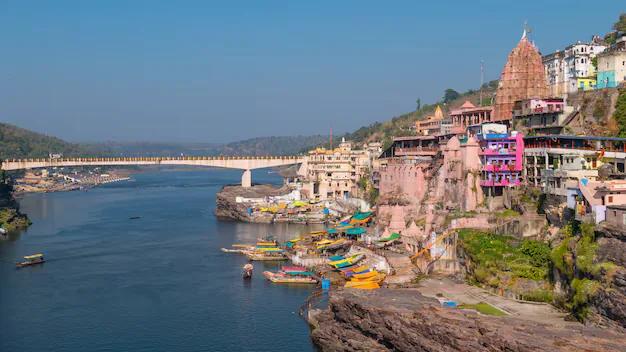
Omkareshwar sits on Mandhata island, which, seen from above, is said to resemble the Om symbol. The Omkareshwar temple on the island and the Mamleshwar temple on the southern bank are both revered, and many pilgrims visit both for complete darshan. The island has a parikrama path of around seven kilometres past smaller temples and ghats, and boats cross the river between the two banks. On the hilltop, Ekatma Dham, with its tall statue of Adi Shankaracharya, commemorates the saint who is said to have studied here.
Queues for the jyotirlinga can be long on Mondays, in the month of Shravan and on Mahashivratri. Arrive early, keep your footwear at the counters, and use the bridge or a boat depending on crowds and river levels.
What should you see in Maheshwar?
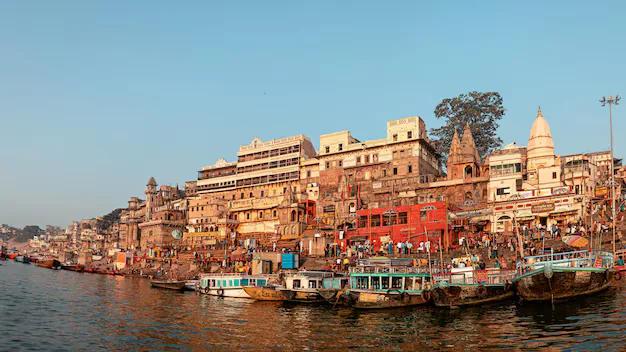
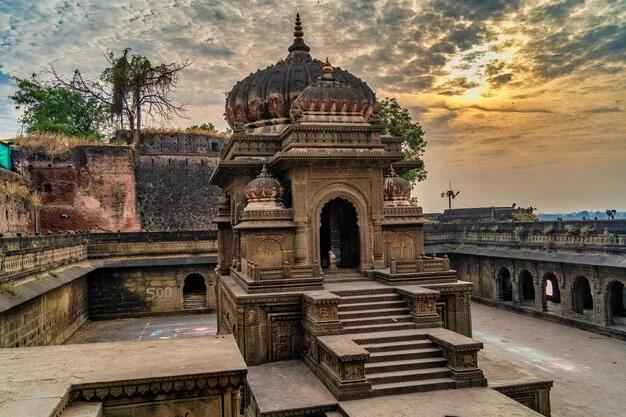
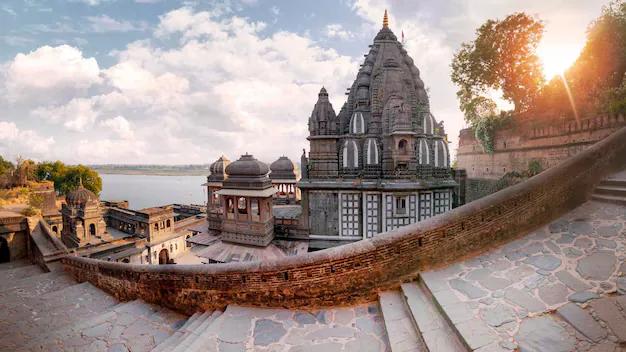
Maheshwar, about 65 kilometres downstream, was the capital of Ahilyabai Holkar, the eighteenth-century queen remembered for building temples, ghats and rest houses across India. Her fort rises above broad stone ghats where pilgrims bathe and boats leave for short trips on the Narmada. The evening aarti at the ghats is peaceful and much less crowded than in larger pilgrimage towns. Maheshwar is also famous for its handwoven Maheshwari saris in cotton and silk, and the weaving centre inside the fort sells them directly.
How do you attend the Bhasma Aarti in Ujjain?
Ujjain is one of India's oldest cities and one of the four sites of the Kumbh Mela. The Mahakaleshwar temple's Bhasma Aarti, performed before dawn with sacred ash, is one of the most powerful rituals in Hinduism. Places are limited and must be booked in advance through the temple's official website, with photo ID matching the booking, and a dress code applies for those entering the sanctum area. The Mahakal Lok corridor around the temple has made the approach spacious, with murals and statues telling Shiva's stories. Other important temples in Ujjain include Kal Bhairav, Harsiddhi and the ghats of the Shipra river, where the evening aarti is held.
Indore itself deserves half a day. The Rajwada, the seven-storey gateway of the old Holkar palace, stands at the heart of the old market, and the Lal Bagh Palace shows the Holkars' later European-style grandeur. The Khajrana Ganesh temple is one of the city's most visited shrines, and the Kanch Mandir, a Jain temple covered entirely in glass and mirror work, is a favourite with Jain families from Gujarat. Indore has repeatedly been ranked India's cleanest city, which makes it a pleasant base.
How do you get there from Gujarat?
Indore is the base for the whole circuit. Its Devi Ahilya Bai Holkar Airport has flights from Ahmedabad and other cities, and trains from across Gujarat reach Indore and Ujjain, often overnight. Many families drive: Indore is roughly six to seven hours from Vadodara by road. From Indore, Omkareshwar is about two hours, Maheshwar about two and a half, and Ujjain about an hour, so a car and driver for three or four days makes everything easy. Our tips on finding cheaper flights from India help for the air route.
When is the best time to visit?
October to March is the most comfortable season, with pleasant days and cool nights. Mahashivratri and the month of Shravan, roughly July to August, are the holiest times and bring very large crowds. In the monsoon the Narmada rises sharply, and boat services and some ghats may close for safety. April to June is very hot.
Food and practical tips
Indore is one of India's great food cities and is especially good for vegetarian and Jain travellers. Start the day with poha and jalebi, and spend an evening at Sarafa Bazaar, a night food market, or Chappan Dukan for garadu, sabudana khichdi, bhutte ka kees and kachori. Omkareshwar and Ujjain have many pure-vegetarian bhojanalayas near the temples. Carry modest traditional clothes for darshan, a shawl for early mornings in winter, and small change for offerings and footwear counters.
For other jyotirlinga journeys, see our guides to Somnath and Dwarka, Kashi Vishwanath in Varanasi and Rameswaram and Madurai, and for Grishneshwar, our Ellora caves guide.
Frequently asked questions
How many days do you need?
Four days is comfortable: one for Omkareshwar, one for Maheshwar, one for Ujjain including the Bhasma Aarti, and a half day for Indore's food.
Is this trip suitable for elderly parents?
Yes. Distances are short, the roads are good, and hotels in Indore are comfortable. At Omkareshwar, use the bridge or a boat instead of the full parikrama walk, and choose less crowded weekdays for darshan.
Can you do the Narmada Parikrama?
The full Narmada Parikrama is a long pilgrimage of several months on foot or in stages by road; ask us about organised road versions if you would like to complete part of it.
Explera Vacations plans jyotirlinga pilgrimages from Surat, with trains or flights to Indore, hotels, a car and driver, and help with darshan and Bhasma Aarti bookings. Tell us your dates through our contact page, or ask about our fixed-departure group tours.